Green Card Holder ICE Detention in Florida: Your Rights & Defense
Green card holders in Florida can face ICE detention for various reasons, primarily related to criminal convictions or serious immigration violations. Understanding your rights, the complex detention process, and the importance of skilled legal representation is crucial. This comprehensive guide from Florida Immigration Lawyers details the grounds for detention, the step-by-step process, essential documents, timelines, and costs involved. We also highlight common mistakes to avoid and when to seek legal help to protect your lawful permanent resident status and fight against deportation.
Green card holders can be detained by ICE in Florida under specific circumstances, often related to criminal convictions, past immigration violations, or national security concerns. While lawful permanent residents have more rights than undocumented individuals, detention is possible. Understanding your rights, securing legal counsel, and preparing for defense is crucial to challenge detention and avoid deportation proceedings.
- Lawful Permanent Residents (LPRs) are not immune to ICE detention.
- Criminal offenses, even minor ones, can trigger ICE action.
- You have the right to legal representation during detention.
- Bond hearings are a critical step to seek release.
- Early legal intervention significantly improves outcomes.
Green Card Holder ICE Detention in Florida: Protecting Your Rights and Freedom
Imagine living your life in Florida, a lawful permanent resident with a green card, contributing to your community in Gainesville or Miami, only to suddenly face detention by U.S. Immigration and Customs Enforcement (ICE). This can be a terrifying and confusing experience, leaving you and your family feeling helpless and uncertain about the future.
Many green card holders believe their status offers absolute protection from immigration enforcement. While a green card provides significant security, it does not grant absolute immunity from detention or deportation. Certain actions can put your lawful permanent resident status at risk, leading to ICE custody.
At Florida Immigration Lawyers, we understand the immense stress and anxiety that green card holder ICE detention brings. Our dedicated team is here to help you navigate these complex challenges with compassion and expertise. If you or a loved one is facing ICE detention, do not wait. Call Florida Immigration Lawyers at 1-844-967-3536 for a free consultation immediately.
Understanding Green Card Holder ICE Detention in Florida
A green card, officially known as a Permanent Resident Card, signifies your authorization to live and work permanently in the United States. For many, it represents stability, opportunity, and the foundation for a life in Florida. However, this status can be jeopardized under specific legal circumstances, leading to detention by ICE.
ICE's primary mission includes enforcing immigration laws for both undocumented immigrants and, in certain cases, lawful permanent residents. Detention of green card holders often stems from alleged violations of immigration law or criminal activity that renders an individual deportable under the Immigration and Nationality Act (INA).
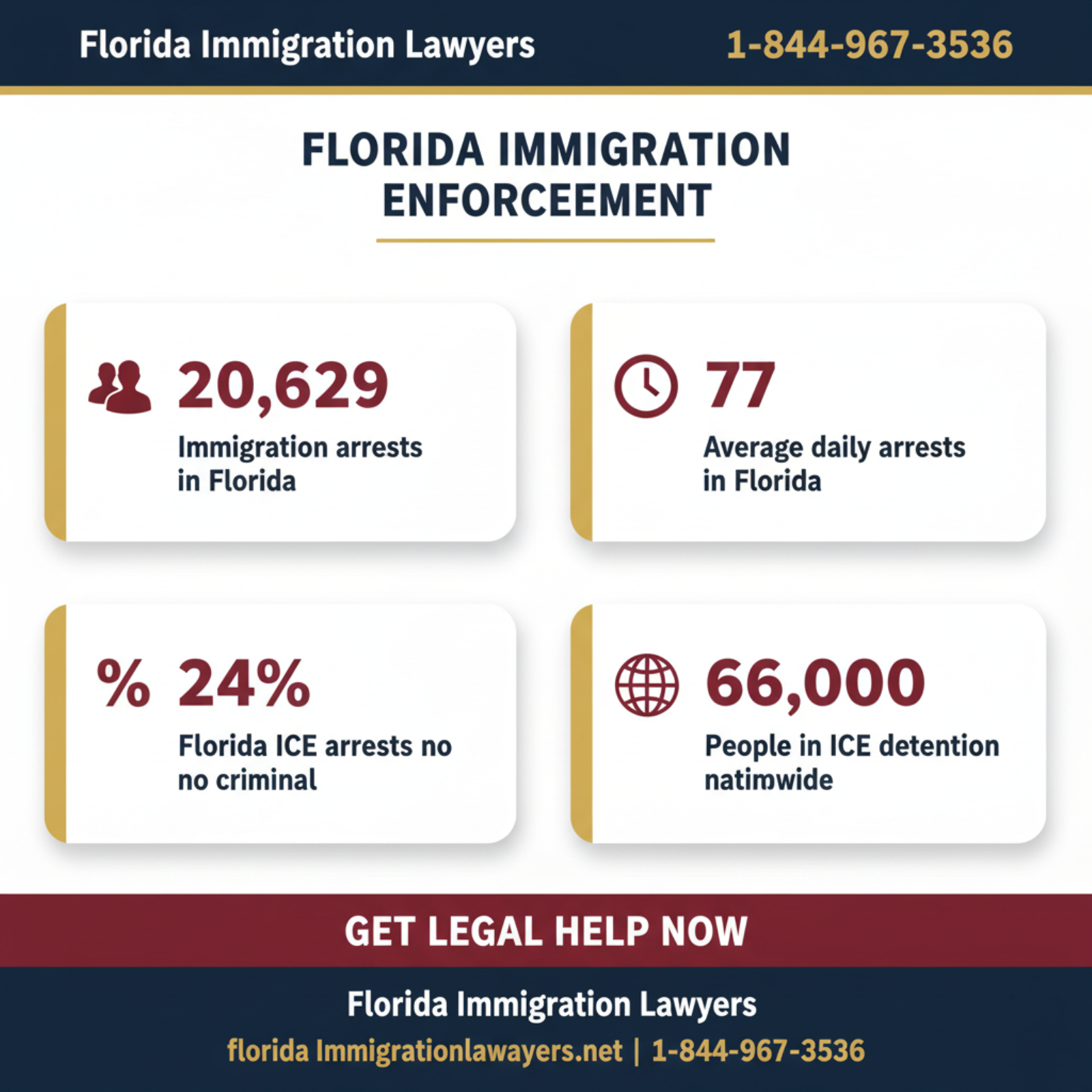
Florida, with its diverse population and numerous ports of entry, sees a significant number of immigration enforcement actions. ICE field offices in Miami, Tampa, and Jacksonville are active in identifying and detaining individuals who may be subject to removal proceedings. Understanding the reasons for detention is the first step toward building a strong defense.
Why Green Card Holders Can Be Detained by ICE in Florida
While green card holders enjoy many rights, their status can be revoked, and they can be detained and deported if they commit certain offenses. These reasons are primarily outlined in the Immigration and Nationality Act. It is crucial to understand these grounds to protect your status.
Criminal Convictions and Deportability
One of the most common reasons for green card holder ICE detention is a criminal conviction. Not all crimes lead to deportation, but certain categories are particularly problematic. These include:
- Aggravated Felonies: As defined under INA § 101(a)(43) (8 U.S.C. § 1101(a)(43)), these are severe crimes like murder, rape, drug trafficking, firearms trafficking, and certain theft offenses. An aggravated felony conviction almost always leads to detention and deportation, with very limited relief available.
- Crimes Involving Moral Turpitude (CIMT): These are offenses that are inherently base, vile, or depraved, contrary to the accepted rules of morality and the duties owed between persons or to society in general. Examples include fraud, grand theft, and certain assault crimes. A single CIMT committed within five years of admission, or two CIMTs at any time, can trigger deportability under INA § 237(a)(2)(A)(i) and (ii) (8 U.S.C. § 1227(a)(2)(A)(i) and (ii)).
- Drug Offenses: Convictions for controlled substance violations, other than a single offense of possession for one's own use of 30 grams or less of marijuana, can lead to deportation.
- Firearms Offenses: Convictions related to firearms or destructive devices are also grounds for deportation.
- Domestic Violence, Stalking, Child Abuse: These offenses are specifically listed as grounds for removal.
Even minor offenses can sometimes be reclassified or interpreted in ways that trigger immigration consequences. It is vital to consult with an attorney experienced in deportation defense immediately if you face any criminal charges, regardless of their severity.
Immigration Violations
While less common for green card holders, certain immigration violations can also lead to detention. These might include:
- Visa Fraud or Misrepresentation: If it's discovered that you obtained your green card through fraud or willful misrepresentation of a material fact.
- Abandonment of Permanent Resident Status: Spending too much time outside the U.S. without proper documentation (like a re-entry permit) can lead to a finding that you abandoned your green card.
- Failure to Register: Certain foreign nationals are required to register with the government, and failure to do so can have consequences.
These situations highlight that a green card is not an absolute shield. Your rights and responsibilities as a lawful permanent resident are clearly defined, and violations can have serious repercussions. If you have questions about maintaining your status, our immigration lawyers can provide clarity.
What Happens During ICE Detention: A Step-by-Step Guide
Understanding the process after ICE detention is crucial for effective defense. While every case is unique, there is a general sequence of events.
-
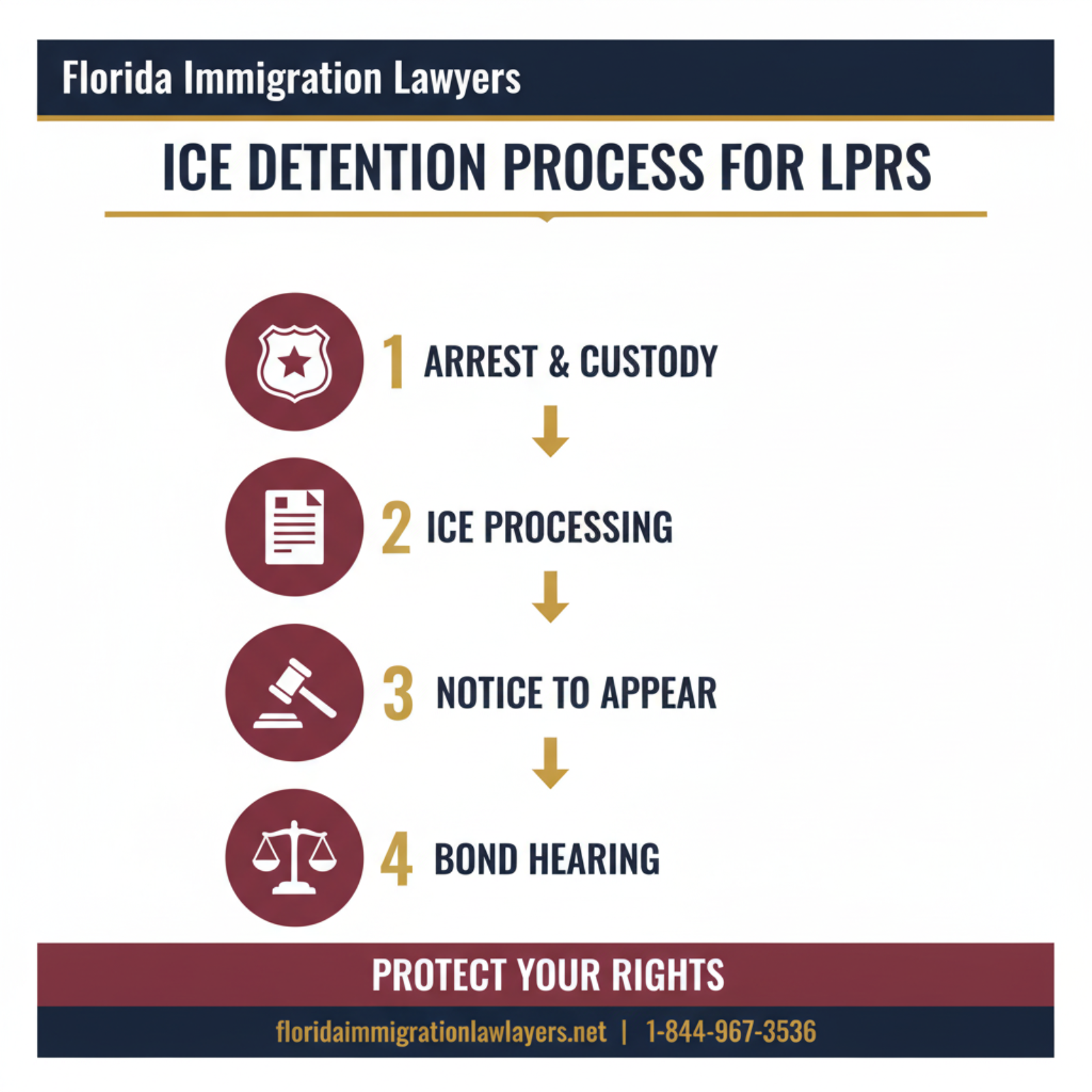
Arrest and Initial Processing: ICE may arrest a green card holder at their home, workplace, or even a traffic stop. This often occurs after a criminal conviction or a tip. You will be taken to an ICE detention facility, such as the Glades County Detention Center or Broward Transitional Center in Florida. During processing, your fingerprints will be taken, and you will be questioned. You have the right to remain silent and request an attorney.
-
Issuance of a Notice to Appear (NTA): If ICE decides to initiate removal proceedings, they will issue a Form I-862, Notice to Appear (NTA). This document formally charges you with being removable from the U.S. and instructs you to appear before an immigration judge. The NTA will specify the alleged grounds for your deportability.
-
Custody Determination and Bond Hearing: After receiving an NTA, ICE will make a custody determination. They may decide to release you on your own recognizance, set a bond, or deny bond altogether. If bond is denied or considered too high, your attorney can request a bond hearing before an immigration judge. This hearing, typically held at immigration courts in Orlando, Miami, or Pompano Beach, is critical for seeking release. The judge will consider factors like flight risk, danger to the community, and ties to the community (e.g., family, employment, property in Gainesville or other Florida cities) when deciding on bond.
-
Master Calendar Hearing: This is the first court appearance before an immigration judge. During this hearing, you, through your attorney, will acknowledge receipt of the NTA, admit or deny the factual allegations, and indicate your chosen forms of relief from removal. This is a procedural hearing to set the stage for your case.
Step-by-Step Process Guide -
Individual Hearing (Merits Hearing): If you contest the charges or seek relief from removal, your case will be scheduled for an Individual Hearing. This is a full evidentiary hearing where both sides present arguments, witnesses, and evidence. Your attorney will present your defense, challenge the government's evidence, and argue for any forms of relief you may be eligible for, such as cancellation of removal for certain permanent residents under INA § 240A(a) (8 U.S.C. § 1229b(a)).
-
Decision and Appeals: After the Individual Hearing, the immigration judge will issue a decision. If the judge orders your removal, your attorney can appeal the decision to the Board of Immigration Appeals (BIA). Further appeals may be possible to a federal circuit court.
Each step in this process is complex and requires meticulous legal strategy. Having an experienced Florida immigration lawyer by your side is indispensable. We can help you understand your options and fight for your rights.
Essential Documents for Your ICE Detention Case
Gathering the correct documentation is critical for building a strong defense and demonstrating your eligibility for bond or relief from removal. If you or a family member are detained, try to collect these documents as soon as possible:
- Your Permanent Resident Card (Green Card)
- Any valid passports or travel documents
- Birth certificates of yourself and any U.S. citizen or LPR family members
- Marriage certificate (if applicable)
- Evidence of your continuous physical presence in the U.S. (e.g., old passports with entry stamps, school records, employment records, tax returns, utility bills, rental agreements from Florida addresses)
- Proof of employment (pay stubs, employment letters, W-2s)
- Tax returns for the past several years
- Bank statements and financial records
- Property deeds or lease agreements in Florida
- Letters of support from family, friends, employers, and community leaders
- Medical records, especially if you have serious health conditions
- Any documents related to prior immigration applications (e.g., I-130, I-485 approval notices)
- Court dispositions for any criminal arrests or convictions, including certified copies of sentencing orders and proof of completion of sentences
- Evidence of rehabilitation (e.g., certificates from counseling, community service)
- Police reports for any arrests (even if charges were dropped or expunged)
A comprehensive collection of these documents helps your attorney present a complete picture of your life in the U.S. and your strong ties to Florida. These can be pivotal in a bond hearing or in arguing for cancellation of removal.
Navigating the Timeline and Processing of ICE Cases
The timeline for ICE detention cases can vary significantly based on the specific facts of your case, the complexity of the legal issues, and the caseload of the immigration courts in Florida. There is no fixed duration, and cases can take anywhere from a few weeks to several months, or even years, to resolve.
Initial Detention to Bond Hearing
Typically, after detention, an NTA is issued within a few days to a few weeks. A bond hearing can often be requested relatively quickly, sometimes within a few weeks of the NTA's issuance, especially for those held in Florida detention centers. However, delays can occur, particularly if court dockets are crowded or if there are issues with document production.
Master Calendar to Individual Hearing
Once you appear for a Master Calendar Hearing, the judge will schedule an Individual Hearing. The gap between these hearings can be substantial, often several months, due to the high volume of cases in Florida's immigration courts. During this time, your attorney will prepare your defense, gather evidence, and file necessary applications for relief.
Appeals Process
If an adverse decision is rendered, the appeals process adds further time. An appeal to the Board of Immigration Appeals (BIA) can take many months, and a subsequent appeal to a federal circuit court could add another year or more. It is crucial to be prepared for a potentially lengthy legal battle.
Throughout this process, continuous communication with your attorney is vital. They can provide updates, manage expectations, and keep you informed about the progress of your case. Patience and persistence are key when dealing with the U.S. immigration system.
Understanding the Costs Associated with ICE Detention Cases
Facing ICE detention for a green card holder involves various potential costs. These are important considerations for you and your family as you prepare for the legal process.
Attorney Fees
Legal representation is the most significant cost. Fees for an experienced immigration attorney vary based on the complexity of the case, the amount of time required, and the specific services provided. A case involving a bond hearing, multiple court appearances, and applications for relief will naturally incur higher costs than a simpler matter. Florida Immigration Lawyers offers transparent fee structures and will discuss all costs upfront during your free consultation.
Bond Amounts
If a bond is granted, you or your family will need to pay the bond amount to ICE to secure your release. Bond amounts can range from a few thousand dollars to tens of thousands, depending on the individual's circumstances, criminal history, and flight risk assessment. This money is typically returned once your case is concluded, provided you attend all court hearings.
Filing Fees
Certain applications for relief from removal, such as an application for cancellation of removal, require filing fees with USCIS or the Executive Office for Immigration Review (EOIR). These fees are subject to change and must be paid at the time of filing. Your attorney will advise you on any applicable fees for your specific case.
Other Expenses
Additional costs may include fees for obtaining certified court documents, expert witness testimony (if needed), translation services for documents, and travel expenses for family members attending hearings or visiting detention centers. It is important to factor these potential expenses into your planning.
While the costs can seem daunting, investing in quality legal representation is often critical for protecting your green card and your future in the U.S. We are committed to providing effective and efficient legal services to our clients across Florida.
Do not navigate this process alone. The complexities of immigration law, especially concerning green card holder ICE detention, require seasoned legal expertise. Contact Florida Immigration Lawyers today to schedule your free consultation and take the first step towards defending your rights.
Common Mistakes to Avoid During ICE Detention
-
Failing to Remain Silent: Anything you say to ICE agents can be used against you in immigration court. You have the right to remain silent. Do not answer questions about your immigration status, birthplace, or how you entered the U.S. without an attorney present. Providing incorrect information can lead to further complications.
-
Signing Documents Without Understanding Them: Never sign any document presented by ICE or other law enforcement officers without fully understanding its contents and implications. Some documents, like a "Voluntary Departure" form, can waive your rights to a hearing and result in immediate removal from the U.S.
-
Not Requesting an Attorney: This is your most crucial right. As soon as you are detained, clearly state, "I want to speak to my attorney." Do not waive this right. ICE agents may try to question you without legal counsel, but you are not obligated to answer.
-
Providing False Information: Lying to immigration officers or presenting false documents can lead to severe penalties, including criminal charges and permanent bars to future immigration benefits. Always be truthful when speaking with your attorney.
-
Failing to Inform Family of Detention: If possible, ensure your family or a trusted contact is aware of your detention. This allows them to begin the process of finding an attorney and gathering necessary documents. Our team at Florida Immigration Lawyers is available 24/7 to assist.
-
Not Disclosing Criminal History to Your Attorney: Even if a criminal charge was dropped, expunged, or occurred many years ago, it is vital to inform your immigration attorney about every interaction with law enforcement. Undisclosed history can severely damage your defense and lead to unexpected complications.
-
Missing Court Dates: Failing to appear for an immigration court hearing will almost certainly result in an in absentia removal order, making it extremely difficult to reopen your case and leading to immediate deportation if you are encountered by ICE.
-
Not Gathering All Relevant Documents: As outlined above, a comprehensive set of documents is crucial. Waiting until the last minute or failing to provide all requested information can weaken your case for bond or relief from removal. Your family immigration records are especially important.
-
Believing Myths or Misinformation: The immigration system is complex, and misinformation is rampant. Rely only on accurate legal advice from a qualified attorney, not rumors or advice from non-attorneys. This is particularly true for those with citizenship aspirations.
-
Delaying Legal Action: Time is often of the essence in ICE detention cases. The sooner an attorney is involved, the more options may be available for release and defense. Delaying can limit your ability to challenge detention effectively.
When to Call a Lawyer for Green Card Holder ICE Detention in Florida
Knowing when to seek legal counsel is paramount for any green card holder facing potential or actual ICE detention. Prompt legal intervention can significantly alter the outcome of your case.
You should contact an experienced immigration attorney immediately if:
- You or a family member is detained by ICE: This is the most urgent scenario. Your attorney can immediately work to locate the individual, ascertain the reasons for detention, and begin preparing for a bond hearing.
- You have been arrested for any criminal offense: Even if the charges seem minor, a criminal conviction can have severe immigration consequences for green card holders. An attorney can advise on how to handle the criminal case to minimize immigration impact.
- You receive a Notice to Appear (NTA): This document formally initiates removal proceedings. Do not try to respond to it or represent yourself in immigration court. An attorney will guide you through the process.
- You are questioned by ICE or other law enforcement about your immigration status: You have the right to remain silent and request an attorney. Do not answer questions without legal counsel.
- You are considering traveling outside the U.S. with a criminal history: Re-entry for green card holders with certain criminal convictions can lead to detention at ports of entry, including Florida airports like Miami International or Orlando International. Consult an attorney before traveling.
- You have an old criminal conviction and are concerned about its impact: Even decades-old convictions can resurface and lead to ICE action. An attorney can assess your risk and advise on potential remedies.
Florida Immigration Lawyers has extensive experience representing green card holders in ICE detention cases throughout Florida, including Gainesville, Orlando, Miami, and Tampa. We understand the nuances of deportation defense and are committed to protecting your rights and freedom. Our team is ready to provide the compassionate and aggressive representation you need during this challenging time.
Common Questions About Green Card Holder ICE Detention
Here are answers to frequently asked questions regarding green card holder ICE detention in Florida:
Can a green card holder be deported for a misdemeanor?
Yes, in some cases. While aggravated felonies are the most common grounds for deportation, certain misdemeanors, particularly those classified as Crimes Involving Moral Turpitude (CIMT) or related to controlled substances or domestic violence, can make a green card holder deportable. The specific nature of the crime, the sentence received, and the timing of the conviction are all critical factors.
What are the rights of a green card holder in ICE custody?
Green card holders in ICE custody have several important rights. These include the right to legal representation, the right to a bond hearing (in most cases), the right to present evidence and witnesses in immigration court, and the right to appeal an adverse decision. You also have the right to remain silent when questioned by ICE and to not sign any documents you do not understand.
How long can ICE detain a green card holder in Florida?
There is no fixed limit to how long ICE can detain a green card holder during removal proceedings. Detention can last throughout the entire immigration court process, which could be months or even years, especially if appeals are pursued. However, individuals are generally eligible for bond hearings to seek release while their case is pending.
Can a green card holder get bond after ICE detention?
Many green card holders are eligible for bond after ICE detention, allowing them to be released from custody while their immigration case proceeds. Eligibility and the bond amount depend on factors like criminal history, flight risk, ties to the community, and whether they are deemed a danger to the community. An immigration judge makes the final bond determination at a bond hearing.
What is the difference between deportation and removal?
The terms "deportation" and "removal" are often used interchangeably, but "removal" is the current legal term under the Immigration and Nationality Act. It encompasses both "deportation" (for those already admitted to the U.S.) and "exclusion" (for those seeking admission). For green card holders, the process they face is typically referred to as removal proceedings.
About Florida Immigration Lawyers
Florida Immigration Lawyers is a leading immigration law firm dedicated to serving individuals and families across the entire state of Florida. With a deep understanding of U.S. immigration laws and a commitment to our clients, we provide comprehensive legal services tailored to your unique needs.
Our experienced attorneys specialize in a wide range of immigration matters, including green card applications, asylum, deportation defense, citizenship, family-based immigration, and business immigration. We pride ourselves on offering empathetic, client-focused representation, ensuring you feel supported and informed every step of the way.
We understand that immigration challenges often arise unexpectedly and require immediate attention. That's why Florida Immigration Lawyers is available 24/7 to answer your calls and provide prompt assistance. We offer free consultations to discuss your case and outline your best legal strategies.
Choose Florida Immigration Lawyers for unparalleled expertise, dedicated advocacy, and a steadfast commitment to achieving the best possible outcomes for our clients. Your future in Florida is our priority.
Phone: 1-844-967-3536
Website: https://www.floridaimmigrationlawyers.net
Sources and References
- U.S. Citizenship and Immigration Services (USCIS)
- Executive Office for Immigration Review (EOIR)
- U.S. Immigration and Customs Enforcement (ICE)
- 8 U.S.C. Chapter 12 - Immigration and Nationality Act (INA)
- INA § 101(a)(43) - Definition of Aggravated Felony (8 U.S.C. § 1101(a)(43))
- INA § 236 - Detention and Release of Aliens (8 U.S.C. § 1226)
- INA § 237(a)(2)(A)(i) and (ii) - General Crimes, Crimes Involving Moral Turpitude (8 U.S.C. § 1227(a)(2)(A)(i) and (ii))
- INA § 240A(a) - Cancellation of Removal for Certain Permanent Residents (8 U.S.C. § 1229b(a))
- 8 CFR (Code of Federal Regulations, Title 8 - Aliens and Nationality)
This article provides general legal information and is not intended as legal advice. Every case is unique, and outcomes depend on specific facts and circumstances. Contact an attorney for advice about your particular situation.
If you or a loved one is a green card holder facing ICE detention in Florida, you need immediate and experienced legal help. Our team at Florida Immigration Lawyers is ready to fight for your rights and guide you through every step of this challenging process. Call us now for a free consultation at 1-844-967-3536. Se Habla Español - Estamos aquí para ayudarle.
Need help with Immigration?
Our Florida immigration attorneys offer free consultations. Call today or schedule online.
Frequently Asked Questions
Florida Immigration Lawyers
Legal Team
Our experienced attorneys at Florida Immigration Lawyers have been serving clients across Florida for over 20 years. We specialize in immigration, personal injury, criminal defense, workers compensation, and family law.