H-1B Visa Fee Increase Florida: What Employers & Workers Need to Know in 2026
Navigate the H-1B visa fee increase in Florida for 2026. Understand new costs, requirements, and how to protect your application. Contact Florida Immigration Lawyers for a free consultation.
The H-1B visa program faces significant fee increases in 2026, impacting employers and skilled foreign workers across Florida. These changes cover various filing components, including the base petition, fraud prevention, and ACWIA fees. Understanding these new costs and complex regulations is crucial for a successful application. Florida Immigration Lawyers can guide you through these updates.
- USCIS is implementing substantial fee adjustments for H-1B visas in 2026.
- Employers will bear the primary burden of these increased H1B visa fees 2026.
- Expert legal guidance is vital to navigate the complex application process and new costs.
- The H-1B visa Florida process requires careful planning and document preparation.
- Consulting an attorney helps avoid common mistakes and ensures compliance with new USCIS fee increase 2026 regulations.
Are you an employer in Florida seeking to hire highly skilled foreign professionals? Perhaps you are a talented individual hoping to work in the U.S. through the H-1B visa program. The landscape of U.S. immigration, particularly concerning the H-1B visa, is constantly evolving. In 2026, significant changes to H-1B visa fees are set to take effect, directly impacting businesses and workers throughout Florida, from Pembroke Pines to Miami and Orlando.
These new regulations and increased costs can be daunting. Understanding the implications of the h-1b visa fee increase is critical for both petitioners and beneficiaries. This comprehensive guide will break down the upcoming changes, explain the application process, and provide essential insights to help you prepare. We will cover everything from the new fee structures to common pitfalls to avoid.
Navigating complex immigration laws requires expert knowledge. Do not risk your future or your company's ability to secure top talent. Call Florida Immigration Lawyers at 1-844-967-3536 for a free consultation. Our experienced team is ready to assist you.
Understanding the H-1B Visa Program and 2026 Fee Changes
The H-1B visa is a nonimmigrant visa that allows U.S. employers to temporarily employ foreign workers in specialty occupations. These occupations generally require a bachelor's degree or higher in a specific field. The program is crucial for many industries, including technology, healthcare, and engineering, which rely on skilled international talent.
Each year, U.S. Citizenship and Immigration Services (USCIS) conducts a lottery for H-1B visas due to the annual cap of 85,000, which includes 20,000 for those with a U.S. master's degree or higher. This high demand, coupled with evolving economic and policy considerations, often leads to regulatory adjustments. The USCIS fee increase 2026 represents one such significant adjustment.
The Importance of the H-1B Visa for Florida's Economy
For businesses and professionals in Florida, the H-1B visa program remains a vital pathway. Cities like Pembroke Pines, Fort Lauderdale, and Miami are hubs for various industries that frequently sponsor H-1B workers. The new fee structure will be a critical factor in planning your immigration strategy for 2026.
Our firm, Florida Immigration Lawyers, understands the unique challenges and opportunities within the Florida immigration landscape. We are committed to helping our clients navigate these changes effectively. Preparing early is key to a successful H-1B petition under the new fee regime.
The Rationale Behind the USCIS Fee Increase 2026
USCIS is primarily funded by fees collected from immigration benefit requests. Periodically, the agency reviews its fee schedule to ensure it recovers its operational costs and can process applications efficiently. The upcoming H1B visa fees 2026 are part of a broader fee rule adjustment aimed at improving service delivery and addressing backlogs.
These increases are intended to provide USCIS with the resources needed to adjudicate petitions, detect fraud, and modernize its systems. While these changes aim to benefit the immigration system, they undeniably place a greater financial burden on employers and, indirectly, on foreign workers. It is essential to be aware of how these changes will affect your H1B visa cost to employer.
Navigating the H-1B Visa Application Process: A Step-by-Step Guide
The H-1B visa application process is multi-faceted and requires meticulous attention to detail. The general steps remain consistent, but the new fee structure will be integrated into the financial planning. Understanding each stage is crucial for a successful outcome.
-
Employer Files LCA (Labor Condition Application): Before filing an H-1B petition, the employer must submit a Labor Condition Application (LCA) Form ETA-9035 to the U.S. Department of Labor (DOL). This ensures that the employment of an H-1B worker will not adversely affect the wages and working conditions of U.S. workers.
This crucial step must be certified by the DOL before the H-1B petition can be filed with USCIS. Any inaccuracies or omissions on the LCA can lead to significant delays or even denial of the petition.
-
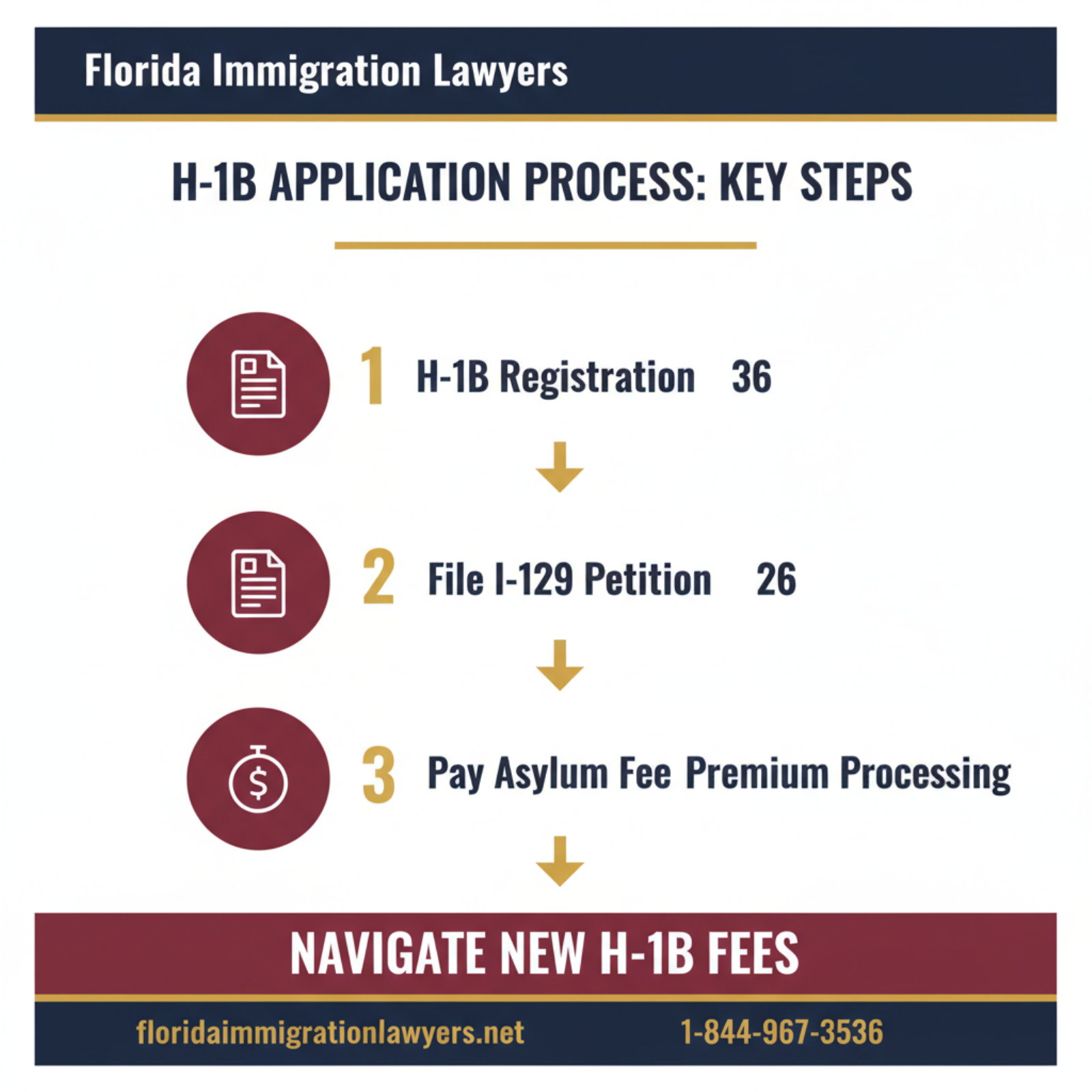
H-1B Cap Registration (if applicable): For cap-subject H-1B petitions, USCIS conducts an electronic registration process annually. Employers, or their authorized representatives, must register each prospective H-1B beneficiary electronically during a designated registration period. Only those selected in the lottery can proceed to file a full H-1B petition.
The registration process, while streamlined, still requires accurate employer and beneficiary information. The H1B lottery fee, if any, will also be collected at this stage. This is a critical first hurdle for many H-1B aspirants.
-
File Form I-129, Petition for a Nonimmigrant Worker: Once an LCA is certified and, if applicable, the beneficiary is selected in the H-1B lottery, the employer files Form I-129 with USCIS. This petition includes all supporting documentation, demonstrating the beneficiary's qualifications and the specialty occupation nature of the job.
This is the core of the H-1B application. It must clearly establish that the position meets the definition of a "specialty occupation" and that the beneficiary possesses the required qualifications. All applicable H-1B visa fees 2026 will be submitted with this form.
-
Respond to RFEs (Requests for Evidence): It is common for USCIS to issue a Request for Evidence (RFE) if they require additional information or clarification to adjudicate the petition. Prompt and thorough responses are essential to avoid delays or denial.
An RFE is not a denial but an opportunity to strengthen your case. Our attorneys at Florida Immigration Lawyers are adept at preparing robust RFE responses, addressing USCIS concerns effectively.
-
Visa Interview and Stamping (for those outside the U.S.): If the petition is approved and the beneficiary is outside the U.S., they will attend an interview at a U.S. embassy or consulate in their home country. Upon successful interview, the H-1B visa stamp is placed in their passport.
Preparation for the visa interview is crucial. Applicants should be ready to discuss their qualifications, the job offer, and their intent to comply with visa terms. Our firm can help prepare you for this final step.
-
Change of Status or Admission to the U.S.: For beneficiaries already in the U.S. on another nonimmigrant status, the H-1B approval often includes a change of status. Those outside the U.S. can then enter the U.S. using their new H-1B visa.
Upon entry or change of status, H-1B workers can begin their employment in the U.S. It is vital to maintain H-1B status by adhering to all immigration regulations.
Essential Documents for Your H-1B Petition
A successful H-1B application hinges on a complete and accurate submission of documents. The following is a general list of documents typically required. Ensure all documents are translated into English if originally in another language, with a certified translation.
- Certified Labor Condition Application (LCA) Form ETA-9035.
- Form I-129, Petition for a Nonimmigrant Worker.
- Employer's letter of support outlining the job offer, salary, and specialty occupation duties.
- Beneficiary's educational degrees, diplomas, and transcripts (e.g., Bachelor's, Master's, Ph.D.).
- Foreign degree evaluations, if applicable, to prove U.S. equivalency.
- Beneficiary's resume or CV detailing work experience.
- Copies of any professional licenses or certifications required for the occupation.
- Beneficiary's passport copy (biographic page and all visa stamps).
- Beneficiary's U.S. visa copies and I-94 arrival/departure record (if already in the U.S.).
- Marriage certificate and birth certificates for dependents (for H-4 visa applications).
- Employer's financial statements, tax returns, and business licenses to demonstrate ability to pay the prevailing wage.
H-1B Visa Timeline and Processing Expectations
H-1B processing times can vary significantly based on USCIS workload, the service center handling your petition, and whether an RFE is issued. The annual cap and lottery system also introduce specific timelines. It is always wise to apply as early as possible within the allowable windows.
Key Milestones and Typical Durations
- LCA Certification: Typically 7-10 business days.
- H-1B Cap Registration: A designated period, usually in March, for a few weeks. Lottery results are typically announced by late March.
- Petition Filing (Form I-129): If selected in the lottery, petitions can be filed starting April 1st.
- Regular Processing: Can range from 3 to 6 months, or sometimes longer, depending on the service center.
- Premium Processing: For an additional fee, USCIS guarantees a response (approval, denial, RFE, or notice of intent to deny) within 15 calendar days. This option can significantly expedite the process for an additional H1B visa cost to employer.
- Visa Interview (outside U.S.): Varies by embassy/consulate wait times.
- Start Date: H-1B status typically begins on October 1st of the fiscal year for which the petition is approved.
These timelines are estimates and subject to change. The USCIS fee increase 2026 might also influence processing times as the agency adjusts its resources. Always plan for potential delays.
Understanding Your H-1B Visa Expenses: Cost Factors and Fee Breakdown
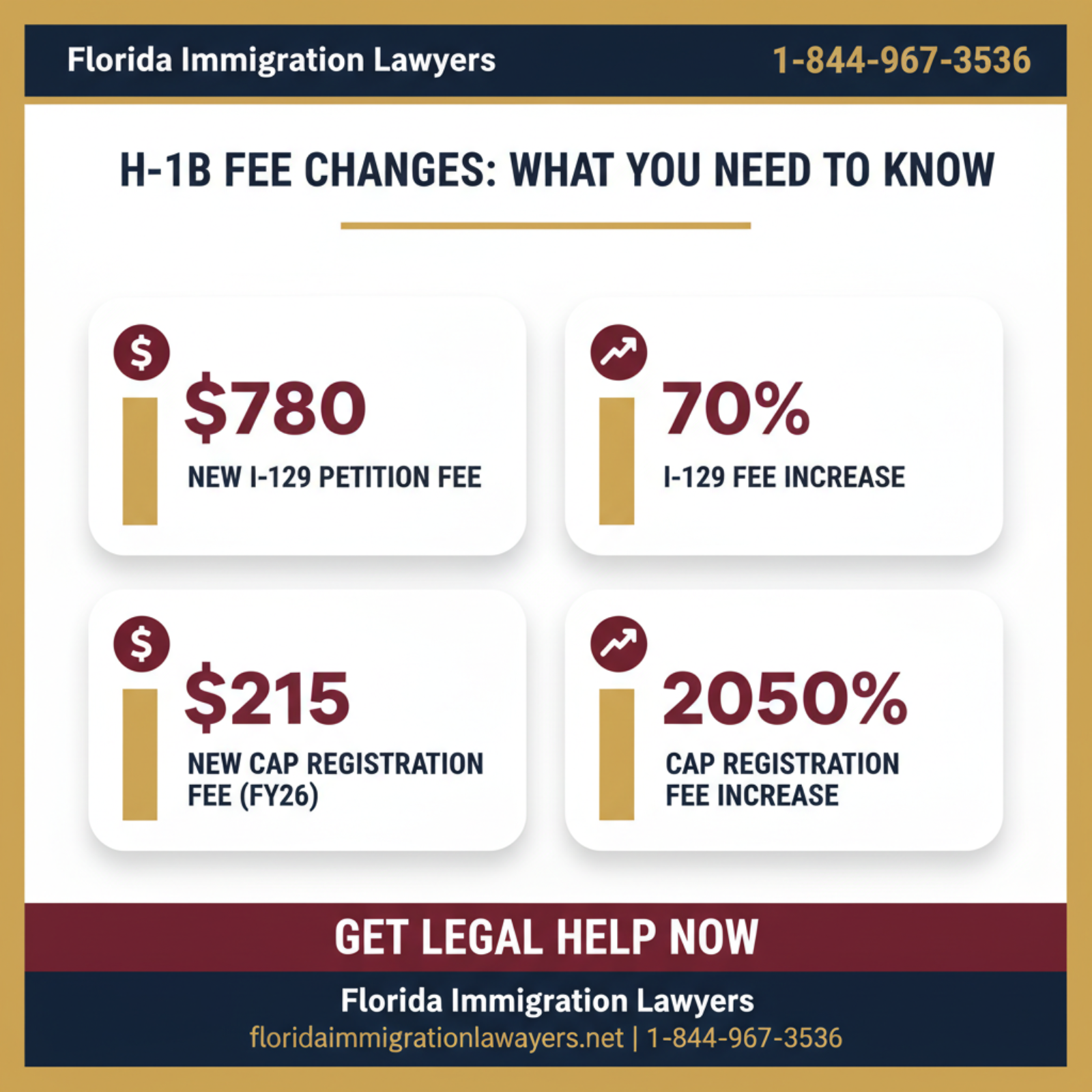
The h-1b visa fee increase in 2026 will introduce new financial considerations for employers. It is crucial to understand each component of the H1B visa cost to employer to budget effectively. Note that specific fee amounts are not provided here, as they are subject to change, but the categories will remain. Always refer to the latest USCIS fee schedule on uscis.gov.
Breakdown of H-1B Visa Fees
- USCIS Base Filing Fee for Form I-129: This is the primary fee for filing the H-1B petition itself. This fee is subject to the general USCIS fee increases.
- ACWIA (American Competitiveness and Workforce Improvement Act) Fee: This fee applies to employers with 25 or more full-time equivalent employees, and a reduced fee applies to those with fewer than 25 employees. This fee contributes to training U.S. workers.
- Fraud Prevention and Detection Fee: This fee applies to all initial H-1B petitions and petitions filed by employers for an H-1B worker already in the U.S. seeking new employment.
- Public Law 114-113 Fee (for employers with 50 or more employees, where 50% are H-1B or L-1): This specific fee applies to employers meeting certain criteria regarding their workforce composition. This fee is substantial and has been a significant cost for larger employers.
- H-1B Registration Fee: A smaller fee introduced with the electronic registration system. This fee may also see an increase.
- Premium Processing Fee (Optional): If an employer opts for expedited processing, a significant additional fee is required. This fee is also subject to periodic increases by USCIS.
Who Pays Which H-1B Visa Fees?
Generally, the employer is responsible for paying the ACWIA fee, the fraud prevention and detection fee, and the Public Law 114-113 fee. The base filing fee for Form I-129 is also typically paid by the employer. While the law does not explicitly prohibit an employer from requiring the beneficiary to pay the base filing fee or legal fees, it is generally considered best practice and often a requirement in practice for the employer to cover these costs.
It is important to note that the employer cannot require the H-1B beneficiary to pay the ACWIA fee or the fraud prevention and detection fee. Such practices could violate Department of Labor regulations. The H1B visa cost to employer is a significant investment in securing skilled talent.
Common Mistakes to Avoid in Your H-1B Application
Applying for an H-1B visa, especially with the new h-1b visa fee increase, involves numerous complexities. Even minor errors can lead to RFEs, delays, or even denials. Avoiding these common mistakes can significantly improve your chances of success.
-
Incorrect or Incomplete LCA: Failing to accurately complete the Labor Condition Application (LCA) or submitting it with errors can lead to delays or rejection by the Department of Labor. Without a certified LCA, USCIS will not accept the H-1B petition.
Consequence: Delays in filing, potential denial, and a need to restart the LCA process, costing valuable time and resources.
-
Missing the H-1B Cap Registration Deadline: For cap-subject petitions, missing the designated electronic registration window means you cannot file for that fiscal year. This is a strict deadline with no exceptions.
Consequence: You must wait until the next fiscal year's registration period, potentially delaying employment for a full year.
-
Insufficient Evidence of Specialty Occupation: Not providing enough evidence to demonstrate that the position qualifies as a "specialty occupation" (requiring a bachelor's degree or higher in a specific field). This is a common reason for RFEs.
Consequence: RFE, significant delays, or outright denial if the evidence is deemed insufficient.
-
Lack of Employer-Employee Relationship: Failing to clearly establish a valid employer-employee relationship, especially in third-party placement or consulting models. USCIS scrutinizes these arrangements closely.
Consequence: RFE or denial, as USCIS needs to confirm the employer has control over the H-1B worker's employment.
-
Inaccurate Wage Information or Prevailing Wage Issues: Not paying the H-1B worker the higher of the actual wage paid to others with similar experience and qualifications, or the prevailing wage for the occupation in the area of employment.
Consequence: DOL investigations, fines, and potential revocation of LCA certification, impacting the H-1B petition.
-
Incorrect Fee Payment: Submitting the wrong fee amount or using an outdated fee schedule. With the USCIS fee increase 2026, this mistake will become more prevalent.
Consequence: USCIS will reject the petition, requiring resubmission with the correct fees, leading to delays and potentially missing filing deadlines.
-
Poorly Prepared RFE Responses: Responding to an RFE without adequately addressing USCIS's concerns or failing to provide compelling additional evidence.
Consequence: Petition denial, requiring a new application or an appeal, both of which are time-consuming and costly.
When to Call a Florida Immigration Lawyer
The complexity of H-1B regulations, compounded by the upcoming H1B visa fees 2026 and the specific requirements for H1B visa Florida applicants, makes legal representation invaluable. While some employers might consider self-filing, the risks associated with errors far outweigh the cost of professional guidance.
Specific Scenarios Requiring Legal Help:
- Initial H-1B Petitions: Especially for cap-subject cases, an attorney ensures all documentation is perfect and deadlines are met.
- Responding to RFEs: A lawyer can craft a comprehensive and persuasive response, significantly increasing the chances of approval.
- Employer Changes or Amendments: If the H-1B worker changes employers or if there are significant changes to the job duties, an amendment is often required.
- H-1B Transfers: Seamlessly transferring an H-1B visa to a new employer requires careful planning.
- Complex Cases: Situations involving criminal history, previous immigration violations, or unique educational qualifications demand expert legal analysis.
- Compliance Concerns: Ensuring ongoing compliance with DOL and USCIS regulations, especially regarding wages and working conditions.
- Strategic Planning: For businesses in Pembroke Pines and across Florida, planning long-term immigration strategies for their workforce.
Our team at
Preguntas Frecuentes
Vasquez Law Firm
Equipo Legal
Por más de 15 años, Vasquez Law Firm ha estado sirviendo a clientes en Florida. Nos especializamos en inmigración, lesiones personales, defensa criminal, compensación laboral y derecho familiar.