Derived Citizenship in Florida: Your Child's Path...
Explore derived U.S. citizenship for children of U.S. citizens or lawful permanent residents in Florida. Learn eligibility, application steps, and secure your child's future. Contact Florida Immigration Lawyers for expert guidance.
Derived Citizenship in Florida: Your Child's Path Through Parents
For many families in Florida and across the United States, the concept of U.S. citizenship is deeply cherished. While most people understand birthright citizenship – being born on U.S. soil – fewer are familiar with the equally vital pathway of derived citizenship. This process allows children born outside the United States to automatically become U.S. citizens through their U.S. citizen parents or lawful permanent resident parents who later naturalize. Understanding derived citizenship is crucial for ensuring your child's legal status, access to opportunities, and a secure future.
Navigating the complexities of immigration law can be daunting, especially when it concerns the future of your children. This comprehensive guide will demystify derived citizenship, outlining the specific requirements, the application process, and common challenges. Whether your child was born abroad to a U.S. citizen parent or your family recently naturalized, securing their citizenship status is a critical step. Our goal is to provide clear, actionable information to help Florida families understand this important aspect of immigration law. For personalized assistance, consider reaching out to experienced immigration lawyers who can guide you through every step.
What is Derived Citizenship? Understanding the Foundation
Derived citizenship refers to the automatic acquisition of U.S. citizenship by a child through the naturalization of one or both parents. Unlike birthright citizenship, which is conferred at the moment of birth within U.S. territory, derived citizenship is a subsequent event. It's distinct from 'acquired citizenship,' which typically applies to children born abroad to U.S. citizen parents who meet certain residency requirements at the time of the child's birth. While both pathways lead to U.S. citizenship based on parentage, derived citizenship specifically hinges on the parent's naturalization process occurring while the child is still a minor and meets other specific criteria.
The legal framework for derived citizenship is primarily found in Section 320 of the Immigration and Nationality Act (INA). This section outlines the conditions under which a child, who is a lawful permanent resident (LPR), automatically becomes a U.S. citizen when their parent naturalizes. This automatic process is a cornerstone of U.S. immigration policy, reflecting a desire to keep families together and ensure that children of naturalized citizens share in the full rights and responsibilities of citizenship. It's a powerful mechanism that can simplify the lives of many families, removing the need for a separate naturalization application for the child. However, meeting all the stringent requirements is paramount, and any misstep can lead to delays or even denial. This is where expert legal counsel becomes invaluable, particularly for families in Florida dealing with diverse backgrounds and circumstances.
Key Requirements for Derived Citizenship
For a child to derive citizenship through a parent, several critical conditions must be met simultaneously. These conditions are strict and must all be satisfied before the child's 18th birthday. The specific requirements include:
- At least one parent is a U.S. citizen: This parent must be a U.S. citizen either by birth or through naturalization.
- The child is a lawful permanent resident (LPR): The child must have a Green Card and be residing in the U.S. as an LPR. This means they must have been lawfully admitted for permanent residence.
- The child is under the age of 18: The automatic acquisition of citizenship must occur before the child's 18th birthday.
- The child is residing in the U.S. in the legal and physical custody of the U.S. citizen parent: This means the child must live with the U.S. citizen parent and that parent must have legal authority over the child.
It's important to note that all these conditions must be met concurrently. If, for example, a parent naturalizes but the child has not yet obtained LPR status, or if the child turns 18 before all conditions are met, derived citizenship will not occur automatically under Section 320. Understanding these nuances is vital for families planning their immigration journey. For more detailed information, the U.S. Citizenship and Immigration Services (USCIS) website is an excellent resource.
The Child's Path: Automatic Citizenship Through Parents
The beauty of derived citizenship lies in its automatic nature. Once all the statutory requirements are met, the child becomes a U.S. citizen by operation of law, without needing to file a separate application for naturalization. This means there's no interview process or civics test for the child. However, while the citizenship is automatic, obtaining proof of that citizenship (such as a Certificate of Citizenship or a U.S. passport) does require an application. This distinction is crucial: the child *is* a citizen, but they need documentation to prove it to others.
For families in Florida, this path offers a streamlined approach to securing their children's future. It eliminates the lengthy and often stressful naturalization process for minors, allowing them to enjoy the full benefits of U.S. citizenship, including the right to vote, hold a U.S. passport, and protection from deportation. The key is meticulous planning and ensuring that all prerequisites are satisfied before the child's 18th birthday. Many families overlook the importance of the child's LPR status or the timing of the parent's naturalization, leading to missed opportunities. Consulting with an experienced attorney can help prevent such oversights and ensure a smooth transition to citizenship for your child.
Conditions for Children Born Abroad
For children born outside the United States, the path to derived citizenship often begins with their parents' immigration journey. If one or both parents were U.S. citizens at the time of the child's birth, the child might have acquired citizenship at birth, which is a different, though related, concept. However, if the child was born abroad to non-citizen parents, and then one or both parents naturalize after the child has obtained lawful permanent resident status and moved to the U.S., derived citizenship becomes the relevant pathway. The child must be residing in the U.S. with the naturalizing parent, under their legal and physical custody. This often involves the child entering the U.S. on an immigrant visa, obtaining their Green Card, and then waiting for the parent's naturalization to be finalized, all while remaining under 18 years of age. The specific circumstances of birth, parentage, and residency are all critical factors that must be carefully evaluated.
The Role of Lawful Permanent Resident Status
The child's status as a lawful permanent resident (LPR) is a non-negotiable requirement for derived citizenship under Section 320. This means the child must possess a valid Green Card. Many children enter the U.S. on various non-immigrant visas, such as student visas or tourist visas. While these visas allow temporary stay, they do not confer LPR status. For a child to derive citizenship, they must first go through the process of becoming a lawful permanent resident. This typically involves an immigrant petition filed by a U.S. citizen or LPR parent, followed by either consular processing abroad or adjustment of status within the U.S. Once the Green Card is issued, and the child is residing in the U.S. with the U.S. citizen parent who has legal and physical custody, the stage is set for derived citizenship upon the parent's naturalization. The timing of obtaining LPR status relative to the parent's naturalization and the child's 18th birthday is critical. Any delay in securing the Green Card can jeopardize the child's ability to derive citizenship automatically.
Navigating the Application Process for Proof of Citizenship
As mentioned, derived citizenship is automatic once all conditions are met. However, to prove this citizenship for practical purposes – such as obtaining a U.S. passport, enrolling in certain programs, or simply having official documentation – you will need to apply for a Certificate of Citizenship. This is done by filing Form N-600, Application for Certificate of Citizenship, with USCIS. While the child is already a citizen, the N-600 provides official recognition and documentation of that status. The process involves submitting the form, along with supporting evidence and applicable fees, to USCIS. The agency will then review the application and, if approved, schedule an interview (though often waived for children) before issuing the Certificate of Citizenship. This document serves as definitive proof of U.S. citizenship, similar to a birth certificate for those born in the U.S.
It's important to approach the N-600 application with the same diligence as any other immigration process. Errors or omissions in the application or insufficient documentation can lead to requests for evidence (RFEs), delays, or even denial. For families in Florida, ensuring that all records are accurate and complete is paramount. This includes birth certificates, marriage certificates, divorce decrees, naturalization certificates, and proof of residency and custody. A thorough review by an attorney can help identify any potential issues before submission, significantly increasing the chances of a smooth and successful outcome. Remember, the goal is not to *become* a citizen through N-600, but to *prove* already existing citizenship.
Essential Documentation
When filing Form N-600, a comprehensive set of documents is required to demonstrate that all conditions for derived citizenship have been met. These typically include:
- The child's birth certificate (with certified English translation if applicable).
- The U.S. citizen parent's birth certificate or naturalization certificate.
- Marriage certificate of the parents (if applicable).
- Divorce decrees or death certificates of prior spouses (if applicable).
- Proof of the child's lawful permanent resident status (e.g., Green Card, I-551 stamp in passport).
- Evidence of the child's residence in the U.S. in the legal and physical custody of the U.S. citizen parent (e.g., school records, medical records, utility bills).
- Photocopies of all relevant passports.
- Two passport-style photos of the child.
Each document plays a crucial role in establishing eligibility. Missing or incorrectly submitted documents are common reasons for delays. It is always advisable to submit certified copies rather than originals unless specifically requested by USCIS. Organizing these documents meticulously before submission can save significant time and stress during the application process. For specific guidance on what constitutes sufficient proof of custody and residency, consulting with an attorney is highly recommended.
Form N-600, Application for Certificate of Citizenship
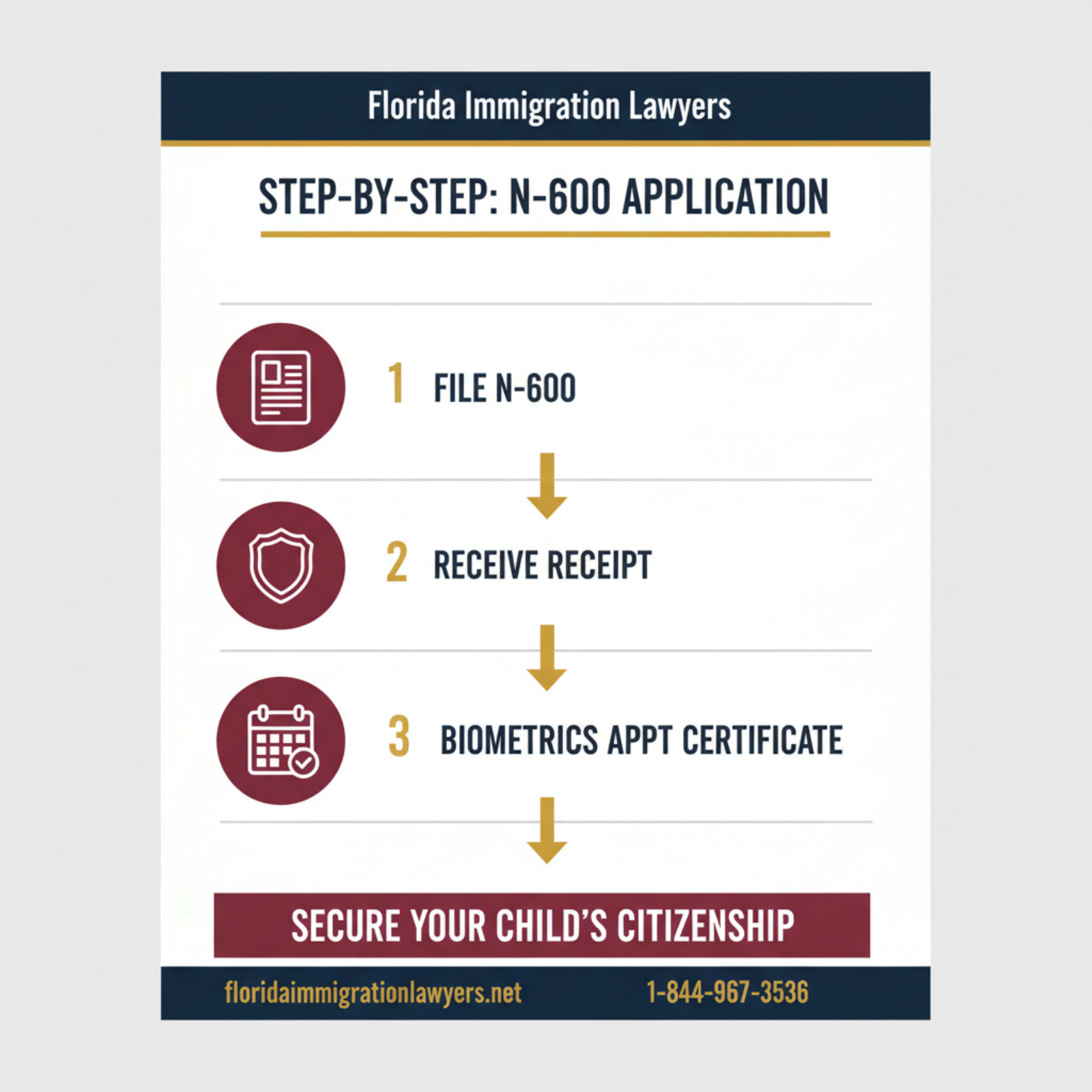
Form N-600 is the official application used to obtain a Certificate of Citizenship. The form itself is detailed and requires accurate information about the child, the U.S. citizen parent(s), and the circumstances under which citizenship was derived. Key sections include personal information, details about the parents, immigration history, and a declaration that all requirements for derived citizenship have been met. The filing fee for Form N-600 can be substantial, though fee waivers may be available for eligible applicants. After submission, USCIS will send a receipt notice, followed by biometric appointments (if necessary), and potentially an interview notice. The processing times can vary significantly, so patience is key. While waiting, it's possible to check the status of your application online through the USCIS website. The Certificate of Citizenship is a highly valued document, serving as indisputable proof of U.S. citizenship for life. This document is essential for future interactions with government agencies, including obtaining a U.S. passport from the Department of State.
Common Challenges and Pitfalls in Derived Citizenship Cases
While derived citizenship offers a straightforward path to U.S. citizenship for many children, the process is not without its complexities and potential pitfalls. Families often encounter challenges related to documentation, legal custody, and the precise timing of events. One of the most common issues arises when the child turns 18 before all conditions for derived citizenship are met. If a parent naturalizes even one day after the child's 18th birthday, the child will not automatically derive citizenship under Section 320. In such cases, the child would typically need to pursue their own naturalization application (Form N-400), which involves different eligibility criteria, including residency requirements and passing a civics and English test. This highlights the critical importance of proactive planning and understanding the strict age limits.
Another frequent challenge involves proving legal and physical custody. In situations where parents are divorced or separated, determining which parent has legal and physical custody can be complicated. USCIS requires clear evidence that the U.S. citizen parent has sole or joint legal custody and that the child resides with them. Court orders, custody agreements, and school records are often necessary to establish this. Furthermore, issues such as a child's prior immigration violations or criminal history, even if minor, can complicate the LPR status or raise questions during the N-600 review, potentially leading to additional scrutiny or even denial. It is crucial to disclose all relevant information and address any potential issues transparently. Seeking advice from a Florida immigration attorney early in the process can help identify and mitigate these challenges, ensuring that your child's path to citizenship is as smooth as possible. Understanding the intricacies of family law in conjunction with immigration law is often key to resolving these complex situations.
Complex Family Situations
Family structures today are diverse, and derived citizenship law must account for various scenarios. Issues such as adoption, children born out of wedlock, and stepchildren can add layers of complexity. For adopted children, specific legal requirements must be met, including the finalization of the adoption before the child turns 16 (in most cases) and the child residing with the adoptive U.S. citizen parent. Children born out of wedlock may have different requirements depending on whether the U.S. citizen parent is the mother or the father, and whether paternity has been legally established. Stepchildren generally do not derive citizenship automatically through a stepparent unless the stepparent legally adopts them. Each of these situations has unique legal nuances that require careful consideration. Misinterpreting the law in these complex family scenarios can lead to significant delays or even a denial of the Certificate of Citizenship. This is where the expertise of an experienced attorney becomes indispensable, as they can help navigate the specific legal requirements applicable to your family's unique circumstances.
Avoiding Delays and Denials
To avoid unnecessary delays or outright denials of an N-600 application, meticulous preparation is essential. The most common reasons for delays include incomplete applications, missing supporting documentation, or discrepancies in information provided. Ensuring that every question on Form N-600 is answered accurately and completely, and that all required documents are submitted in the correct format, can significantly streamline the process. Furthermore, being prepared for potential requests for evidence (RFEs) from USCIS is crucial. Responding promptly and thoroughly to an RFE can prevent further delays. In cases where there are complex legal issues, such as prior immigration violations or questions about custody, it is highly advisable to seek legal counsel. An attorney can help prepare a strong application, anticipate potential issues, and represent your interests effectively before USCIS. Proactive engagement with legal experts can save time, reduce stress, and ultimately lead to a successful outcome for your child's citizenship application. The U.S. Department of Justice also provides resources related to immigration courts and legal assistance, which can be found at justice.gov.
The Benefits of U.S. Citizenship for Your Child
The acquisition of U.S. citizenship for your child, whether through birthright, acquisition, or derivation, opens up a world of opportunities and provides unparalleled security. A U.S. citizen child enjoys fundamental rights and privileges that are not available to non-citizens, even lawful permanent residents. These benefits extend across various aspects of life, from education and employment to travel and civic engagement. Educationally, U.S. citizens are eligible for federal student aid, scholarships, and in-state tuition at public universities, which can significantly reduce the financial burden of higher education. In terms of employment, citizens have unrestricted access to all jobs, including federal employment and positions requiring security clearances, without the need for work authorization or sponsorship.
Beyond these practical advantages, U.S. citizenship provides a profound sense of belonging and stability. Your child will have the right to vote, participate in the democratic process, and eventually run for public office. They will be able to travel internationally with a U.S. passport, offering greater ease of entry and protection from U.S. embassies and consulates abroad. Perhaps most importantly, U.S. citizens are protected from deportation, offering a permanent and secure home in the United States. This protection is particularly significant for families who may have experienced challenges with immigration status in the past, or who are concerned about the future. For families who have sought asylum or faced deportation defense, securing derived citizenship for their children represents the culmination of a long and often arduous journey, providing peace of mind and a foundation for a prosperous future. The benefits are lifelong and contribute significantly to a child's overall well-being and success.
Conclusion
Derived citizenship offers a vital and often overlooked pathway for children of U.S. citizens or naturalized lawful permanent residents to automatically become U.S. citizens. For families in Florida, understanding the precise requirements – including the child's LPR status, age, and residency with the U.S. citizen parent – is paramount. While the citizenship itself is automatic once these conditions are met, obtaining official proof through Form N-600 is a necessary step to fully realize the benefits of U.S. citizenship.
Navigating the intricacies of immigration law can be complex, and even minor errors can lead to significant delays or complications. Whether you are seeking to understand your child's eligibility, gather the necessary documentation, or prepare for the N-600 application, expert legal guidance can make all the difference. Securing your child's U.S. citizenship is an investment in their future, providing them with unparalleled opportunities and lifelong security. If you have questions or need assistance with derived citizenship or any other immigration matter, do not hesitate to contact Florida Immigration Lawyers for a free consultation. Our team is dedicated to helping families achieve their immigration goals and secure a brighter future in the United States.
No Navegue Este Proceso Solo
Nuestros abogados de inmigración con experiencia están listos para luchar por usted. Obtenga una consulta gratuita y confidencial hoy.
We Speak English
Preguntas Frecuentes
Florida Immigration Lawyers
Abogado de Inmigración | Fundador, Vasquez Law Firm
Veterano de la Fuerza Aérea de EE.UU. y abogado de inmigración con miles de casos resueltos. J.D., NCCU School of Law. Miembro de AILA. Admitido en los Circuitos 4.°, 5.° y 11.°
Disponible 24/7 - Consultas Gratis
Servicios legales relacionados
Nuestros abogados de inmigración en Florida pueden ayudarle con protección de asilo, consulta gratis de inmigración y áreas de práctica de inmigración. Llame hoy al 1-844-967-3536 para una consulta gratuita.
Enlaces Relacionados
Temas Relacionados
Consulta Legal Gratuita
Discuta su caso con nuestros abogados experimentados. Estamos disponibles 24/7.
Artículos Relacionados
Entrevista Stokes: Navegando el Fraude Matrimonial en Florida
Una entrevista Stokes es una entrevista especializada y separada realizada por USCIS cuando existen sospechas de fraude matrimonial en una solicitud de tarjeta de residencia. Este riguroso proceso implica el interrogatorio individual de los cónyuges, centrándose en las inconsistencias de sus testimonios para determinar la autenticidad de su vínculo matrimonial. Para las parejas en Florida, navegar esta entrevista de alto riesgo requiere una preparación meticulosa, una documentación exhaustiva y, a menudo, la orientación estratégica de un abogado de inmigración experimentado. Comprender el proceso, prepararse para preguntas detalladas y presentar un caso sólido son cruciales para superar las acusaciones de fraude matrimonial y asegurar su futuro migratorio. Florida Immigration Lawyers está listo para ayudarle.
Abogado de Inmigración Gainesville: Ayuda Legal Norte Florida
Para aquellos en Gainesville, el Condado de Alachua y en todo el Norte de Florida, navegar por la ley de inmigración de EE. UU. requiere orientación experta. Un abogado de inmigración experimentado puede simplificar procesos complejos, desde peticiones familiares y visas de empleo hasta reclamos críticos de asilo y defensa contra la deportación. Esta guía completa describe los servicios esenciales proporcionados por un abogado de inmigración, detalla la documentación necesaria, aclara los tiempos de procesamiento y analiza los costos asociados. También destacamos los errores comunes a evitar y los escenarios cruciales donde el asesoramiento legal es indispensable. Florida Immigration Lawyers atiende a todo Florida, incluyendo Gainesville y St. Petersburg, brindando apoyo legal dedicado para ayudarle a alcanzar sus metas migratorias. Contáctenos para una consulta gratuita para discutir sus necesidades específicas.
Naturalización Militar Acelerada en Bases de Florida
Descubre el proceso de naturalización militar acelerada para miembros de servicio en bases de Florida como MacDill. Aprende sobre elegibilidad, pasos y errores comunes. Contacta a Florida Immigration Lawyers para una consulta gratuita.