I-601 Waiver Florida Guide: Overcoming Inadmissibility in 2026
Facing inadmissibility in Florida can be a significant hurdle to your immigration goals. The I-601 waiver offers a potential solution, allowing eligible individuals to overcome certain grounds of inadmissibility by demonstrating extreme hardship to a qualifying U.S. citizen or lawful permanent resident relative. This comprehensive guide from Florida Immigration Lawyers provides crucial information on eligibility, the application process, required documentation, and what to expect regarding processing times and costs in 2026. Learn to navigate the complexities, avoid common mistakes, and understand when expert legal assistance is essential for a successful I-601 waiver application in Florida. Contact us for a free consultation.
An I-601 waiver, officially the Application for Waiver of Grounds of Inadmissibility, allows certain individuals who are otherwise barred from entering or remaining in the U.S. to seek forgiveness for specific immigration violations or issues. It is crucial for those in Florida facing inadmissibility due to past actions, enabling them to pursue a green card or other immigration benefits. This process often requires demonstrating extreme hardship to a qualifying U.S. citizen or lawful permanent resident relative.
- The I-601 waiver addresses specific grounds of inadmissibility.
- Applicants must prove extreme hardship to a qualifying relative.
- Thorough documentation is essential for a successful application.
- Processing times can vary significantly based on individual circumstances.
- Legal guidance is highly recommended to navigate its complexities.
Are you or a loved one in Florida facing the daunting challenge of inadmissibility to the United States? Perhaps a past immigration violation, a criminal record, or a period of unlawful presence is preventing you from achieving your American dream. The path to legal status can seem blocked, leading to stress and uncertainty for families across Naples and throughout Florida.
Many individuals find themselves in this difficult situation, unaware that a solution might exist. The I-601 waiver, also known as the Application for Waiver of Grounds of Inadmissibility, offers a critical pathway for eligible individuals to overcome certain barriers. This comprehensive guide from Florida Immigration Lawyers will walk you through the intricacies of the I-601 waiver process in Florida for 2026, helping you understand eligibility, requirements, and what to expect.
We understand the profound impact immigration challenges have on your life. Our goal is to provide clear, actionable information to help you navigate this complex legal landscape. If you are ready to explore your options and fight for your future, do not hesitate. Call Florida Immigration Lawyers at 1-844-967-3536 for a free consultation and let our experienced team assist you.
Understanding the I-601 Waiver: What is it and Who Needs It?
The I-601 waiver is a formal request to U.S. Citizenship and Immigration Services (USCIS) to forgive certain grounds of inadmissibility. Inadmissibility means that a person is legally barred from entering or remaining in the United States. These grounds are outlined in the Immigration and Nationality Act (INA) Section 212(a).
Common reasons for inadmissibility include past criminal convictions, previous immigration fraud, certain health-related issues, or a history of unlawful presence in the U.S. For Florida residents, especially those in diverse communities like Naples, understanding these grounds is the first step toward seeking a solution.
To be eligible for an I-601 waiver, you must generally demonstrate that your denial of admission or adjustment of status would result in extreme hardship to a qualifying U.S. citizen or lawful permanent resident spouse, parent, or in some cases, child. This is a high legal standard that requires compelling evidence.
The concept of extreme hardship is central to the I-601 application. It involves showing that your qualifying relative would suffer more than the ordinary difficulties typically associated with family separation or relocation. This could include significant financial, medical, psychological, or educational hardship.
It is important to note that not all grounds of inadmissibility can be waived with an I-601. For example, certain serious criminal offenses or national security grounds are generally not waivable. Consulting with an immigration attorney is crucial to determine if your specific situation qualifies for an immigration waiver.
The I-601 Waiver Application Process: A Step-by-Step Guide for Florida Residents
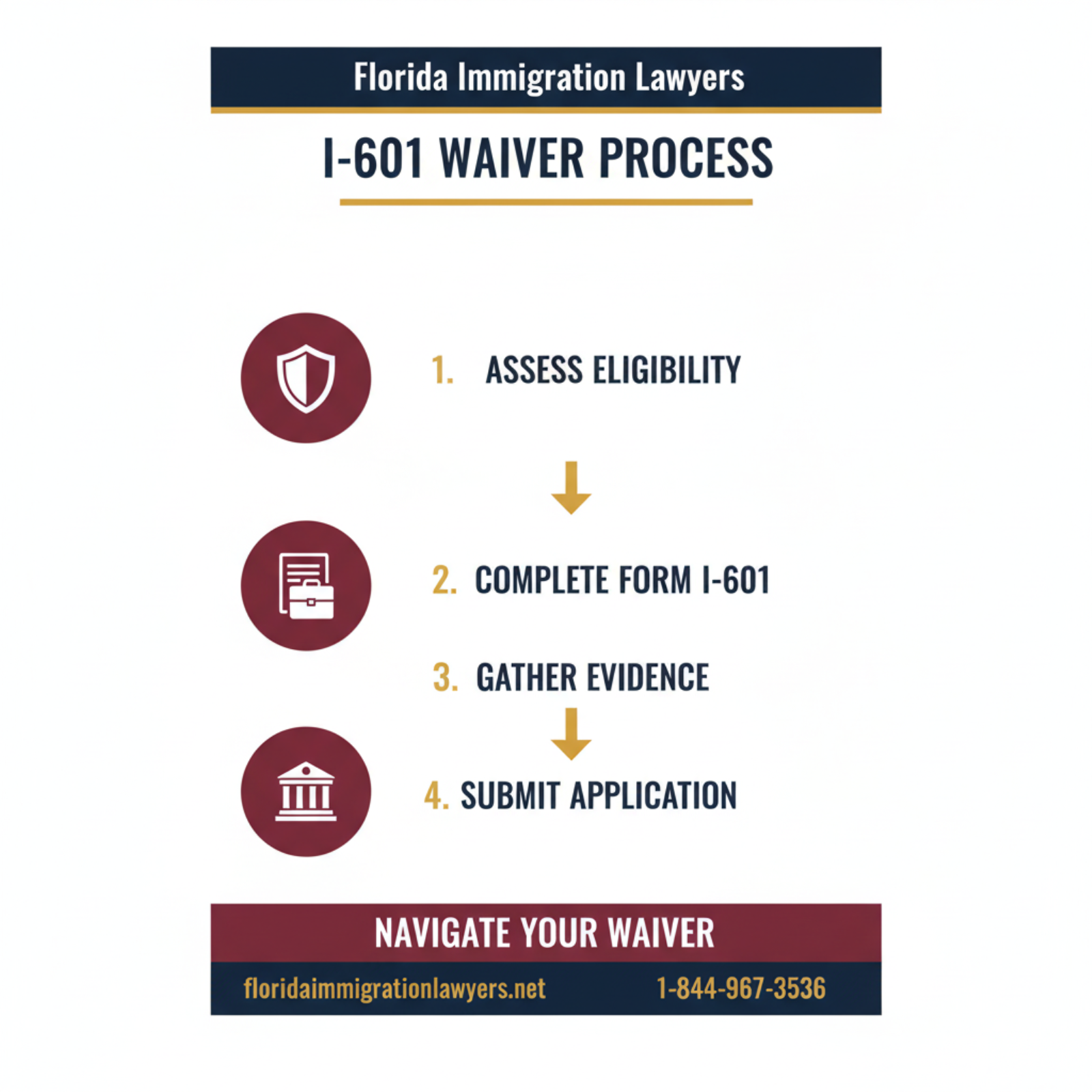
The process for applying for an I-601 waiver can be intricate and demanding. Here is a general step-by-step guide to help you understand what is involved, particularly for those residing in Florida:
-
Determine Eligibility and Ground of Inadmissibility: The first step is to identify the specific ground of inadmissibility that applies to your case. This requires a thorough review of your immigration history, any past criminal records, and periods of unlawful presence. An attorney can help you understand the precise legal basis for your inadmissibility under INA 212(a).
-
Identify a Qualifying Relative: You must have a qualifying U.S. citizen or lawful permanent resident spouse, parent, or in some cases, child, who would suffer extreme hardship if your waiver is not granted. The relationship must be legally established and verifiable through documentation.
-
Gather Evidence of Extreme Hardship: This is arguably the most critical part of your I-601 waiver application. You will need to compile extensive documentation demonstrating extreme hardship to your qualifying relative. This evidence can include medical records, psychological evaluations, financial statements, employment letters, educational records, and country condition reports if the relative would need to relocate abroad.
-
Complete Form I-601, Application for Waiver of Grounds of Inadmissibility: Fill out the form accurately and completely. Any errors or omissions can lead to delays or even denial. Ensure all sections are addressed and that your responses are consistent with your supporting documentation.
-
Prepare a Detailed Legal Brief: While not strictly required by USCIS, a comprehensive legal brief from an attorney is highly recommended. This brief will articulate the legal arguments for why your waiver should be approved, specifically addressing the extreme hardship standard and presenting your evidence in a persuasive manner.
-
Submit the Application Package: Mail the completed Form I-601, all supporting documents, the legal brief, and the required filing fee to the appropriate USCIS Lockbox facility. The filing location often depends on where your underlying immigration application (e.g., Form I-485 or immigrant visa petition) is processed.
-
Attend Biometrics Appointment: After filing, USCIS will typically send you a notice to attend a biometrics appointment at an Application Support Center (ASC) in Florida, such as those serving the Naples area. Here, your fingerprints, photograph, and signature will be collected for background checks.
-
Respond to Requests for Evidence (RFEs): USCIS may issue an RFE if they need additional information or clarification on your application. Responding promptly and thoroughly to an RFE is crucial for the success of your immigration waiver.
-
Interview (if applicable): In some cases, USCIS may schedule an interview for the I-601 waiver. This is an opportunity to explain your case further and answer any questions from an immigration officer. Having legal representation at an interview can be highly beneficial.
-
Receive a Decision: USCIS will issue a written decision approving or denying your I-601 waiver. If approved, you can proceed with your underlying immigration application. If denied, you may have options to appeal or refile, depending on the reasons for denial.
Essential Documents for Your I-601 Waiver Application
A strong I-601 waiver application hinges on robust and persuasive documentation. Providing comprehensive evidence of extreme hardship is paramount. Here is a checklist of documents typically required:
- Proof of Qualifying Relationship: Marriage certificates, birth certificates, adoption decrees proving your relationship to the U.S. citizen or LPR spouse, parent, or child.
- Declarations and Affidavits: Sworn statements from the applicant and the qualifying relative detailing the hardship they would face. Include statements from other family members, friends, and community leaders.
- Medical Documentation: Records, diagnoses, and prognoses from doctors, therapists, or psychologists for any medical conditions affecting the qualifying relative. Include letters explaining how your absence or relocation would exacerbate these conditions.
- Psychological Evaluations: Reports from licensed psychologists or psychiatrists detailing the emotional and psychological impact of your separation or relocation on the qualifying relative. This is often crucial for demonstrating extreme hardship.
- Financial Documentation: Evidence of financial dependence, income, assets, debts, property ownership, and any financial burdens the qualifying relative would face without you. This includes tax returns, bank statements, mortgage statements, and utility bills.
- Employment Records: Letters from employers, pay stubs, and any documentation showing the qualifying relative's employment status and how your absence would affect their ability to work or support the family.
- Educational Records: If the qualifying relative is a student, provide transcripts, enrollment verification, and letters from school officials explaining how relocation or separation would disrupt their education.
- Country Condition Reports: If the qualifying relative would have to relocate to your home country, provide reports on the economic, political, social, and medical conditions there that would cause them hardship.
- Proof of Ties to the U.S.: Documentation showing the qualifying relative's strong connections to the U.S., such as property deeds, community involvement, and long-term residency.
- Character References: Letters from community members, employers, and religious leaders attesting to your good moral character and positive contributions to the community, especially in areas like Naples.
- Police Clearances and Court Documents: If your inadmissibility is related to criminal history, provide certified copies of all arrest records, court dispositions, and evidence of rehabilitation.
- Immigration Records: Copies of all previous immigration applications, decisions, and correspondence from USCIS or other immigration authorities.
I-601 Waiver Processing Time and Expectations in 2026
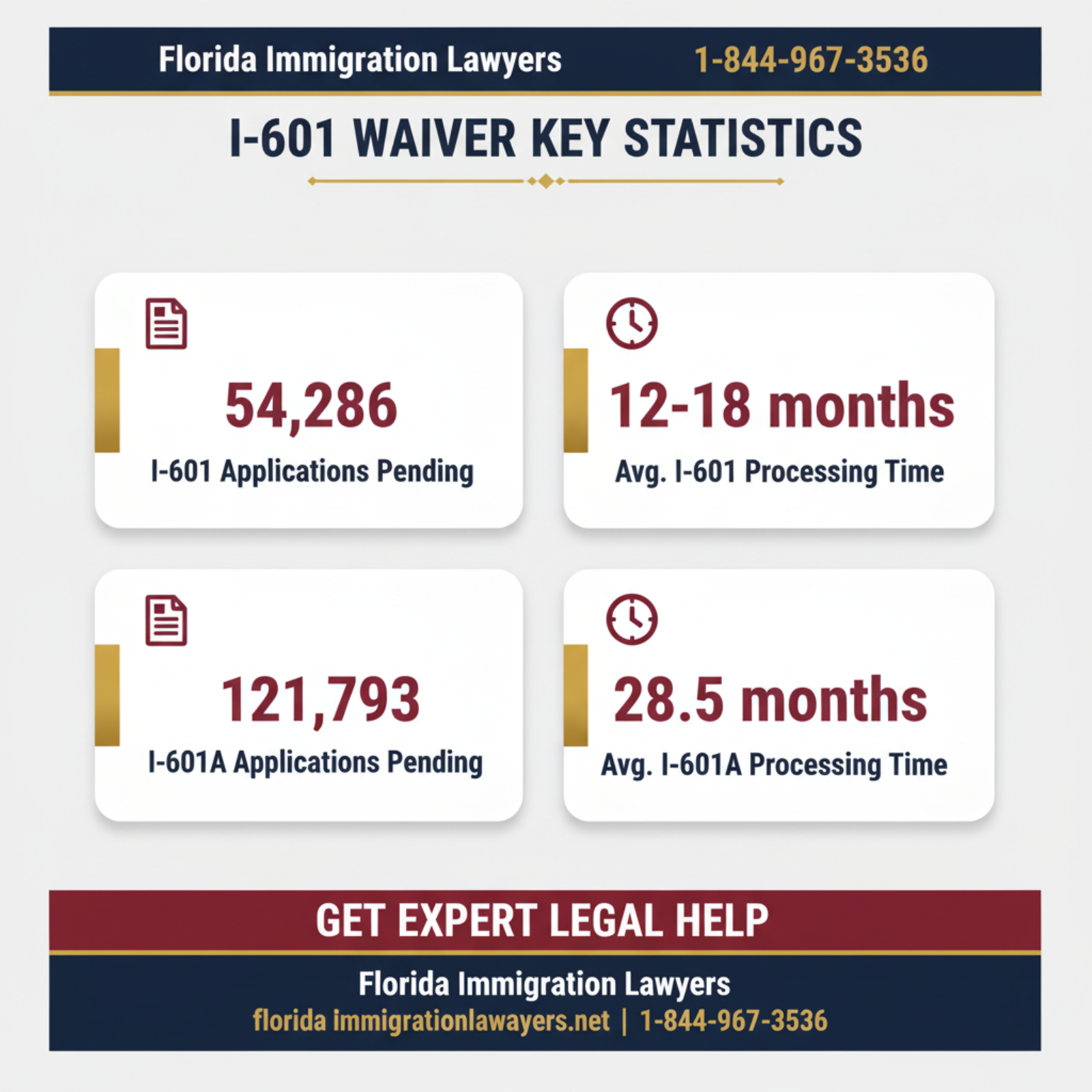
One of the most common questions applicants have is, "What is the processing time for the I-601 waiver in 2026?" Unfortunately, there is no single answer, as processing times for the I-601 waiver can vary significantly. Factors such as the USCIS service center handling your case, the complexity of your application, the volume of applications, and your responsiveness to RFEs all play a role.
Generally, applicants should prepare for a waiting period that can range from several months to over a year. USCIS publishes estimated processing times on its website, which can give you a general idea. We recommend checking the USCIS processing times page regularly for the most up-to-date information relevant to your specific service center.
To expedite the process as much as possible, ensure your application is complete, accurate, and includes all necessary supporting documentation from the outset. A well-prepared and legally sound submission can help prevent delays caused by RFEs or denials. Keep copies of everything you submit.
While we cannot guarantee specific timelines, our experience at Florida Immigration Lawyers suggests that thorough preparation is the best strategy. We monitor USCIS trends and can provide realistic expectations based on current conditions. "How long does the I-601 waiver take?" is a question best answered with a comprehensive case review.
Understanding I-601 Waiver Cost Factors and Fees
The cost associated with an I-601 waiver application involves several components. It is essential to budget for these expenses to avoid unexpected financial burdens.
The primary cost is the USCIS filing fee for Form I-601. This fee is subject to change, so it is crucial to check the official USCIS website for current fees before filing. This fee is non-refundable, regardless of the outcome of your application.
Beyond the government filing fee, you should also consider other potential costs. These may include fees for obtaining supporting documents such as medical evaluations, psychological assessments, criminal background checks, and certified translations of foreign-language documents. These costs can accumulate, especially when detailed expert reports are needed to prove extreme hardship.
Perhaps the most significant investment, and often the most valuable, is legal representation. While you can file an I-601 waiver on your own, the complexity of demonstrating extreme hardship and navigating immigration law makes professional legal assistance highly advisable. Attorney fees will vary based on the complexity of your case and the services provided, but they represent an investment in increasing your chances of success.
Do not navigate this process alone. The complexities of proving extreme hardship and understanding all legal requirements can be overwhelming. Contact Florida Immigration Lawyers today to discuss your case and understand the potential costs involved. We are here to help.
Common Mistakes to Avoid When Filing Your I-601 Waiver
Applying for an I-601 waiver is a complex legal undertaking where even small errors can lead to significant delays or denials. Avoid these common pitfalls:
-
Failing to Prove Extreme Hardship: This is the most frequent reason for denial. Applicants often submit insufficient evidence or fail to articulate how the hardship is "extreme" and beyond normal separation. Consequences: Denial, requiring a new application or appeal, and prolonged separation.
-
Not Identifying a Qualifying Relative: The I-601 waiver generally requires a U.S. citizen or LPR spouse, parent, or in some cases, child. Trying to apply without one, or with an unqualified relative, will lead to denial. Consequences: Automatic denial of the waiver.
-
Submitting Incomplete or Inaccurate Documentation: Missing documents, outdated forms, or inconsistent information can raise red flags for USCIS. Consequences: Requests for Evidence (RFEs), significant delays, or outright denial if not properly addressed.
-
Misrepresenting Facts or Omitting Information: Any false statements or intentional omissions on your application can be considered immigration fraud. Consequences: Permanent bars to immigration benefits, criminal charges, and severe penalties.
-
Missing Deadlines: Failing to respond to RFEs or other USCIS requests by the specified deadline can result in the abandonment or denial of your application. Consequences: Loss of filing fees and the need to restart the entire process.
-
Not Understanding the Specific Grounds of Inadmissibility: Applying for an I-601 when another waiver (like an I-601A or I-212) is more appropriate, or when the grounds are non-waivable, is a waste of time and money. Consequences: Inevitable denial and wasted resources.
-
Using Boilerplate Letters or Generic Evidence: USCIS officers are adept at recognizing generic submissions. Your evidence must be specific to your case and clearly demonstrate the unique hardships your qualifying relative faces. Consequences: Weakens your case and increases the likelihood of denial.
-
Ignoring Country Conditions: If your qualifying relative would have to relocate, failing to provide specific, credible evidence of conditions in your home country that would cause them extreme hardship. Consequences: Fails to meet the extreme hardship threshold.
-
Poor Organization of Application Package: A disorganized application can frustrate USCIS officers and make it difficult for them to find critical evidence. Consequences: Delays, RFEs, or a less favorable review.
-
Not Seeking Legal Counsel: Attempting to navigate the complex I-601 waiver process without an experienced immigration attorney. Consequences: Higher risk of errors, missed opportunities, and ultimately, denial.
When to Call a Lawyer: Expert Guidance for Your I-601 Waiver in Florida
While this guide provides general information, the I-601 waiver process is highly individualized and fraught with legal complexities. Knowing when to seek professional legal help is crucial. You should contact Florida Immigration Lawyers if any of the following scenarios apply to you:
- You have a complicated immigration history: If you have multiple periods of unlawful presence, previous deportations, or a complex criminal record, your case will require expert analysis.
- You are unsure about your grounds of inadmissibility: It can be difficult to pinpoint the exact legal reason for your inadmissibility. An attorney can accurately identify the issue and determine the correct waiver.
- You struggle to gather compelling evidence of extreme hardship: Proving extreme hardship is subjective and requires a sophisticated legal argument supported by extensive documentation. Our attorneys specialize in building strong hardship cases.
- You received a Request for Evidence (RFE) or Notice of Intent to Deny (NOID): These notices indicate that USCIS has concerns about your application. An attorney can help you respond effectively and strategically.
- You need to attend an interview: Preparing for and attending an interview with an immigration officer can be intimidating. Legal representation can provide invaluable support and advocacy.
- You are confused by USCIS procedures or legal terminology: Immigration law is constantly evolving. An attorney stays current with policies and regulations, ensuring your application meets all requirements.
Florida Immigration Lawyers has extensive experience assisting individuals across Florida, including Naples, Fort Myers, and Miami, with their immigration waiver applications. We understand the unique challenges faced by immigrants in our state, especially with recent enforcement actions like Operation Tidal Wave. Our dedicated team can assess your eligibility, help you gather the necessary evidence, prepare a persuasive legal brief, and represent you throughout the entire process.
Frequently Asked Questions About the I-601 Waiver
What is the processing time for the I-601 waiver in 2026?
Processing times for the I-601 waiver vary significantly. While USCIS provides estimated ranges on their website, they can typically take anywhere from several months to over a year. Factors like the specific service center, case complexity, and completeness of your application all influence the timeline. Always check the official USCIS processing times page for the most current estimates.
How to get an I-601 waiver approved?
To increase your chances of I-601 waiver approval, you must clearly demonstrate extreme hardship to a qualifying U.S. citizen or lawful permanent resident spouse, parent, or child. This requires a meticulously prepared application with comprehensive supporting evidence, including detailed affidavits, medical and psychological evaluations, financial records, and country condition reports. A strong legal argument presented by an experienced attorney is often key.
How long does the I-601 waiver take?
The duration of the I-601 waiver process is not fixed. It depends on various factors, including the workload at the USCIS processing center, the quality and completeness of your submission, and whether USCIS issues Requests for Evidence. While some cases are processed within 6-9 months, others can extend beyond 18 months. Patience and proactive follow-up are essential.
What percentage of I-601 waivers are approved?
USCIS does not regularly publish specific approval rates for the I-601 waiver alone. However, approval rates generally depend heavily on the strength of the extreme hardship claim and the quality of the supporting documentation. Cases prepared with thorough evidence and strong legal arguments tend to have a higher likelihood of success. Without precise data, it is difficult to give an exact percentage, but a well-prepared case significantly improves your odds.
About Florida Immigration Lawyers
Florida Immigration Lawyers is a leading law firm dedicated to providing exceptional immigration legal services across the entire state of Florida. With offices serving communities from Naples to Jacksonville, our experienced attorneys are committed to helping individuals and families navigate the complexities of U.S. immigration law.
We offer a wide range of services, including family-based immigration, business immigration, deportation defense, asylum applications, and citizenship processes. Our firm understands the unique challenges faced by immigrants in Florida and is dedicated to achieving the best possible outcomes for our clients.
Why choose Florida Immigration Lawyers? We pride ourselves on our client-focused approach, deep legal knowledge, and unwavering commitment. We offer personalized attention, clear communication, and strategic advocacy tailored to your specific needs. Your immigration journey is our priority.
Contact us today for a free consultation. Our team is available 24/7 to answer your questions and provide the guidance you need. Call us at 1-844-967-3536 or visit our website at https://www.floridaimmigrationlawyers.net to learn more.
Sources and References
- U.S. Citizenship and Immigration Services (USCIS)
- USCIS - Filing Fees
- USCIS - Check Case Processing Times
- U.S. Department of State - Waivers of Ineligibility
- 8 U.S.C. § 1182 (Immigration and Nationality Act Section 212 - General Classes of Aliens Ineligible to Receive Visas and Inadmissible to United States)
- 8 CFR § 212.7 (Waivers of certain grounds of inadmissibility)
- USCIS Policy Manual, Volume 9, Part A, Chapter 2 (Extreme Hardship)
This article provides general legal information and is not intended as legal advice. Every case is unique, and outcomes depend on specific facts and circumstances. Contact an attorney for advice about your particular situation.
Do not let inadmissibility prevent you from building a life in Florida. Our dedicated immigration attorneys are ready to fight for your rights and guide you through every step of the I-601 waiver process. We offer compassionate and effective legal representation for clients throughout Florida, including Naples, Miami, Orlando, and Tampa. Call Florida Immigration Lawyers today at 1-844-967-3536 for your free consultation. Se Habla Español - Estamos aquí para ayudarle.
Frequently Asked Questions
Florida Immigration Lawyers
Legal Team
Our experienced attorneys at Florida Immigration Lawyers have been serving clients across Florida for over 20 years. We specialize in immigration, personal injury, criminal defense, workers compensation, and family law.