H-1B Visa Fee Increase in Florida: What You Need to Know in 2026
Florida's H-1B visa landscape is changing dramatically in 2026 due to a significant fee increase. This comprehensive guide details the new costs for employers and skilled workers in St. Petersburg and across the state. Learn about the updated application process, essential documents, timelines, and how the H-1B visa fee increase impacts your planning. We cover common mistakes to avoid and highlight when to seek expert legal assistance from Florida Immigration Lawyers. Understanding these changes is vital for successful H-1B petitions in the coming year, ensuring compliance and efficient processing.
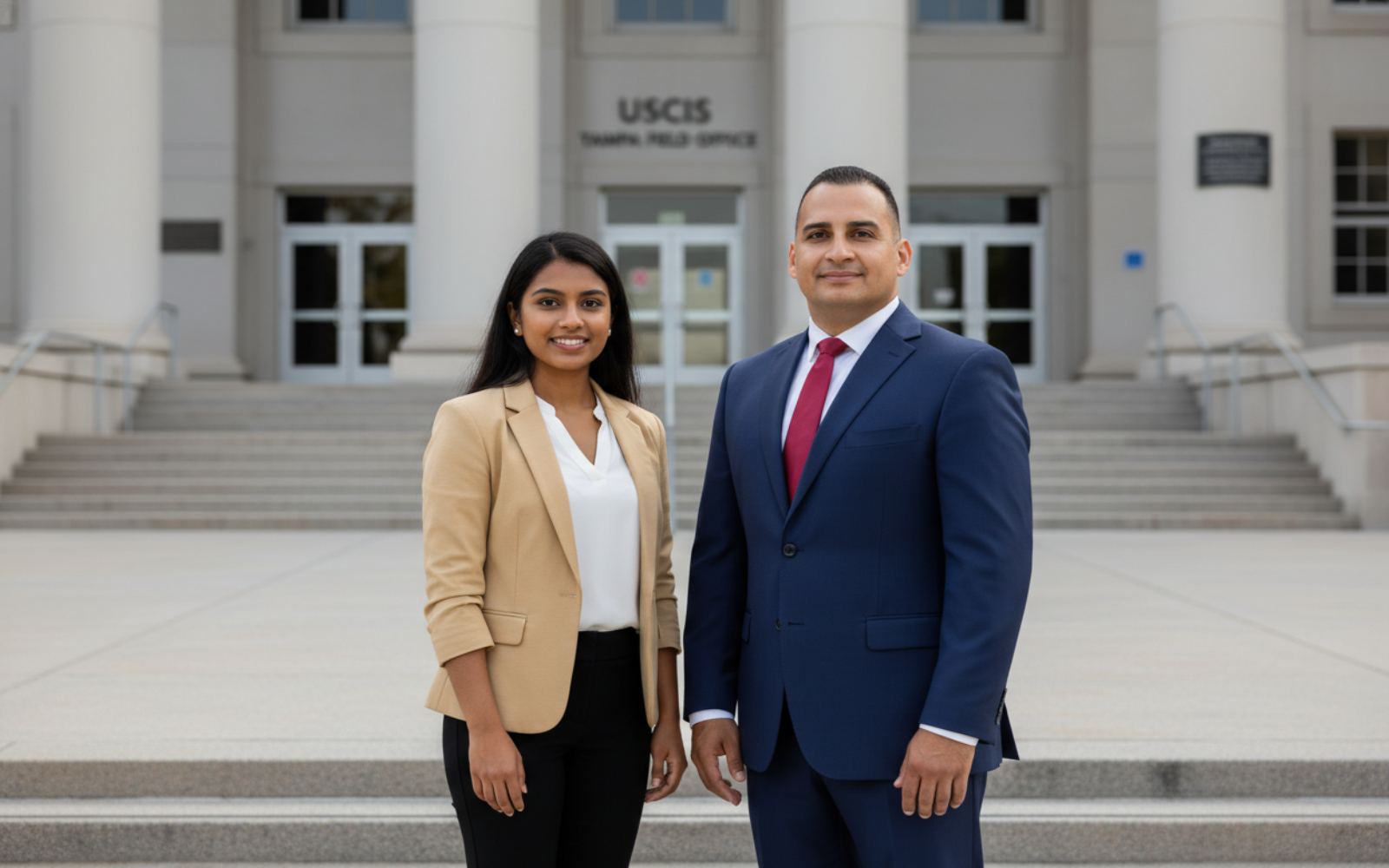
The H-1B visa fee increase, effective in 2026, significantly raises costs for employers sponsoring highly skilled foreign workers in Florida. New fees cover registration, filing, and surcharges, impacting recruitment and budget planning. Navigating these changes requires careful attention to detail and understanding updated USCIS regulations to ensure compliance and successful petitioning.
- Increased costs for employers sponsoring H-1B visas.
- New non-refundable H-1B Cap Registration fee.
- Adjusted base filing fees and surcharges from USCIS.
- Critical for Florida businesses to budget and plan accordingly.
- Expert legal counsel is essential to navigate these complex changes.
Florida's dynamic economy thrives on innovation and skilled professionals. From the tech hubs in St. Petersburg to the bustling business centers across the state, many companies rely on the H-1B visa program to bring in specialized talent. However, the landscape for sponsoring these essential workers is changing significantly in 2026 due to a substantial H-1B visa fee increase.
These new fees present both challenges and complexities for employers and foreign nationals alike. Understanding the updated cost structure and application process is crucial for anyone involved in the H-1B program in Florida. This comprehensive guide will detail the new fee schedule, outline the application steps, discuss timelines, and highlight common pitfalls to avoid.
Our goal is to equip you with the knowledge needed to navigate these changes effectively. The immigration process can be daunting, especially with evolving regulations. For personalized guidance and to ensure your petition is handled correctly, call Florida Immigration Lawyers at 1-844-967-3536 for a free consultation. We are here to help you understand the impact of the H-1B visa fee increase.
Understanding the H-1B Visa Fee Increase in Florida for 2026
The H-1B visa program is vital for many U.S. employers seeking to hire foreign workers in specialty occupations. These roles typically require a bachelor's degree or higher in a specific field. The program is particularly important in Florida, where industries like technology, healthcare, and engineering often seek international talent.
In 2026, the United States Citizenship and Immigration Services (USCIS) implemented significant adjustments to its fee schedule. These changes include a notable H-1B visa fee increase, which impacts various stages of the application process. The primary goal of these increases is to recover the full cost of USCIS services and to fund agency operations.
Florida employers, whether large corporations in Miami or growing tech firms in St. Petersburg, must now factor these higher costs into their recruitment budgets. The increase affects not only the base filing fees but also other associated costs, making the sponsorship of an H-1B worker a more substantial financial commitment.
The legal basis for these fee adjustments stems from the Immigration and Nationality Act (INA), specifically INA § 214(g), which governs the H-1B program, and relevant sections of 8 CFR § 214.2(h), which outlines the regulations for nonimmigrant classes. USCIS periodically reviews and adjusts its fees to ensure the agency's operational viability, as outlined in 8 CFR § 103.7.
This latest round of increases is one of the most significant in recent memory. It is crucial for businesses and individuals in Florida to understand these changes. Proactive planning and expert advice are more important than ever to navigate the updated requirements for the H-1B visa.
Key Drivers Behind the Fee Hike
Several factors contributed to the decision for the H-1B visa fee increase. USCIS, primarily funded by user fees, cited increased operational costs, inflation, and the need to modernize its systems as primary justifications. The agency also aims to reduce processing backlogs and improve service delivery.
These changes reflect a broader effort to ensure the long-term sustainability of the U.S. immigration system. While the increases may present an immediate burden, the intent is to create a more efficient and responsive system for all applicants. Understanding these underlying reasons can help employers and applicants in Florida better prepare for the financial implications.
Navigating the H-1B Visa Application Process with New Fees
The H-1B visa application process remains multi-faceted, but the new fee structure in 2026 adds another layer of complexity. Here is a step-by-step guide to help you understand the journey, keeping the updated costs in mind.
-
H-1B Cap Registration and New Fee: For cap-subject H-1B petitions, the process begins with electronic registration. Employers must register prospective beneficiaries during a designated period. Effective 2026, USCIS has introduced a new, non-refundable H-1B Cap Registration fee for each submission. This fee must be paid before the lottery takes place. If selected, the employer can then proceed with filing the full petition.
-
Labor Condition Application (LCA) Filing: Before an H-1B petition can be filed, the employer must submit a Labor Condition Application (Form ETA-9035) to the U.S. Department of Labor (DOL). This document attests that the employer will pay the H-1B worker at least the prevailing wage or the actual wage, whichever is higher, and will provide working conditions that do not adversely affect U.S. workers. There is no direct DOL fee for filing an LCA.
-
Form I-129 Petition for a Nonimmigrant Worker: Once the LCA is certified (and the beneficiary is selected in the lottery for cap-subject cases), the employer files Form I-129, Petition for a Nonimmigrant Worker, with USCIS. This is the core of the H-1B application. The base filing fee for Form I-129 has seen a significant H-1B visa fee increase. Additionally, several other fees are typically required:
- American Competitiveness and Workforce Improvement Act (ACWIA) Fee: This fee depends on the employer's size (e.g., typically $750 for employers with 1-25 full-time equivalent employees or $1,500 for those with 26 or more employees).
- Fraud Prevention and Detection Fee: A mandatory fee of $500.
- Public Law 114-113 Fee: An additional $4,000 fee for certain employers (those with 50 or more employees, where more than 50% are H-1B or L-1 visa holders). This is a substantial cost for affected businesses, including some in Florida.
-
Premium Processing (Optional): Employers can opt for Premium Processing by filing Form I-907. This expedites the adjudication of the I-129 petition to within 15 calendar days. The fee for Premium Processing has also increased significantly in 2026, reflecting the demand for faster service.
-
Biometrics Services Fee: In some cases, USCIS may require a biometrics appointment, which involves a small fee for fingerprinting and photographs. This is typically for beneficiaries applying for a change of status or extension within the U.S.
-
Consular Processing or Adjustment of Status: If the beneficiary is outside the U.S., they will undergo consular processing at a U.S. embassy or consulate abroad after the I-129 is approved. This involves a separate visa application fee (Form DS-160). If the beneficiary is already in the U.S. and eligible, they may apply for an Adjustment of Status (Form I-485) to become a lawful permanent resident, which has its own set of fees.
-
Interview and Visa Stamping: For consular processing, the beneficiary will attend an interview. Upon approval, the H-1B visa will be stamped in their passport. There are no additional fees directly associated with the interview itself, beyond the initial DS-160 fee.
Each step requires meticulous attention to detail and adherence to strict deadlines. The impact of the H-1B visa fee increase is felt throughout this entire process, especially by employers in Florida who are keen to secure top talent efficiently.
Essential Documents for Your H-1B Visa Petition in Florida
A successful H-1B petition hinges on submitting a complete and accurate set of supporting documents. USCIS rigorously reviews all submissions, and any missing or incorrect documentation can lead to Requests for Evidence (RFEs) or even denial. Here's a comprehensive checklist of documents typically required:
- Certified Labor Condition Application (LCA) Form ETA-9035.
- Employer's Federal Employer Identification Number (FEIN).
- Employer's business license and formation documents (e.g., Articles of Incorporation for Florida companies).
- Employer's financial statements, tax returns, and annual reports demonstrating ability to pay the offered wage.
- Detailed company description, including services offered, number of employees, and organizational structure.
- Job offer letter or employment contract outlining the specialty occupation, salary, and terms of employment.
- Beneficiary's original academic degrees, diplomas, and transcripts (evaluated by a U.S. credential evaluation service if obtained abroad).
- Beneficiary's professional licenses (if applicable to the occupation in Florida).
- Experience letters and resumes demonstrating qualifications for the specialty occupation.
- Copies of beneficiary's passport, birth certificate, and previous U.S. visa stamps (if applicable).
- Beneficiary's Form I-94 Arrival/Departure Record (if already in the U.S.).
- Marriage certificate and birth certificates for any dependent family members (H-4 visa applicants).
- Photographs of the beneficiary (passport-style).
- Evidence of the employer-employee relationship (e.g., organizational charts, supervision plans, if working off-site).
- Any previous USCIS approval notices (e.g., I-797s for prior H-1B or other visa statuses).
- Receipts for all fees paid, including the new H-1B Cap Registration fee and the increased I-129 petition fee.
Organizing these documents thoroughly is paramount. Florida Immigration Lawyers can assist you in preparing a robust petition package, minimizing the chances of delays or denials due to incomplete paperwork, especially with the increased scrutiny following the H-1B visa fee increase.
H-1B Visa Timeline and Processing Expectations in 2026
The H-1B visa process operates on a strict annual timeline, particularly for cap-subject petitions. The H-1B visa fee increase does not directly alter this timeline, but it does mean that employers are investing more upfront, making efficient processing even more critical. Here’s a general overview of what to expect in 2026:
- H-1B Cap Registration Period: Typically occurs in March each year. Employers register prospective beneficiaries and pay the new non-refundable registration fee.
- Lottery Results Announcement: Usually announced by the end of March. Only selected registrations can proceed to file a full petition.
- Petition Filing Window: For selected registrations, the filing window for Form I-129 typically opens on April 1st and lasts for about 90 days.
- Regular Processing Times: After submission, regular processing can take anywhere from 6 to 12 months, or even longer, depending on the USCIS service center workload (e.g., California Service Center or Vermont Service Center). The H-1B visa fee increase is intended to help reduce these backlogs, but immediate improvements may vary.
- Premium Processing: If opted for, USCIS guarantees a decision within 15 calendar days. This significantly reduces uncertainty but comes with a substantially increased fee in 2026.
- Request for Evidence (RFE): If USCIS requires more information, an RFE will be issued. Responding to an RFE can add 2-3 months to the overall processing time.
- Effective Start Date: For approved cap-subject petitions, the earliest employment start date is typically October 1st of the fiscal year for which the visa was granted.
It is important to remember that these are general estimates. Processing times can fluctuate based on USCIS priorities, the volume of petitions received, and the complexity of individual cases. Staying informed about current USCIS processing times, which are regularly updated on their website, is highly recommended for Florida businesses and applicants.
Understanding H-1B Visa Cost Factors and Fee Breakdown
The **H-1B visa fee increase** in 2026 means that the total cost of sponsoring an H-1B worker has become a significant financial consideration for employers in Florida. While we cannot provide exact figures due to their fluctuating nature, here is a breakdown of the various fees that contribute to the overall **H1B visa cost for employee** (though typically paid by the employer) and the **H1B visa fees 2026**:
- USCIS H-1B Registration Fee: This is a new, non-refundable fee introduced in 2026 for each electronic registration submitted for the H-1B cap lottery.
- Form I-129 Base Filing Fee: This is the core fee for the petition itself, which has seen a substantial increase.
- American Competitiveness and Workforce Improvement Act (ACWIA) Fee: This fee varies based on the size of the employer. It contributes to U.S. worker training and education programs.
- Fraud Prevention and Detection Fee: A mandatory fee designed to combat fraud in the H-1B program.
- Public Law 114-113 Fee (as applicable): A significant additional fee for companies meeting specific criteria (e.g., 50 or more employees with a certain percentage of H-1B/L-1 workers).
- Premium Processing Fee (Optional): If an employer chooses to expedite processing, this fee provides a guaranteed faster decision, but it has also increased.
- Attorney Fees: Legal fees for an experienced immigration attorney, such as Florida Immigration Lawyers, are an investment in ensuring the petition is prepared accurately and efficiently. These fees vary based on the complexity of the case.
- Visa Interview Fees (Consular Processing): If the beneficiary is outside the U.S., there will be a separate fee for the visa application at the U.S. embassy or consulate.
- Biometrics Services Fee: If required for an in-country change of status or extension.
The cumulative effect of these fees, particularly with the H-1B visa fee increase, means that employers must meticulously plan their budgets. While the employer is legally responsible for most of these fees, some agreements may stipulate that certain costs, like attorney fees or premium processing, could be shared or borne by the employee, though this is less common and can be subject to ethical considerations. Consult with an attorney to understand the specifics of your situation.
Do not navigate this process alone. The complexities of the new fee structure and the H-1B application require expert knowledge. Contact Florida Immigration Lawyers today to discuss your specific needs and how we can assist you.
Common Mistakes to Avoid During the H-1B Visa Process
Navigating the H-1B visa process, especially with the recent H-1B visa fee increase, is fraught with potential pitfalls. Avoiding these common mistakes can save significant time, money, and stress for both employers and beneficiaries in Florida.
-
Incorrect Fee Payment: With the new fee schedule, paying the wrong amount or using an outdated fee can lead to immediate rejection of the petition. Always verify the latest fees on the USCIS website before submitting.
-
Missing or Incomplete Documentation: Failing to include all required supporting documents, or submitting incomplete forms, is a primary cause for Requests for Evidence (RFEs) or outright denials. Double-check every item on the checklist.
-
Late Filing: For cap-subject petitions, missing the H-1B cap registration window or the subsequent filing deadline for selected petitions means waiting another year. Timeliness is paramount.
-
Inaccurate Labor Condition Application (LCA): Errors in the LCA regarding prevailing wage, job duties, or work location can lead to DOL investigations and severe penalties for the employer, as well as H-1B petition denial.
-
Ignoring USCIS Deadlines: Whether it's a deadline to respond to an RFE or a submission window, failure to adhere to USCIS deadlines will almost certainly result in adverse action on the petition.
-
Failing to Prove Specialty Occupation: The H-1B visa is for specialty occupations. Employers must clearly demonstrate that the role requires a bachelor's degree or higher in a specific field, and that the beneficiary possesses those qualifications. Vague job descriptions are a red flag.
-
Lack of Employer-Employee Relationship Proof: For certain employment models, especially those involving third-party worksites, USCIS scrutinizes the employer-employee relationship closely. Insufficient evidence can lead to denials.
-
Not Disclosing Prior Immigration History: Any prior visa denials, overstays, or immigration violations must be truthfully disclosed. Failure to do so can be considered misrepresentation and lead to severe consequences, including bans from the U.S.
-
Attempting DIY Filing Without Expertise: The H-1B process is highly complex and constantly evolving. Attempting to navigate it without experienced legal counsel significantly increases the risk of errors and denial, especially with the added complexities of the **H-1B visa fee increase**.
-
Ignoring Changes in Immigration Law and Policy: Immigration laws and policies, including fee structures, are subject to frequent changes. Staying updated is crucial, and an immigration lawyer specializing in **H1B visa Florida** can provide the latest information.
-
Inadequate Preparation for Consular Interview: For those undergoing consular processing, a lack of preparation for the visa interview can lead to denial, even if the I-129 petition was approved. Understand the purpose of the interview and be ready to answer truthfully.
The Importance of Accuracy and Timeliness
Every piece of information submitted must be accurate and consistent. Any discrepancies can trigger additional scrutiny from USCIS. Furthermore, adhering strictly to all deadlines is non-negotiable in the H-1B process. Missing a deadline can result in the loss of an entire year's opportunity.
Avoiding Pitfalls with Expert Guidance
Given the high stakes and the intricate nature of the H-1B visa, particularly with the new **H-1B visa fee increase**, seeking professional legal assistance is highly advisable. An experienced immigration attorney can help you meticulously prepare your petition, avoid common errors, and respond effectively to any USCIS inquiries.
When to Call a Florida Immigration Lawyer for Your H-1B Visa
While some immigration processes appear straightforward, the H-1B visa is rarely one of them. The recent H-1B visa fee increase, coupled with the inherent complexities of U.S. immigration law (Title 8 U.S. Code, Chapter 12), makes expert legal counsel invaluable. Here are specific scenarios where contacting Florida Immigration Lawyers is not just helpful, but often essential:
- Complex Employment History: If the beneficiary has a non-traditional educational background, varied work experience, or gaps in employment, proving specialty occupation eligibility can be challenging. An attorney can help present a strong case.
- Prior Visa Denials or Immigration Issues: Any past immigration problems, such as previous visa denials, overstays, or removal proceedings, significantly complicate a new petition. An attorney can assess the impact and strategize the best approach.
- Employer Unfamiliar with H-1B Process: If your Florida business is new to sponsoring H-1B workers or is unfamiliar with the latest regulations, including the H-1B visa fee increase, an attorney can guide you through every step, ensuring compliance.
- Need for Premium Processing: While premium processing speeds up adjudication, it adds another layer of cost and requires an even more perfectly prepared petition. An attorney ensures your expedited petition is flawless.
- Received a Request for Evidence (RFE) or Notice of Intent to Deny (NOID): These notices indicate USCIS has concerns about your petition. Responding effectively to an RFE or NOID often requires legal expertise to address the specific issues raised by the agency.
- Changes in Employment: If an H-1B worker needs to change employers, job duties, or work locations (even within Florida), an amended petition may be required. An attorney can advise on the necessary filings to maintain legal status.
- Family Members Joining: Sponsoring H-4 dependents involves additional forms and requirements. An attorney ensures all family members are properly included in the process.
- Businesses in St. Petersburg and Beyond Seeking Multiple Sponsors: For Florida companies looking to sponsor multiple H-1B employees, managing numerous petitions efficiently and compliantly becomes a significant task. Our firm can streamline this process.
Warning signs that you need legal help include feeling overwhelmed by the forms, receiving conflicting advice, facing tight deadlines, or simply wanting peace of mind that your petition is in expert hands. Florida Immigration Lawyers offers comprehensive services for H-1B visas, from initial consultation and cap registration to petition filing and RFE responses. We are dedicated to helping Florida businesses and individuals navigate the complexities of immigration law, especially with the new challenges presented by the H-1B visa fee increase.
Frequently Asked Questions (FAQs) About the H-1B Visa Fee Increase
Who will pay for the increased H-1B visa fees?
Generally, the employer is legally responsible for paying the H-1B base filing fee, the ACWIA fee, and the Fraud Prevention and Detection fee. The new H-1B Cap Registration fee is also typically paid by the employer. While attorney fees and premium processing fees can sometimes be negotiated or paid by the employee, the core petition fees are the employer's responsibility. It's crucial for employers to understand these obligations, especially with the H-1B visa fee increase in 2026.
Did Trump increase the H-1B visa fee?
While there were discussions and proposals during the Trump administration regarding significant increases to H-1B fees, many of those specific proposals did not fully materialize or faced legal challenges. The current H-1B visa fee increase effective in 2026 is part of a broader, agency-wide fee rule implemented by USCIS, which regularly reviews its fee schedule irrespective of specific administrations to cover operational costs. So, while fee increases were a topic under Trump, the specific 2026 changes are a result of USCIS's standard fee review process.
What is the new H-1B visa fee structure in 2026?
The new H-1B visa fee structure in 2026 includes several key changes. There is a new, non-refundable H-1B Cap Registration fee. The base Form I-129 filing fee has seen a substantial increase. Additionally, the premium processing fee for expedited adjudication has also risen significantly. Other fees, such as the ACWIA fee, Fraud Prevention and Detection fee, and Public Law 114-113 fee, remain in effect, contributing to a higher overall cost for H-1B sponsorship. Specific amounts are subject to change and should always be verified on the official USCIS website.
Are there additional fees beyond the base H-1B petition?
Yes, absolutely. Beyond the base Form I-129 filing fee and the new H-1B Cap Registration fee, employers must account for several other mandatory and optional costs. These include the American Competitiveness and Workforce Improvement Act (ACWIA) fee, the Fraud Prevention and Detection fee, and for certain employers, the Public Law 114-113 fee. Optional fees include premium processing for faster adjudication. Additionally, there are attorney fees, potential biometrics fees, and separate visa application fees if the beneficiary undergoes consular processing abroad. All these contribute to the overall H-1B visa fee increase impact.
About Florida Immigration Lawyers
Florida Immigration Lawyers is a leading immigration law firm dedicated to serving individuals and businesses across the entire state of Florida. With years of specialized experience, our team of compassionate and knowledgeable attorneys provides expert legal guidance through the complexities of U.S. immigration law.
We understand the challenges and anxieties that come with immigration processes, especially concerning significant changes like the H-1B visa fee increase. Our firm offers a wide range of services, including family-based immigration, business immigration, deportation defense, asylum applications, citizenship, and naturalization. We are committed to protecting your rights and achieving the best possible outcomes for your case.
Why choose Florida Immigration Lawyers? We pride ourselves on our client-focused approach, transparent communication, and unwavering dedication. Our attorneys are available 24/7 to address your concerns and provide timely assistance. We offer free consultations to discuss your unique situation and outline a clear path forward. Serving all of Florida, we are your trusted partners in navigating the U.S. immigration system. Visit our website at https://www.floridaimmigrationlawyers.net or call us at 1-844-967-3536.
Sources and References
Related Articles
You may also be interested in:
- Immigration Attorney Orlando Florida: Your Guide to Legal Help
Navigating U.S. immigration law in Orlando, Florida, can be daunting. This comprehensive guide from Florida Immigration ...
- H-1B Visa Price in Florida 2026: Costs & Legal Guidance
Discover the true H-1B visa price in Florida for 2026, including all required USCIS fees, optional premium processing co...
- TPS Honduras Extension 2026 Florida: Your Essential Guide
Discover vital information about the TPS Honduras extension 2026 Florida. This guide from Florida Immigration Lawyers co...
- 2026 Winter Olympics Ice Hockey Immigration: Florida Guide for Athletes & Staff
Navigating immigration for athletes, coaches, and staff involved in the 2026 Winter Olympics ice hockey tournament, espe...
This article provides general legal information and is not intended as legal advice. Every case is unique, and outcomes depend on specific facts and circumstances. Contact an attorney for advice about your particular situation.
The new H-1B visa fee increase presents significant challenges, but you don't have to face them alone. The team at Florida Immigration Lawyers is ready to provide the expert guidance and support you need to navigate these complex changes successfully. We are committed to helping you achieve your immigration goals in Florida.
For a free, confidential consultation, call us today at 1-844-967-3536. Se Habla Español - Estamos aquí para ayudarle.
Florida Immigration Lawyers
Legal Team
Our experienced attorneys at Florida Immigration Lawyers have been serving clients across Florida for over 20 years. We specialize in immigration, personal injury, criminal defense, workers compensation, and family law.