Green Card Holder ICE Detention: Your Rights in Florida
Experiencing green card holder ICE detention can be a frightening and confusing ordeal, especially when you believed your green card offered full protection. This comprehensive guide from Florida Immigration Lawyers explains your rights, the detention process, common reasons for detention in Florida, and crucial steps to take. Learn how to navigate this complex legal challenge and why immediate legal representation is vital. We are here to help you understand your options and fight for your freedom.

If you are a green card holder facing ICE detention in Florida, it means immigration authorities believe you are deportable. Your green card does not offer absolute protection against removal. You have critical rights, including the right to legal counsel, to remain silent, and to a bond hearing. Acting quickly and securing an experienced immigration lawyer is essential to protect your status and fight for your release.
- Green card holders can be detained and deported for certain criminal offenses or immigration violations.
- You have rights, including the right to speak with a lawyer.
- A bond hearing may be possible to secure release from ICE detention.
- Immediate legal representation is crucial to navigate the complex immigration court system.
Green Card Holder ICE Detention: Your Rights in Florida
Discovering that a green card holder can face ICE detention in Florida often comes as a shock. Many lawful permanent residents believe their green card provides absolute immunity from deportation. Unfortunately, this is not always the case.
Certain actions, especially criminal convictions or serious immigration violations, can place a green card holder at risk. Understanding your rights and the legal process is paramount when you or a loved one are in such a precarious situation.
This comprehensive guide from Florida Immigration Lawyers will walk you through the complexities of green card holder ICE detention. We will explain the reasons for detention, the typical process, and the critical steps you must take to protect your future. Call Florida Immigration Lawyers at 1-844-967-3536 for a free consultation and immediate guidance.
Understanding Green Card Holder ICE Detention in Florida
Immigration and Customs Enforcement (ICE) has the authority to detain individuals who are not U.S. citizens. This includes lawful permanent residents, also known as green card holders. Detention typically occurs when ICE believes an individual is deportable under immigration law.
Being a green card holder grants you significant rights and protections. However, it does not make you immune to removal proceedings if you violate specific laws. These laws are primarily found in the Immigration and Nationality Act (INA).
In Florida, ICE operates several detention facilities. If you or a family member are detained, it is crucial to understand that you are not alone. Our firm specializes in helping individuals navigate these challenging circumstances.
Why a Green Card Holder Might Face ICE Detention
Several factors can lead to a green card holder being placed in ICE detention. These reasons often involve criminal activity or serious breaches of immigration regulations. It is vital to recognize these risks to avoid potential issues.
The Immigration and Nationality Act (INA) outlines specific grounds of deportability for lawful permanent residents. These grounds can trigger detention and removal proceedings. Understanding these legal provisions is the first step in mounting a strong defense.
Criminal Offenses and Consequences
Certain criminal convictions can make a green card holder deportable. These include aggravated felonies, crimes involving moral turpitude (CIMT), and drug-related offenses. Even seemingly minor offenses can have severe immigration consequences.
An aggravated felony is a broad category under immigration law, defined in INA Section 101(a)(43) (8 U.S.C. 1101(a)(43)). It includes crimes like murder, rape, sexual abuse of a minor, drug trafficking, and certain theft or fraud offenses. A conviction for an aggravated felony almost always leads to detention and deportation, with very limited relief options.
Crimes Involving Moral Turpitude (CIMT) are also serious. These are offenses that involve depraved or inherently base acts, contrary to the accepted rules of morality and the duties owed to society. Examples often include theft, fraud, assault, and some domestic violence offenses. Multiple CIMT convictions, or a single CIMT committed within five years of admission for which a sentence of one year or more may be imposed, can trigger deportability.
Drug offenses, even for small amounts of marijuana, can also lead to deportation. While some states have legalized marijuana, federal law still classifies it as a controlled substance. This discrepancy can create significant problems for non-citizens, including green card holders.
Violations of Immigration Law
Beyond criminal acts, violations of immigration law can also lead to ICE detention and deportation. These might include marriage fraud, misrepresentation on immigration applications, or failing to maintain proper residency.
For instance, if a green card was obtained through fraud or misrepresentation, it can be revoked, leading to removal proceedings. Similarly, abandoning your permanent resident status by spending too much time outside the U.S. without proper documentation can also be a cause for concern.
Even minor administrative errors or misunderstandings with USCIS can sometimes escalate. It is always best to ensure all your immigration documents are accurate and up-to-date. If you have concerns about your status, consult with an experienced immigration lawyer.
The Process: What Happens During ICE Detention for Green Card Holders
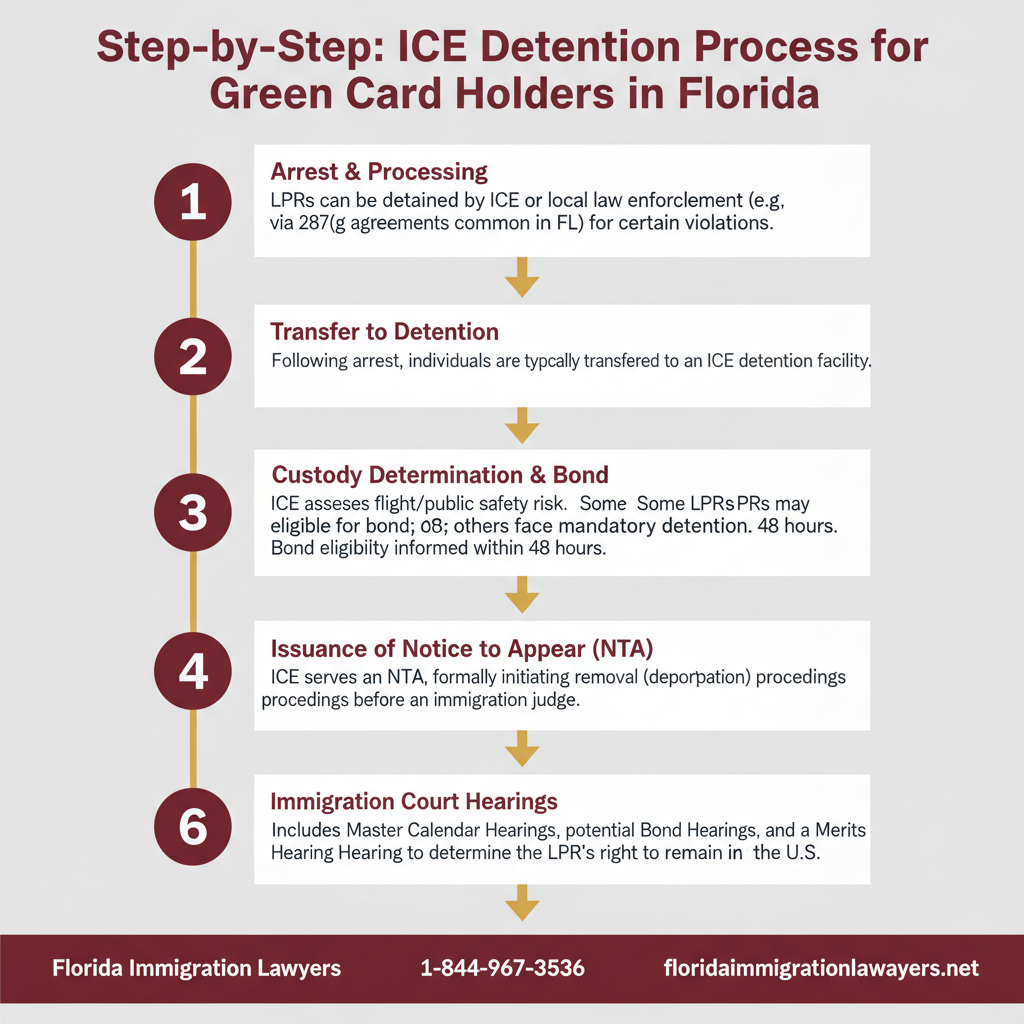
The process of ICE detention can be disorienting and frightening. Knowing what to expect can help you prepare and respond effectively. Here is a general overview of the steps involved:
- Initial Encounter and Arrest: ICE may encounter a green card holder through various means. This could be during a routine traffic stop, after release from criminal custody, or through targeted enforcement actions. If ICE has probable cause to believe you are deportable, they can arrest you.
- Issuance of a Notice to Appear (NTA): After arrest, ICE typically issues a Form I-862, Notice to Appear (NTA). This document is the charging instrument in immigration court. It specifies the legal grounds under which the government believes you are deportable and informs you of your upcoming court hearing.
- Detention and Processing: Following arrest, you will be transported to an ICE detention facility. In Florida, these facilities might include the Krome Service Processing Center or Glades County Detention Center. During processing, your fingerprints will be taken, and you will be interviewed. It is crucial to remember your right to remain silent and to request an attorney at this stage.
- Custody Determination and Bond Hearing: ICE determines if you are eligible for release on bond. If you are deemed a flight risk or a danger to the community, ICE may deny bond. However, many green card holders are eligible for a bond hearing before an Immigration Judge. An attorney can argue for your release on bond, presenting evidence of your ties to the community and lack of flight risk.
- Immigration Court Proceedings: If you are not released on bond, or even if you are, your case will proceed to immigration court. Here, an Immigration Judge will hear arguments from both your attorney and the ICE attorney. The judge will determine if the government has met its burden of proof for deportation.
- Seeking Relief from Removal: As a green card holder, you may be eligible for certain forms of relief from removal, even if the government proves deportability. These could include cancellation of removal for certain permanent residents (8 U.S.C. 1229b(a)), asylum, or adjustment of status if applicable. Your attorney will explore all available options.
- Decision and Appeals: The Immigration Judge will issue a decision. If the judge orders your removal, your attorney can generally file an appeal with the Board of Immigration Appeals (BIA). Further appeals may be possible to a federal circuit court.
Each step in this process is complex and requires specialized legal knowledge. Having an experienced immigration lawyer is not just helpful; it is often essential for a favorable outcome.
Initial Encounter and Arrest
When ICE agents approach you, they must identify themselves. You have the right to remain silent. You also have the right to speak with an attorney before answering any questions. Do not sign anything without legal advice.
If you are arrested, ask why. Do not resist, but clearly state you wish to speak with your lawyer. Remember, anything you say can be used against you in immigration court. This is a critical moment for your defense.
Bond Hearings and Release
A bond hearing is your opportunity to argue for release from ICE detention. The Immigration Judge considers factors like your criminal history, community ties, and flight risk. An attorney can present evidence, such as letters of support, property deeds, and employment records, to demonstrate you are not a flight risk.
The goal is to convince the judge that you deserve to be released while your immigration case is pending. A favorable bond decision allows you to fight your case from outside detention, which is a significant advantage.
Deportation Proceedings and Appeals
Deportation proceedings are formal legal hearings. The government must prove you are deportable. Your attorney will challenge the government's evidence and present your defense. This could involve demonstrating that you are not deportable or that you qualify for a form of relief.
If the Immigration Judge orders your deportation, you generally have the right to appeal. The Board of Immigration Appeals (BIA) reviews decisions from Immigration Judges. This appeal process can be lengthy but offers another chance to present your case.
Do not navigate this process alone. Contact Florida Immigration Lawyers today. Our experienced team can provide the robust defense you need during green card holder ICE detention proceedings.
Essential Documents for Your ICE Detention Case
When facing green card holder ICE detention, having access to crucial documents can significantly impact your case. These documents help establish your identity, legal status, and ties to the community. They are vital for your defense and any potential bond hearing.
- ✓ Green Card (Form I-551): Your primary proof of lawful permanent residency.
- ✓ Birth Certificate: For yourself and any U.S. citizen family members.
- ✓ Marriage Certificate: If applicable, especially if your green card was family-based.
- ✓ Children's Birth Certificates: Especially if they are U.S. citizens.
- ✓ Passport(s): Your current and any expired passports.
- ✓ Employment Records: Pay stubs, job offer letters, letters from employers.
- ✓ Tax Returns: Proof of consistent tax filing in the U.S.
- ✓ Property Deeds/Leases: Evidence of homeownership or stable residency in Florida.
- ✓ Bank Statements: Demonstrating financial stability.
- ✓ Medical Records: Especially if you have serious health conditions requiring ongoing care.
- ✓ Letters of Support: From family, friends, employers, or community leaders attesting to your good character and community ties.
- ✓ Criminal Records: If applicable, obtain certified dispositions of any arrests or convictions. Your attorney can help analyze these.
- ✓ Immigration Court Documents: Any previous Notices to Appear, court orders, or asylum applications.
- ✓ USCIS Notices: Any correspondence from USCIS regarding your status.
Gathering these documents quickly is often challenging when someone is in detention. It is important to have a trusted family member or friend who can collect and provide these to your immigration lawyer. The more evidence you can provide of your strong ties to the U.S. and your good moral character, the stronger your defense will be.
Navigating Timelines and Processing Expectations
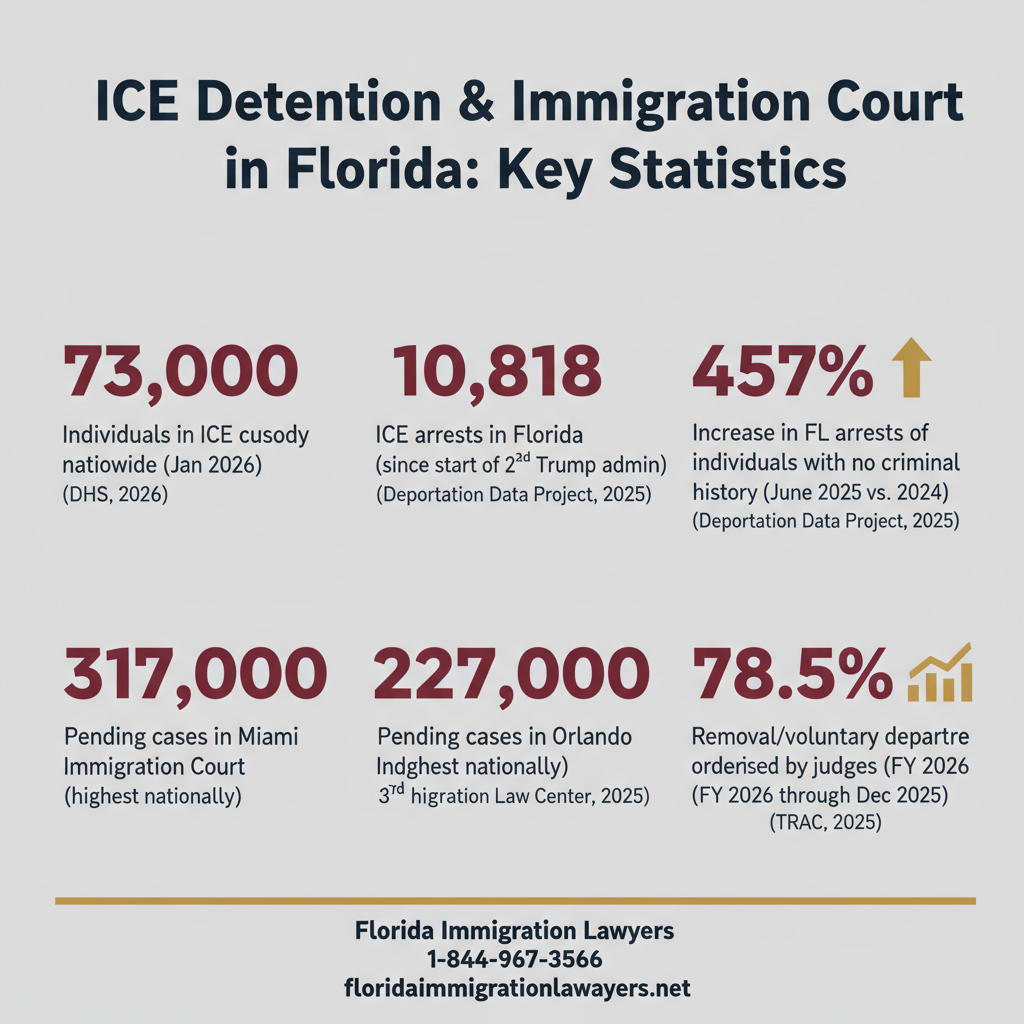
The timeline for green card holder ICE detention cases can vary significantly. Factors influencing the duration include the complexity of your case, the volume of cases in immigration courts, and whether you are eligible for bond.
Bond hearings, if granted, can sometimes occur within a few weeks of detention. However, the full deportation proceedings can take months, or even years, especially if appeals are filed. This uncertainty underscores the importance of prompt legal action.
While in detention, conditions can be challenging. Access to legal resources, communication with family, and medical care can be limited. An attorney can help facilitate communication and ensure your rights are respected during this difficult period.
The U.S. Department of Justice's Executive Office for Immigration Review (EOIR) provides general information on court backlogs. However, specific case timelines are unpredictable. Your immigration lawyer will provide the most realistic expectations for your particular situation.
Legal Costs and Fees in Detention Cases
Facing green card holder ICE detention involves various potential costs. These can include attorney fees, court filing fees (though many detention cases do not have direct filing fees for the respondent), and bond amounts if a bond is set.
Attorney fees for detention cases can vary based on the complexity of the case, the experience of the lawyer, and the amount of work required. Some attorneys charge a flat fee, while others bill hourly. It is crucial to discuss fees upfront during your initial consultation.
If a bond is granted, the amount can range from a few thousand dollars to tens of thousands. This money is typically returned once your immigration case concludes, provided you attend all court hearings. Sometimes a bond can be posted by a family member or a bond agency.
While legal costs can be substantial, investing in experienced legal representation is often the most critical step you can take. A skilled immigration lawyer can significantly increase your chances of release and avoiding deportation. Consider it an investment in your future and freedom.
Common Mistakes to Avoid in ICE Detention
Navigating green card holder ICE detention is fraught with potential pitfalls. Avoiding these common mistakes can be crucial for the success of your case. Be mindful of these warnings:
- Talking to ICE Agents Without a Lawyer: Anything you say can be used against you. Do not discuss your immigration status, criminal history, or how you entered the U.S. without legal counsel present.
- Signing Documents Without Understanding Them: Never sign any document, especially those related to voluntary departure or waiving your rights, without a lawyer's review. You might unknowingly waive critical protections.
- Lying to Immigration Officials: Providing false information can lead to severe penalties, including a permanent bar from the U.S. Always be truthful, but exercise your right to remain silent when appropriate.
- Missing Court Hearings: Failure to appear for an immigration court hearing can result in an in absentia removal order, making it much harder to fight your case later. Always know your next court date.
- Not Disclosing All Criminal History to Your Lawyer: Your attorney needs to know every detail of your criminal record, even if expunged or sealed. Hiding information prevents them from building the strongest defense.
- Not Gathering Essential Documents: As mentioned, documents are vital. Failing to provide your lawyer with necessary identity, status, and community tie evidence can weaken your case significantly.
- Failing to Seek Legal Counsel Promptly: Time is of the essence in detention cases. The longer you wait to contact an immigration lawyer, the more difficult it can become to secure release or build a defense.
- Resisting Arrest or Obstructing Justice: While you have rights, do not physically resist ICE agents. This can lead to additional criminal charges and complicate your immigration case.
- Assuming Your Green Card Protects You Completely: Understand that a green card is not an absolute shield. Certain actions can lead to its revocation and your deportation.
- Not Informing Family of Your Detention: Ensure a trusted family member knows where you are detained and has your attorney's contact information. This facilitates communication and support.
When to Call a Lawyer for ICE Detention
If you or a loved one are facing green card holder ICE detention, the time to call an immigration lawyer is immediately. Every moment counts in these situations. Prompt legal intervention can make a significant difference in the outcome of your case.
You should contact Florida Immigration Lawyers if:
- You have been arrested by ICE or other law enforcement and are a green card holder.
- You have received a Notice to Appear (NTA) in immigration court.
- You are currently in an ICE detention facility in Florida.
- You have a criminal conviction, even an old one, and are concerned about its immigration consequences.
- ICE agents have visited your home or workplace.
- You are unsure of your rights or need clarification on your immigration status.
Our firm, Florida Immigration Lawyers, specializes in deportation defense and helping individuals navigate ICE detention. We understand the specific challenges faced by green card holders. We can assess your situation, explain your options, and aggressively advocate on your behalf.
We have extensive experience representing clients in immigration courts across Florida. Our attorneys are well-versed in the complexities of immigration law, including INA Section 237 (8 U.S.C. 1227) which outlines grounds for deportability. We will work tirelessly to protect your rights and fight for your freedom.
Frequently Asked Questions About ICE Detention
Is ICE detaining green card holders?
Yes, Immigration and Customs Enforcement (ICE) does detain green card holders. While lawful permanent residency offers substantial protection, it is not absolute. Green card holders can be detained and placed in removal proceedings if they are found to be deportable under U.S. immigration law, typically due to certain criminal convictions or violations of immigration statutes. These can include aggravated felonies, crimes involving moral turpitude, or drug offenses. It is crucial for green card holders to understand that their status can be challenged, and legal representation is essential if they face detention.
Can you be deported with a green card for a DUI?
A single DUI conviction typically does not, by itself, make a green card holder automatically deportable. However, a DUI conviction can have serious immigration consequences depending on the specifics of the charge, such as whether it involves aggravating factors like injury to another person, multiple offenses, or if it is combined with other criminal history. In some cases, a DUI could be considered a crime involving moral turpitude (CIMT) or an aggravated felony if it meets certain criteria under immigration law. Consulting an immigration lawyer is vital to assess the specific risks of your DUI conviction.
What happens if you go to jail with a green card?
If a green card holder goes to jail due to a criminal arrest, this immediately raises immigration concerns. After serving any criminal sentence, ICE may place a detainer on you. This means that instead of being released from criminal custody, you would be transferred to ICE detention. Once in ICE custody, you would typically receive a Notice to Appear (NTA) and begin removal proceedings before an Immigration Judge. This is a critical juncture where an experienced immigration lawyer is urgently needed to fight against deportation and seek possible relief.
Do I have to show ICE my green card?
As a green card holder, you are required by law to carry proof of your lawful permanent resident status. This typically means carrying your physical green card (Form I-551). If asked by an immigration officer, you should present your green card. However, you are not required to answer any other questions without your attorney present. You have the right to remain silent regarding your immigration history, citizenship, or any other personal details beyond identifying yourself and showing your green card.
How long can ICE detain a green card holder?
The length of ICE detention for a green card holder can vary significantly. If an Immigration Judge determines that you are eligible for bond, you might be released relatively quickly. However, if bond is denied or your case is complex, detention can last for months or even years while your removal proceedings are pending in immigration court and through appeals. There are legal limits on prolonged detention for certain individuals, but these are highly complex. An experienced immigration lawyer can assess your eligibility for release and work to expedite your case.

Can a green card holder be deported for a misdemeanor?
Yes, a green card holder can potentially be deported for a misdemeanor, especially if it is classified as a crime involving moral turpitude (CIMT) or if there are multiple misdemeanor convictions. For example, two CIMT convictions, regardless of sentence, or a single CIMT with a potential sentence of one year or more, can make a green card holder deportable. The specific nature of the misdemeanor and how it is interpreted under immigration law is crucial. Always consult with an immigration lawyer if you have any criminal convictions.
What is the difference between an ICE detainer and an ICE warrant?
An ICE detainer is a request from ICE to a law enforcement agency to hold an individual for an additional 48 hours (excluding weekends and holidays) after they would otherwise be released. This allows ICE to take custody. An ICE warrant (Form I-200 or I-205) is an administrative warrant issued by ICE itself, authorizing the arrest of a non-citizen believed to be deportable. Unlike a judicial warrant signed by a judge, an ICE administrative warrant does not carry the same constitutional protections, although agents must still have probable cause for an arrest. Both can lead to ICE detention.
Can I get my green card back after deportation?
Generally, once a green card holder is deported, it is extremely difficult to obtain another green card or lawful status in the U.S. Deportation typically results in a permanent bar from re-entry, though some individuals may be eligible for waivers after a certain period, depending on the grounds of their removal. Re-entry without proper authorization after deportation carries severe penalties, including potential criminal charges. Preventing deportation in the first place with the help of a skilled immigration lawyer is always the best strategy.
About Florida Immigration Lawyers
Florida Immigration Lawyers is a leading immigration law firm dedicated to serving clients throughout Florida. We understand the profound impact immigration issues have on individuals and families. Our experienced attorneys provide compassionate yet aggressive legal representation for a wide range of immigration matters.
We specialize in areas such as general immigration law, deportation defense, asylum, citizenship, family-based immigration, and business immigration. Our commitment is to achieving the best possible outcomes for our clients, guiding them through every step of the legal process.
Why choose Florida Immigration Lawyers? We offer free consultations, are available 24/7, and possess a deep understanding of both federal immigration law and the specific challenges faced by immigrants in Florida. Our bilingual team is ready to assist you. Visit our website at www.floridaimmigrationlawyers.net or call us at 1-844-967-3536.
This article is for general informational purposes only and does not constitute legal advice. Immigration laws change frequently. For advice specific to your situation, please consult with a qualified immigration attorney.
Do not face the complexities of green card holder ICE detention alone. Your future and freedom are too important. Contact Florida Immigration Lawyers today at 1-844-967-3536 for a free consultation. Let us put our experience to work for you.
Florida Immigration Lawyers
Legal Team
Our experienced attorneys at Florida Immigration Lawyers have been serving clients across Florida for over 20 years. We specialize in immigration, personal injury, criminal defense, workers compensation, and family law.