Citizenship Interview Tips Florida: 2026 Success Guide
Preparing for your citizenship interview in Florida is a critical step towards naturalization. This comprehensive 2026 guide from Florida Immigration Lawyers provides essential tips, a detailed step-by-step process, and a document checklist. Learn how to master the English and Civics tests, understand timelines, and avoid common mistakes that could jeopardize your application. We cover everything from filing your N-400 to the Oath Ceremony, with specific insights for Florida residents. Our firm offers expert legal assistance for complex cases, ensuring you are fully prepared for your USCIS interview. Contact us for a free consultation and personalized support.
To successfully navigate your citizenship interview in Florida, thorough preparation is key. This includes reviewing your N-400 application, studying for the English and Civics tests, and gathering all necessary documents. Understanding the USCIS process and avoiding common pitfalls will significantly increase your chances of approval. Seek legal guidance from experienced attorneys for personalized support.
- Review your N-400 application thoroughly.
- Master the English reading, writing, and speaking tests.
- Study all 100 civics questions and answers for 2026.
- Gather every required document for your interview.
- Consider professional legal advice from Florida Immigration Lawyers.
Citizenship Interview Tips Florida: Your 2026 Guide to Success
Becoming a U.S. citizen is a profound milestone, representing the culmination of years of dedication and dreams. For many immigrants in Florida, the citizenship interview is the final, crucial step in this journey. This interview can feel daunting, but with the right preparation, you can approach it with confidence.
Florida, with its diverse communities and vibrant immigrant population, is home to countless individuals pursuing naturalization. Understanding the specific requirements and nuances of the naturalization interview process, especially as it stands in 2026, is vital for a positive outcome. Our guide provides comprehensive tips to help you succeed.
At Florida Immigration Lawyers, we understand the stakes involved in your pursuit of citizenship. We are dedicated to providing the expert legal support you need. Call Florida Immigration Lawyers at 1-844-967-3536 for a free consultation and let us help you prepare effectively.
Navigating Your Naturalization Interview in Florida: An Overview
The citizenship interview is a mandatory part of the naturalization process. It serves several critical purposes for the U.S. Citizenship and Immigration Services (USCIS). During this meeting, a USCIS officer will verify the information on your Form N-400, Application for Naturalization.
They will also assess your ability to read, write, and speak English. Additionally, you will be tested on your knowledge of U.S. history and government, commonly known as the civics test. This comprehensive evaluation ensures you meet all eligibility criteria for U.S. citizenship, as outlined in the Immigration and Nationality Act (INA).
Florida residents typically attend their interviews at one of the state's USCIS field offices. These include locations in Miami, Orlando, Tampa, and Jacksonville. While Tallahassee does not have a dedicated USCIS field office, applicants from the Big Bend region would generally be scheduled at the Jacksonville or Orlando offices. Preparing for your interview means understanding what to expect at these specific locations.
The officer will ask you questions about your background, family, employment, and any travel history. They will also review your moral character and attachment to the U.S. Constitution. This is your opportunity to demonstrate your eligibility and commitment to becoming a U.S. citizen.
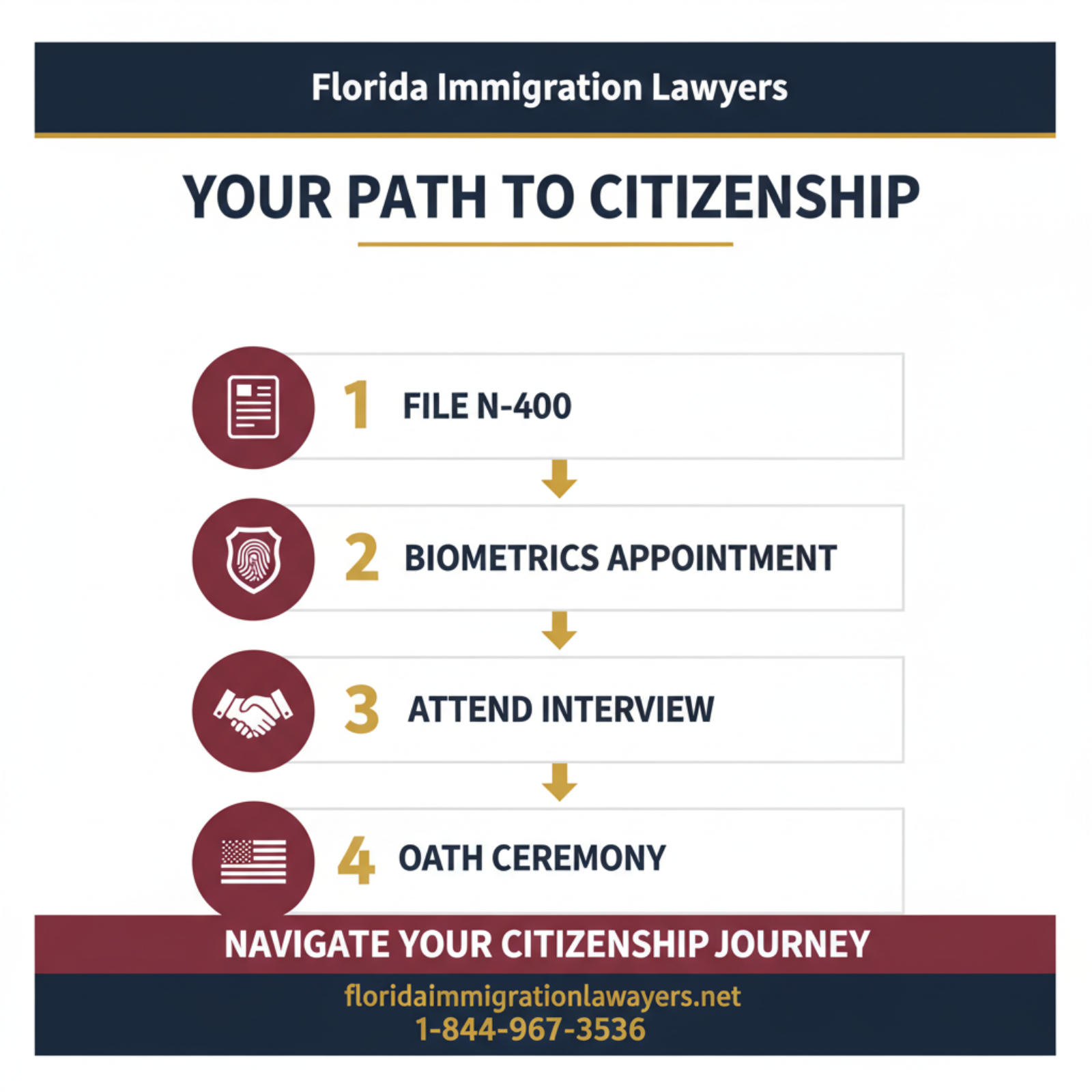
Step-by-Step Guide to Your Florida Citizenship Interview Success
Preparing for your citizenship interview requires a systematic approach. Follow these steps to ensure you are fully ready for this pivotal moment in your immigration journey.
-
File Form N-400, Application for Naturalization
Your journey begins with accurately completing and filing Form N-400. This application collects extensive personal information and details about your eligibility for naturalization. Ensure every section is filled out truthfully and completely.
Any discrepancies between your N-400 and your interview answers can raise red flags. It is crucial to retain a copy of your submitted application for review.
-
Attend Your Biometrics Appointment
After filing N-400, you will receive a notice for a biometrics appointment. This typically involves fingerprinting, photographs, and a signature. These are used for background checks and identity verification.
Your biometrics appointment is not an interview, but it is a mandatory step. Be sure to attend on time and bring your appointment notice and a valid photo ID.
-
Receive Your Interview Notice
Once your background checks are processed, USCIS will mail you an interview notice, Form N-14. This document specifies the date, time, and location of your naturalization interview. It also lists any additional documents you must bring.
Read this notice carefully and mark your calendar immediately. Do not lose this important document, as you will need it to enter the USCIS facility.
-
Prepare Thoroughly for the Interview
This is the most critical phase of your preparation. Your interview will consist of three main components: an English test, a civics test, and a review of your N-400 application.
Understanding the English Test
The English test assesses your ability to read, write, and speak basic English. The officer will evaluate your speaking ability during the interview itself. For the reading test, you will read one out of three sentences correctly. For the writing test, you will write one out of three sentences correctly.
Practice reading and writing simple sentences related to civics and common American phrases. USCIS provides study materials that can help you prepare for these specific tasks.
Mastering the Civics Exam
The civics test covers U.S. history and government. You will be asked up to 10 questions from a list of 100 civics questions. You must answer 6 out of 10 questions correctly to pass. All questions are asked orally.
Study all 100 questions and answers diligently. Many resources are available online, including flashcards and practice tests. Focus on understanding the concepts, not just memorizing the answers.
Keep in mind that some answers change with current office holders, such as the Speaker of the House or specific state governors. Ensure your citizenship test questions 2026 study materials are up-to-date.
Reviewing Your N-400 Application
The USCIS officer will go through your N-400 application with you, confirming every detail. They will ask questions about your personal history, family, employment, addresses, and travel outside the U.S. since becoming a permanent resident.
Be prepared to explain any discrepancies or changes since you filed the application. It is crucial to be honest and accurate in your responses. Any misrepresentation can lead to serious consequences.
-
Attend the Interview at Your Scheduled Time
On the day of your interview, arrive early at the USCIS field office. Dress professionally and bring all required documents listed in your interview notice and on our checklist below. Be polite, respectful, and answer all questions truthfully.
Listen carefully to each question before answering. If you do not understand a question, politely ask the officer to repeat or rephrase it. Do not guess or provide false information.
-
Receive a Decision and Attend the Oath Ceremony
After the interview, the officer will typically inform you whether your application is recommended for approval, continued, or denied. If approved, you will usually receive a notice for your Oath of Allegiance ceremony.
The Oath Ceremony is the final step where you officially become a U.S. citizen. You will surrender your Green Card and receive your Certificate of Naturalization. This is a momentous occasion, and for many in Florida, it's a day of great celebration.
Essential Documents for Your USCIS Interview Checklist
Bringing all necessary documents to your citizenship interview is critical for a smooth process. Missing documents can lead to delays or even a denial. Use this checklist as a guide, but always refer to your specific USCIS interview notice (Form N-14) for the exact requirements.
- Your interview appointment notice (Form N-14).
- Your Permanent Resident Card (Green Card).
- Your state-issued identification (e.g., Florida driver's license or ID card).
- Your passport, and any other travel documents (re-entry permits, refugee travel documents).
- All passports you have used since becoming a permanent resident.
- Original or certified copies of marriage certificates and divorce decrees (if applicable).
- Original birth certificates of your children (if applicable).
- Evidence of termination of prior marriages for you or your spouse (if applicable).
- Proof of selective service registration (for male applicants aged 18-26).
- Certified copies of court dispositions for any arrests or citations, even if charges were dismissed or expunged.
- Proof of tax filings for the last five years (or three years if applying based on marriage to a U.S. citizen).
- Any documents you submitted with your N-400 application.
- Any documents listed in your interview notice as specifically required.
Citizenship Interview Timeline and Processing Expectations in 2026
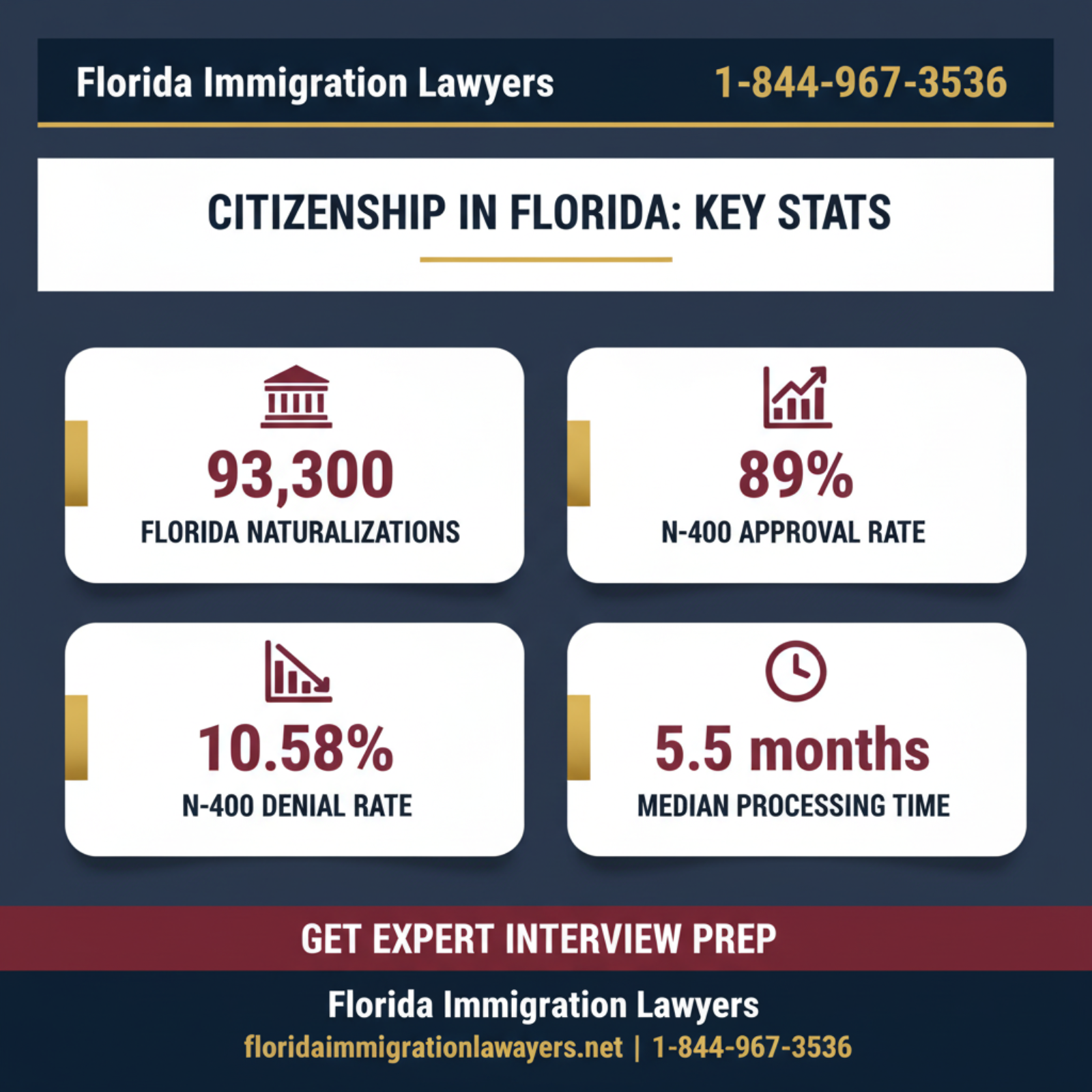
The time it takes to process a naturalization interview application can vary significantly. Several factors influence the timeline, including the specific USCIS field office, the complexity of your case, and current processing backlogs. For applicants in Florida, processing times can differ between offices like Miami, Orlando, Tampa, and Jacksonville.
Generally, from the date you file your Form N-400 to the Oath of Allegiance ceremony, the process can take anywhere from 8 to 18 months, or sometimes even longer. You can check the current estimated processing times for your specific USCIS field office on the official USCIS website. This resource provides valuable insights into what to expect in 2026.
Factors that can extend your timeline include requests for evidence (RFEs), delays in background checks, or needing to be rescheduled. If your case is straightforward and all documents are in order, you may experience a quicker process. However, always prepare for potential delays.
It's important to continuously check your case status online using the receipt number provided by USCIS. This allows you to stay informed about any updates or actions required from your end. Proactive monitoring can help you respond promptly to any USCIS requests.
Understanding Naturalization Cost Factors and Fee Breakdown
Applying for U.S. citizenship involves certain costs that applicants should be aware of. The primary cost is the filing fee for Form N-400, Application for Naturalization. This fee is set by USCIS and is subject to change, so always check the most current fees on the USCIS website before filing.
In addition to the N-400 filing fee, there may be a separate biometrics services fee. However, as of recent updates, the biometrics fee is often included in the N-400 filing fee, but it's essential to verify this. Certain applicants with low income may be eligible for a fee waiver, which can significantly reduce the financial burden.
Beyond government fees, you may incur other expenses. These can include costs for obtaining certified copies of documents, translation services for foreign language documents, or travel expenses to your biometrics appointment and citizenship interview. These ancillary costs can add up, so budget accordingly.
Finally, if you choose to hire an immigration attorney, like the experienced professionals at Florida Immigration Lawyers, you will incur legal fees. While this is an additional cost, the peace of mind and expert guidance an attorney provides can be invaluable, especially for complex cases. We offer free consultations to discuss your specific needs.
Do not navigate this process alone. Contact Florida Immigration Lawyers today to ensure your application is strong and your preparation is thorough.
Common Mistakes to Avoid During Your Citizenship Interview
Avoiding common errors can significantly impact the success of your naturalization interview. Be aware of these pitfalls:
- Lying or Misrepresenting Facts: Any false statements or withholding of material information can lead to immediate denial and potential accusations of immigration fraud, which carries severe penalties.
- Failing to Prepare for English and Civics Tests: Underestimating the difficulty of the English reading/writing or civics exam is a common mistake. Inadequate preparation often results in failure and a rescheduled interview, delaying your citizenship.
- Not Bringing All Required Documents: Forgetting even one crucial document listed in your interview notice or on your N-400 application can cause your interview to be continued, requiring you to return another day with the missing paperwork.
- Being Late or Missing the Interview: Punctuality is paramount. Arriving late or missing your scheduled appointment without proper notice can lead to the denial of your application due to abandonment.
- Disrespectful or Argumentative Behavior: Maintaining a respectful and polite demeanor throughout the interview is essential. Arguing with the USCIS officer or showing disrespect can negatively influence their assessment of your moral character.
- Not Understanding Your N-400 Application: You are expected to know every detail of your application. If you don't understand what you wrote or signed, it can create doubt about the veracity of your application.
- Ignoring Past Arrests or Citations: Even minor arrests or traffic tickets, regardless of dismissal or expungement, must be disclosed. Failure to do so can be considered misrepresentation and a serious moral character issue.
- Failing to Disclose All Absences from the U.S.: Accurate reporting of all trips outside the U.S., including dates and destinations, is vital. Discrepancies can raise questions about your continuous residence requirement.
- Not Updating USCIS on Address Changes: You are legally required to inform USCIS of any change of address within 10 days. Failure to do so can result in missed notices and processing delays.
- Assuming an Interpreter Will Be Provided: Unless you have a medical waiver for the English test, you are expected to conduct the interview in English. Do not bring your own interpreter unless specifically authorized by USCIS.
When to Call a Florida Immigration Lawyer for Your Citizenship Interview
While many applicants successfully navigate the citizenship interview process independently, certain situations strongly warrant the expertise of an immigration attorney. Florida Immigration Lawyers are here to provide critical assistance when your case presents complexities or unique challenges.
You should consider calling us if you have a criminal history, no matter how minor or old the offense. Even expunged records can impact your moral character assessment. Previous immigration application denials, extensive travel history, or long absences from the U.S. also benefit from legal review.
Furthermore, if you have a complex marital history, have ever been involved in deportation or removal proceedings, or have received a Request for Evidence (RFE) or Notice of Intent to Deny (NOID) from USCIS, our attorneys can help. We can review your case, prepare you for specific questions, and even accompany you to the interview.
If you have any doubts about your eligibility, fear misinterpreting questions due to language barriers, or simply desire the highest level of preparation and representation, Florida Immigration Lawyers are ready to assist. We serve clients across Florida, including Tallahassee, Miami, Orlando, and Tampa, ensuring you receive personalized and effective legal strategies. Our goal is to make your path to U.S. citizenship as smooth and successful as possible. Visit our citizenship practice area page for more information.
About Florida Immigration Lawyers
Florida Immigration Lawyers is a leading law firm dedicated to providing comprehensive and compassionate immigration legal services throughout Florida. Our team of experienced attorneys understands the complexities of U.S. immigration law and is committed to guiding individuals and families through every step of their immigration journey.
We offer a wide range of services, including family-based immigration, business immigration, asylum claims, deportation defense, and naturalization assistance. Our firm prides itself on its client-centered approach, offering personalized strategies tailored to your unique circumstances. We believe in clear communication, diligent representation, and achieving the best possible outcomes for our clients.
Why choose Florida Immigration Lawyers? We are available 24/7 to address your urgent needs and offer free consultations to assess your case. Our deep understanding of Florida's diverse communities and our unwavering commitment to justice make us the trusted choice for your immigration needs. We serve all of Florida, ensuring expert legal support is always within reach.
For unparalleled legal assistance with your immigration matters, contact us today. Our dedicated team is ready to help you achieve your American dream. Visit our website at https://www.floridaimmigrationlawyers.net or call 1-844-967-3536.
Sources and References
- U.S. Citizenship and Immigration Services (USCIS)
- Executive Office for Immigration Review (EOIR)
- 8 U.S.C. Chapter 12 - Immigration and Nationality Act (INA)
- INA § 316 - Requirements for Naturalization
- 8 CFR Part 316 - General Requirements for Naturalization
- USCIS Citizenship and Naturalization Information
This article provides general legal information and is not intended as legal advice. Every case is unique, and outcomes depend on specific facts and circumstances. Contact an attorney for advice about your particular situation.
Your journey to U.S. citizenship is significant, and the citizenship interview is a moment to demonstrate your readiness. Don't leave your future to chance. Trust the experienced legal team at Florida Immigration Lawyers to guide you through every step, providing peace of mind and expert preparation. Call us today at 1-844-967-3536 for a free consultation. Se Habla Español - Estamos aquí para ayudarle.
Need help with Immigration?
Our Florida immigration attorneys offer free consultations. Call today or schedule online.
Frequently Asked Questions
Florida Immigration Lawyers
Legal Team
Our experienced attorneys at Florida Immigration Lawyers have been serving clients across Florida for over 20 years. We specialize in immigration, personal injury, criminal defense, workers compensation, and family law.