Canada Immigration News Today: Florida Pathways & Legal Updates
Canadian citizens looking for the latest Canada immigration news today impacting Florida need specific guidance on U.S. immigration laws. This comprehensive guide covers visa options like TN, E, and L visas, as well as family-based green cards. We detail the step-by-step process, essential documentation, and common mistakes to avoid when moving to Fort Lauderdale or any part of Florida. Understanding USCIS processing times and cost factors is crucial for a smooth transition. Florida Immigration Lawyers provides expert legal assistance for complex cases, ensuring you meet all requirements. Contact us today for a free consultation to discuss your specific immigration needs in Florida.
Canadian citizens interested in moving to or extending their stay in Florida must navigate specific U.S. immigration laws. While Canada immigration news today often focuses on Canadian policies, understanding U.S. visa categories like TN, E, L, or family-based options is crucial. Preparing thorough documentation and seeking legal guidance from a Florida immigration lawyer can significantly streamline your process.
- Canadians typically need specific visas for work or long-term stays in Florida.
- Common pathways include TN, E, L visas, or family-sponsored green cards.
- Thorough documentation and adherence to U.S. immigration rules are essential.
- Processing times and fees vary significantly by visa type and individual circumstances.
- Consulting a Florida immigration lawyer is highly recommended for complex cases.
Canada Immigration News Today: Florida Pathways & Legal Updates
Are you a Canadian citizen considering a move to the sunny shores of Florida? Perhaps you are already here as a snowbird and exploring long-term residency options. Keeping up with Canada immigration news today is important, but understanding the specific U.S. immigration landscape for Canadians is even more critical for your journey to Florida.
The process of moving from Canada to the United States, especially to a popular state like Florida, involves a complex set of rules and regulations. This article will guide you through the various immigration pathways available, highlight important legal updates for 2026, and explain how an experienced Florida immigration lawyer can be your most valuable asset.
Whether you are seeking employment, investment opportunities, family reunification, or permanent residency, navigating U.S. immigration law can be challenging. We understand your concerns and are here to provide clear, actionable information. For personalized advice regarding your specific situation, do not hesitate to call Florida Immigration Lawyers at 1-844-967-3536 for a free consultation.
Understanding US Immigration for Canadians in Florida: What's New in 2026?
Florida continues to be a top destination for Canadian citizens seeking warmer climates, business opportunities, and a vibrant lifestyle. Cities like Fort Lauderdale, Miami, and Orlando attract thousands of Canadians annually. However, entry and long-term stay are governed by U.S. federal immigration laws, not Canadian ones.
While U.S. immigration laws generally remain stable, policy shifts and processing updates can occur. As of 2026, the fundamental visa categories for Canadians largely remain consistent, but understanding their application and current processing trends is vital. It is crucial to distinguish between temporary nonimmigrant visas and permanent immigrant visas (green cards).
Canadians often have unique advantages, such as the TN (Trade NAFTA) visa category for professionals, which is unavailable to most other nationalities. Other common pathways include E-1/E-2 treaty trader/investor visas, L-1 intracompany transferee visas, and various family-sponsored or employment-based green card options. Understanding the eligibility criteria for each is your first step.
The Immigration and Nationality Act (INA) is the primary body of law governing immigration to the United States. Specific sections of 8 U.S.C. Chapter 12 outline the requirements for different visa classifications and adjustment of status. These laws are rigorously enforced by agencies like U.S. Citizenship and Immigration Services (USCIS) and U.S. Customs and Border Protection (CBP).
For those considering a move to Fort Lauderdale or any other part of Florida, staying informed about any changes in U.S. travel restrictions or visa requirements is paramount. While there isn't major breaking Canada immigration news today that drastically alters U.S. entry for Canadians as of early 2026, vigilance is always advised. Always check official government sources for the latest updates.
Navigating US Immigration: A Step-by-Step Guide for Canadians
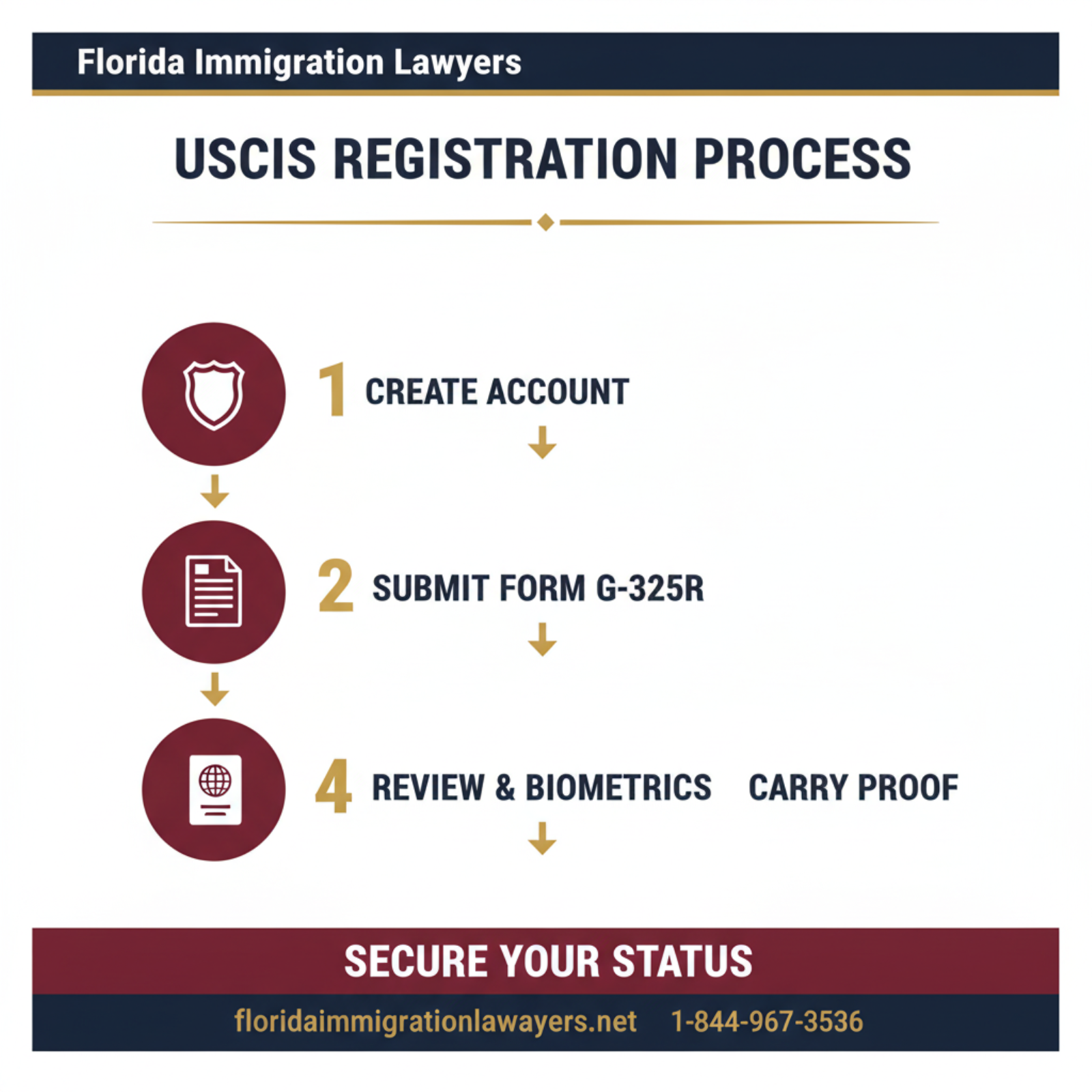
The immigration process can feel overwhelming, but breaking it down into manageable steps can help. Here is a general guide for Canadian citizens seeking to establish residency or work in Florida.
- Determine Eligibility and Visa Category: Your first and most critical step is to identify the correct visa category based on your purpose for coming to Florida. Are you seeking temporary work (TN, H-1B, L-1, E-2)? Do you have a U.S. citizen or lawful permanent resident family member who can sponsor you? Are you a skilled worker with a job offer? Researching these options, often with legal counsel, is vital. Each visa has distinct requirements and limitations.
- Gather Required Documentation: Once your visa category is identified, you must meticulously collect all necessary supporting documents. This often includes passports, birth certificates, marriage certificates, educational diplomas, employment letters, financial statements, and police clearance certificates. Incomplete or incorrect documentation is a leading cause of delays or denials.
- File Petition/Application with USCIS or Department of State: Depending on the visa type, your employer or family sponsor may need to file a petition (e.g., Form I-129 for nonimmigrant workers, Form I-130 for family members) with U.S. Citizenship and Immigration Services (USCIS). For some nonimmigrant visas like the TN, Canadians can apply directly at a U.S. port of entry. For immigrant visas, after USCIS approves the petition, the case typically moves to the National Visa Center (NVC) and then to a U.S. Embassy or Consulate in Canada for processing. Florida has several USCIS field offices, including in Miami, Orlando, and Jacksonville, which handle various applications and interviews for those already in the U.S.
- Attend Interview (Consulate/USCIS): Most visa processes require an interview. For immigrant visas or certain nonimmigrant visas, this will be at a U.S. Embassy or Consulate in Canada. If you are adjusting status from within the U.S. (e.g., applying for a green card after a previous visa), your interview may be at a USCIS field office in Florida. Prepare thoroughly for this interview, as officers will verify your information and intent.
- Receive Decision and Entry/Adjustment of Status: If your application is approved, you will either receive your visa to enter the U.S. or your status will be adjusted to lawful permanent resident if you applied from within the country. Upon entry, U.S. Customs and Border Protection (CBP) officers will make the final decision on your admission. For permanent residents, your green card will typically be mailed to your Florida address.
Essential Documents for Canadian Immigrants to Florida
Having your documents in order is paramount for any U.S. immigration application. The specific list will vary significantly based on your visa type, but here is a general checklist of commonly required items. Always consult the official USCIS website or your attorney for precise requirements.
- Valid Canadian Passport: Must be valid for at least six months beyond your intended period of stay.
- Birth Certificate: Original or certified copy, often required for identity verification.
- Marriage Certificate (if applicable): If applying with a spouse or for family-based immigration.
- Educational Credentials: Diplomas, degrees, transcripts, and any professional licenses, especially for employment-based visas like TN or H-1B.
- Employment Letters: Detailed letters from current or prospective U.S. employers, outlining your job duties, salary, and employment terms.
- Proof of Financial Support: Bank statements, affidavits of support (Form I-864), or employer letters demonstrating you will not become a public charge.
- Medical Examination Results: Required for most immigrant visa applicants, conducted by a USCIS-approved physician.
- Police Certificates: From all countries where you have lived for six months or more since age 16.
- U.S. Citizenship and Immigration Services (USCIS) Forms: Properly completed and signed forms such as I-129 (Petition for a Nonimmigrant Worker), I-130 (Petition for Alien Relative), I-485 (Application to Register Permanent Residence or Adjust Status), among others.
- Photographs: Passport-style photographs meeting specific USCIS requirements.
Processing Times and Expectations for Canadian Immigrants
Understanding the typical processing times for your chosen immigration pathway is crucial for planning your move to Fort Lauderdale or elsewhere in Florida. These times can vary significantly based on the type of visa, the specific USCIS service center or consulate handling your case, and current caseloads. Unfortunately, there isn't always good Canada immigration news today regarding expedited processing for all categories.
For example, TN visas for Canadians can often be processed relatively quickly at a U.S. port of entry, sometimes on the same day. E-1/E-2 and L-1 visas, which involve USCIS petitions, typically take several months, though premium processing options may be available for an additional fee to expedite adjudication. Family-sponsored immigrant visas can take much longer, often years, depending on the preference category and the relationship to the petitioner. You can check current USCIS processing times on their official website.
Factors that can influence processing delays include: the accuracy and completeness of your application, requests for additional evidence (RFEs) from USCIS, background checks, and the volume of applications being processed at a particular time. Immigration laws outlined in 8 CFR Part 214 and 204 govern the procedures and requirements for these processes. External factors, such as global events or changes in administrative policy, can also impact timelines. It is always wise to apply well in advance of your desired travel date.
Immigration Costs and Fees for Canadians Moving to Florida
The financial aspect of immigration to Florida is an important consideration. Various fees are associated with the application process, and these are subject to change by government agencies. It is important to budget for these expenses, which typically include government filing fees, legal fees, and other related costs. We do not provide specific fee amounts here as they are frequently updated by USCIS and the Department of State.
Government filing fees are paid directly to USCIS or the Department of State for processing your petitions and applications. These fees vary significantly by form and visa type. For instance, filing an I-129 petition for a nonimmigrant worker will have a different fee than an I-130 petition for a family member or an I-485 application for adjustment of status. There may also be biometric service fees or other surcharges.
Beyond government fees, you should budget for attorney fees if you choose to hire an immigration lawyer. While this is an additional cost, the expertise and guidance provided by an experienced Florida immigration lawyer can be invaluable, potentially saving you time, stress, and costly mistakes. Other costs may include medical examination fees, translation services for foreign documents, and travel expenses for interviews.
Do not navigate this process alone. Contact Florida Immigration Lawyers today.
Common Mistakes Canadian Immigrants Make When Moving to Florida
Moving to Florida from Canada can be a smooth process with proper preparation, but many common pitfalls can lead to delays or even denials. Avoiding these mistakes is crucial for a successful immigration journey.
- Choosing the Incorrect Visa Category: Many Canadians mistakenly believe any visa will suffice. Selecting a visa that doesn't align with your true purpose (e.g., trying to work on a visitor visa) can lead to serious immigration violations and future bars from entry. Always ensure your chosen visa accurately reflects your intentions.
- Submitting Incomplete or Inaccurate Documentation: USCIS and consular officers require precise and complete documentation. Missing forms, unsigned applications, outdated information, or providing false details can result in Requests for Evidence (RFEs), significant delays, or outright denials. Double-check everything carefully.
- Overstaying a Visa Waiver or Temporary Visa: Canadians can generally visit the U.S. for up to six months without a visa. Overstaying this period or any temporary visa makes you an unlawful presence, which can lead to bars from re-entry for several years. Always adhere strictly to your authorized period of stay.
- Failing to Disclose Past Immigration Violations or Criminal History: Attempting to hide any previous immigration issues, arrests, or convictions is a severe mistake. U.S. immigration authorities have access to extensive databases. Undisclosed issues can lead to findings of inadmissibility and permanent bans from the U.S. Honesty and legal guidance are essential.
- Not Updating Address with USCIS: If you move within Florida or to another state while your application is pending, you are legally required to inform USCIS of your new address within 10 days by filing Form AR-11. Failure to do so can result in missed notices, interview appointments, or even application abandonment.
- Assuming Canadian Immigration Rules Apply: The immigration systems of Canada and the U.S. are distinct. Rules for permanent residency, work permits, and citizenship differ significantly. Do not assume that what applies in Canada will apply in the U.S.; always verify U.S. specific regulations.
- Not Preparing Adequately for Interviews: Immigration interviews are a critical step. Failing to review your application, understand the purpose of your visa, or articulate your intentions clearly can raise red flags. Be prepared to answer questions about your background, finances, and reasons for coming to Florida.
- Ignoring Legal Advice or DIYing Complex Cases: While some straightforward applications can be done independently, complex cases (e.g., involving waivers, criminal history, or previous denials) almost always benefit from legal counsel. Attempting to navigate these alone can lead to irreversible mistakes. The cost of an attorney is often less than the cost of a denied application.
- Failing to Understand Public Charge Rules: For many immigrant visas, applicants must demonstrate they will not become a “public charge” in the U.S. This typically involves proving sufficient financial resources or having a U.S. sponsor. Misunderstanding these requirements can lead to inadmissibility.
- Not Having a Clear Plan for Re-Entry: If you leave the U.S. while your green card application is pending, you generally need advance parole to re-enter without abandoning your application. Leaving without proper authorization is a common and costly error that can jeopardize your entire process.
When to Consult a Florida Immigration Lawyer for Your US Journey
While this article provides general information, U.S. immigration law is incredibly nuanced. There are many scenarios where the expertise of a dedicated Florida immigration lawyer is not just helpful but essential. Florida Immigration Lawyers are here to provide the guidance you need, especially in Fort Lauderdale and surrounding areas.
You should consider contacting us if your situation involves any complexities. This includes previous visa denials, a history of overstaying in the U.S., any criminal record (even minor offenses), or if you have been previously deported or deemed inadmissible. These issues require careful legal analysis and often involve filing waivers, which are intricate legal processes.
Furthermore, if you are pursuing a complex visa category, such as an E-2 investor visa, an L-1 intracompany transfer, or certain employment-based green cards, legal assistance can be invaluable. We can help you navigate the detailed requirements, prepare robust petitions, and ensure compliance with all regulations. Our firm also specializes in family immigration, helping unite families in Florida.
If you face deportation defense proceedings or have received a Notice to Appear (NTA) before an Immigration Judge at the Miami or Orlando Immigration Courts, immediate legal representation is critical. Do not attempt to face these proceedings alone. Our attorneys are experienced in protecting your rights and fighting for your ability to remain in the U.S.
Any time you have questions about changing your immigration status, extending your stay, or understanding the long-term implications of your choices, consulting with Florida Immigration Lawyers is a wise decision. We can help you explore options like citizenship and naturalization, ensuring you meet all legal requirements. Our goal is to provide clear, compassionate, and effective legal solutions for your immigration needs in Florida.
About Florida Immigration Lawyers
Florida Immigration Lawyers is a leading immigration law firm dedicated to serving individuals, families, and businesses across the entire state of Florida. With a deep understanding of U.S. immigration law and a commitment to our clients, we strive to provide exceptional legal representation and guidance.
Our team of experienced attorneys specializes in a comprehensive range of immigration services, including family-based visas, employment visas, investor visas, asylum applications, deportation defense, citizenship, and green card processes. We understand the profound impact immigration matters have on our clients' lives and approach each case with empathy and dedication.
Why choose Florida Immigration Lawyers? We offer personalized attention, strategic legal advice, and a relentless pursuit of favorable outcomes. Our firm is available 24/7 to address your urgent needs, and we offer free consultations to help you understand your options without financial commitment. We are proud to serve all of Florida, from Fort Lauderdale to Jacksonville, Miami to Tampa, ensuring access to quality legal support.
Visit our website at https://www.floridaimmigrationlawyers.net or call us directly at 1-844-967-3536 to schedule your free consultation today. Let us be your trusted partner in navigating the complexities of U.S. immigration law.
Sources and References
- U.S. Citizenship and Immigration Services (USCIS)
- U.S. Department of State (Travel.State.Gov)
- Executive Office for Immigration Review (EOIR)
- 8 U.S.C. Chapter 12 - Immigration and Nationality Act (INA)
- 8 CFR Part 214 - Nonimmigrant Classes
- 8 CFR Part 204 - Immigrant Petitions
This article provides general legal information and is not intended as legal advice. Every case is unique, and outcomes depend on specific facts and circumstances. Contact an attorney for advice about your particular situation.
Navigating U.S. immigration law as a Canadian citizen moving to Florida requires careful planning and precise execution. Do not leave your future to chance. Let the experienced team at Florida Immigration Lawyers guide you through every step of the process. Call us today at 1-844-967-3536 for your free consultation. Se Habla Español - Estamos aquí para ayudarle.
Need help with Immigration?
Our Florida immigration attorneys offer free consultations. Call today or schedule online.
Frequently Asked Questions
Florida Immigration Lawyers
Legal Team
Our experienced attorneys at Florida Immigration Lawyers have been serving clients across Florida for over 20 years. We specialize in immigration, personal injury, criminal defense, workers compensation, and family law.