Alivio Migratorio VAWA en Florida: Protegiendo a las Víctimas de Abuso
¿Buscas alivio migratorio bajo VAWA en Florida? Nuestra firma ayuda a las víctimas de abuso en West Palm Beach y en todo Florida a solicitar protección. Conoce tus opciones con una consulta gratuita.
La protección migratoria VAWA en Florida permite a ciertas víctimas de abuso no ciudadanas solicitar su estatus migratorio legal sin la ayuda del abusador. Esta protección está disponible para individuos abusados por esposos, padres o hijos adultos que son ciudadanos estadounidenses o Residentes Permanentes Legales. Ofrece un camino hacia la seguridad y la independencia para aquellos que enfrentan violencia doméstica o crueldad extrema.
- VAWA permite la auto-solicitud para el estatus migratorio.
- Las víctimas de abuso por parte de miembros de la familia ciudadanos/Residentes Permanentes Legales pueden calificar.
- La confidencialidad y la seguridad son primordiales en el proceso.
- Proporciona un camino hacia la tarjeta verde y la independencia.
¿Vives con miedo, sufriendo abuso y preocupado por tu estatus migratorio en Florida? Muchos no ciudadanos en West Palm Beach y en todo el estado enfrentan un dilema desgarrador: buscar seguridad ante la violencia mientras temen la deportación o perder su oportunidad de un futuro estable. No estás solo, y hay protecciones legales disponibles para ayudarte.
La Ley de Violencia Contra las Mujeres (VAWA) ofrece una protección migratoria crucial para las víctimas de violencia doméstica y crueldad extrema. Esta guía integral explicará todo lo que necesitas saber sobre la protección migratoria VAWA en Florida, detallando la elegibilidad, el proceso de solicitud, los documentos requeridos y cómo los abogados de inmigración de Florida pueden proteger tus derechos y ayudarte a asegurar un camino hacia la seguridad. No sufras en silencio; tu camino hacia la libertad y el estatus legal puede comenzar hoy. Llama a los abogados de inmigración de Florida al 1-844-YO-PELEO para una consulta gratuita.
Entendiendo la Protección Migratoria VAWA en Florida
La Ley de Violencia Contra las Mujeres (VAWA) proporciona una salvaguarda para no ciudadanos que han sido víctimas de violencia doméstica o crueldad extrema. Permite que soliciten "auto-solicitud" para una tarjeta verde sin el conocimiento o la cooperación de su cónyuge, padre o hijo adulto que sea ciudadano estadounidense o Residente Permanente Legal (LPR) abusador. Esta disposición crítica fue promulgada para evitar que los abusadores controlen a sus víctimas a través de amenazas relacionadas con su estatus migratorio.
Para los individuos en Florida, incluidas comunidades como West Palm Beach, VAWA ofrece un camino confidencial para obtener estatus legal. Esta protección se extiende más allá de solo esposos para incluir a hijos y, a veces, padres. El objetivo es empoderar a los sobrevivientes para que abandonen situaciones abusivas sin temor a consecuencias migratorias.
¿Quién es Elegible para la Protección Migratoria VAWA?
La elegibilidad para la protección migratoria VAWA en Florida es específica. Puedes ser elegible si eres víctima de agresión o crueldad extrema cometida por:
- Un esposo o exesposo ciudadano estadounidense o LPR (si el matrimonio terminó debido al abuso en los últimos dos años).
- Un padre ciudadano estadounidense o LPR.
- Un hijo adulto ciudadano estadounidense (que tenga al menos 21 años).
También debes demostrar que residiste con el abusador y que eres una persona de buena conducta moral. El abuso no siempre tiene que ser físico; la crueldad extrema puede abarcar abuso psicológico, emocional, financiero o sexual.
La Ley VAWA en Florida: Disposiciones Clave
En Florida, la ley VAWA funciona bajo la legislación federal de inmigración. Esto significa que las protecciones y los procesos son consistentes a nivel nacional, incluyendo a aquellos que residen en West Palm Beach, Miami, Orlando o Tampa. La disposición principal es la capacidad de presentar el Formulario I-360, Petición para Amerasian, Viudo(a) o Inmigrante Especial, como auto-solicitante de VAWA. Este formulario se presenta directamente ante los Servicios de Ciudadanía e Inmigración de los EE. UU. (USCIS).
Los tribunales de inmigración de Florida y las oficinas de USCIS están familiarizados con los casos de VAWA. La ley tiene como objetivo asegurar que las víctimas no sean penalizadas por reportar abuso o buscar ayuda. Reconoce las vulnerabilidades únicas que enfrentan las víctimas de abuso no ciudadanos.
Guía Paso a Paso para Solicitar la Protección Migratoria VAWA en Florida
Navegar el proceso de auto-solicitud de VAWA puede sentirse abrumador, pero dividirlo en pasos manejables puede ayudar. Recuerda, buscar orientación legal de un abogado en Abogados de Inmigración de Florida es altamente recomendable. Atendemos a clientes en todo Florida, incluyendo West Palm Beach.
- Reúne Evidencia de Abuso y Relación: Comienza a recoger toda la evidencia posible. Esto incluye informes policiales, registros médicos, declaraciones juradas de testigos, fotos, correos electrónicos, mensajes de texto y tu declaración personal detallada. También necesitarás prueba de tu relación con el abusador, como certificados de matrimonio, certificados de nacimiento o facturas de servicios públicos que demuestren residencia compartida.
- Prueba de Buen Carácter Moral: Debes demostrar buen carácter moral durante los tres años inmediatamente anteriores a tu solicitud. Esto generalmente implica proporcionar certificados de antecedentes policiales de todos los lugares donde has vivido, particularmente en los EE. UU. Cualquier historial criminal debe ser revelado y puede requerir exenciones.
- Prepara y Presenta el Formulario I-360: El núcleo de tu solicitud es el Formulario I-360, Petición para Amerasiano, Viudo(a) o Inmigrante Especial. Este formulario debe completarse meticulosamente, proporcionando toda la información personal necesaria y detalles sobre el abuso. Incluye tu declaración, explicando el abuso y tu relación con el abusador.
- Envía Documentos de Apoyo: Junto con el Formulario I-360, debes enviar toda la evidencia recopilada. Esto incluye prueba de la ciudadanía o estatus de LPR del abusador, evidencia de la relación calificada, prueba de convivencia y evidencia de agresiones o crueldad extrema. Organiza estos documentos claramente.
- Recibe Determinación Prima Facie: Después de presentar, USCIS revisará tu petición. Si parece que cumples con los requisitos básicos de elegibilidad, pueden emitir una determinación "prima facie". Esto significa que tu petición es considerada "a primera vista" como aprobable, y puede proporcionar elegibilidad para ciertos beneficios públicos en Florida.
- Asiste a la Cita de Biométricos: Recibirás un aviso para asistir a una cita de biométricos en un Centro de Apoyo a Solicitudes de USCIS local. Esto implica la captura de tus huellas dactilares, fotografía y firma para verificaciones de antecedentes.
- Responde a Solicitudes de Evidencia (RFEs): USCIS puede enviar una RFE si necesitan más información o aclaraciones. Es crucial responder de manera exhaustiva y puntual. Un abogado puede ayudarte a entender y abordar RFEs de manera efectiva.
- Posible Entrevista (Entrevistas VAWA): Aunque no siempre se requiere para las auto-peticiones de VAWA, USCIS puede programar una entrevista. Si se programa una entrevista, es vital estar preparado para discutir tu caso y proporcionar más detalles. Tu abogado puede prepararte para este paso.
- Decisión sobre la Petición I-360: Si tu petición I-360 es aprobada, recibirás un aviso de aprobación. Esto establece tu elegibilidad para los beneficios de inmigración de VAWA.
- Regulariza tu Estatus a Residente Permanente Legal: Una vez que tu I-360 sea aprobado, y si una visa está inmediatamente disponible (lo cual es común para los auto-peticionarios de VAWA), puedes presentar el Formulario I-485, Solicitud para Registrar Residencia Permanente o Ajustar Estatus. Este es el paso final para obtener tu Green Card.
Lista de Documentos para tu Petición de Alivio de Inmigración VAWA
Un conjunto completo de documentos es esencial para una sólida solicitud de alivio de inmigración VAWA Florida. La falta o documentación incompleta puede causar retrasos significativos o incluso la negación.
- Formulario I-360: Petición para Amerasiano, Viudo(a) o Inmigrante Especial.
- Tu Declaración Personal: Una declaración detallada y firmada que describa el abuso y tu relación con el abusador. Este es a menudo el pieza más crítica de evidencia.
- Prueba de Relación: Certificado de matrimonio, certificación de nacimiento, decreto de divorcio (si aplica), facturas de servicios públicos, contratos de arrendamiento, u otros documentos que muestren residencia compartida.
- Prueba del Estatus del Abusador: Copia del certificado de nacimiento estadounidense del abusador, certificado de naturalización, pasaporte o Green Card.
- Evidencia de Abuso/Crueldad Extrema:
- Informes policiales, registros de arrestos, órdenes judiciales (órdenes de restricción, órdenes de protección).
- Registros médicos que documentan lesiones o tratamiento psicológico.
- Declaraciones juradas/declaraciones de amigos, familiares, clérigos, terapeutas o trabajadores sociales.
- Fotos de lesiones, propiedades dañadas.
- Correos electrónicos, mensajes de texto, mensajes de voz, o cartas del abusador.
- Evidencia de control financiero o aislamiento.
VAWA - Proceso Paso a Paso - Prueba de Convivencia: Extractos bancarios conjuntos, facturas de servicios públicos, contratos de arrendamiento, hipotecas, pólizas de seguro, u otros documentos que muestren que viviste con el abusador.
- Evidencia de Buen Carácter Moral: Certificados de antecedentes policiales de todas las residencias en los EE. UU. y en el extranjero durante los últimos tres años, registros criminales (si los hay) y documentos de disposición.
- Certificado de Nacimiento y Pasaporte: Copia de tu certificado de nacimiento y pasaporte actual (si está disponible).
- Fotografías: Fotografías tipo pasaporte de ti mismo.
Línea de Tiempo y Expectativas de Procesamiento para Auto-Peticionarios de VAWA
El tiempo de procesamiento para la ayuda de inmigración VAWA en Florida puede variar significativamente. Los tiempos de procesamiento de USCIS están sujetos a cambios y dependen de varios factores, incluidos la carga de trabajo y la complejidad de los casos individuales. En general, puedes esperar lo siguiente:
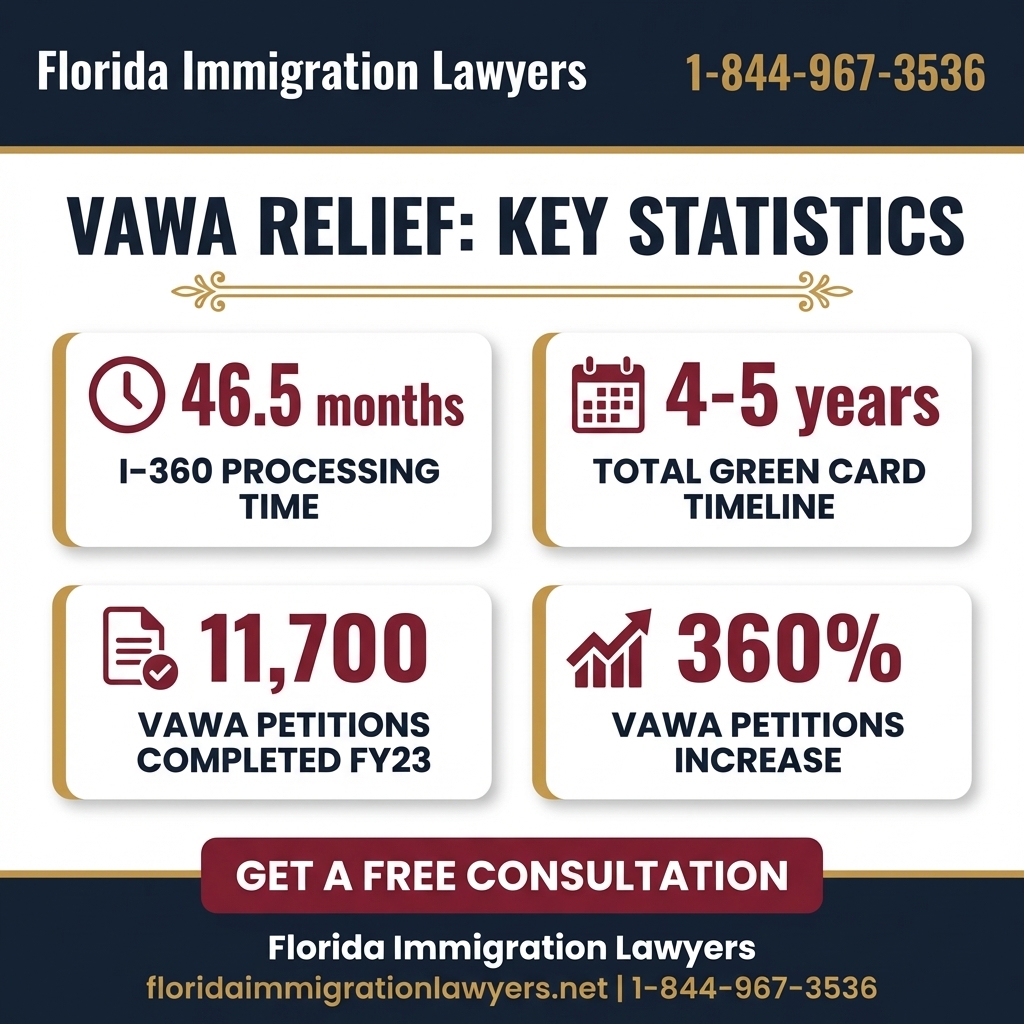
- Procesamiento de la Petición I-360: La revisión inicial y la determinación prima facie pueden tardar varios meses. El procesamiento completo del Formulario I-360 puede variar de 12 a 24 meses, o a veces más. Puedes consultar los tiempos de procesamiento actuales en el sitio web de USCIS.
- Solicitud de Ajuste de Estatus (I-485): Una vez que se aprueba el I-360, si eres elegible para ajustar tu estatus, el procesamiento del I-485 puede tardar entre 6 y 18 meses adicionales. Esto incluye citas de biometría y potencialmente una entrevista.
- Autorización de Trabajo: Es posible que seas elegible para solicitar una autorización de trabajo (Documentos de Autorización de Empleo, EAD) una vez que tu I-360 haya sido presentado y tengas un I-485 pendiente, o en algunos casos, después de una determinación prima facie. Esto puede proporcionar una independencia financiera crucial.
Es importante recordar que estas son estimaciones. Un abogado de inmigración puede ayudar a gestionar las expectativas y mantenerte informado sobre el progreso de tu caso.
Factores de Costo y Desglose de Tarifas para Casos de VAWA
Uno de los beneficios significativos de la ayuda de inmigración VAWA en Florida es que generalmente no hay tarifas de presentación por parte del gobierno para la petición I-360. Esta disposición está diseñada para asegurar que la dificultad financiera no impida que las víctimas de abuso busquen protección.
Sin embargo, puede haber otros costos implicados:
- Tarifa de Biometría: Hay una tarifa por la cita de biometría al presentar la solicitud de ajuste de estatus (Formulario I-485).
- Tarifa de Ajuste de Estatus: Si presentas el Formulario I-485, hay una tarifa de presentación gubernamental aparte.
- Tarifa de Examen Médico: Necesitarás someterte a un examen médico realizado por un cirujano civil aprobado por USCIS, lo que incurre en una tarifa separada que se paga directamente al médico.
- Honorarios de Abogados: Los honorarios legales de un abogado de inmigración con experiencia son un factor de costo significativo. Sin embargo, la inversión en representación legal puede ser invaluable, asegurando que tu solicitud sea sólida y se presente correctamente, minimizando errores y retrasos. Los Abogados de Inmigración de Florida ofrecen consultas gratuitas para discutir tu caso.
- Costos de Traducción: Si alguno de tus documentos de apoyo no está en inglés, deben ser traducidos por un traductor certificado, lo que incurrirá en costos adicionales.
Si bien algunas tarifas pueden ser eximidas en casos de pobreza extrema, es mejor discutir todos los posibles costos y exenciones con tu abogado.
No naveges este proceso complejo solo. Las consecuencias son demasiado altas. Contacta a los Abogados de Inmigración de Florida hoy al 1-844-YO-PELEO para asegurar una representación legal compasiva. También puedes contactarnos en línea.
Errores Comunes que Evitar al Buscar Ayuda de Inmigración VAWA
Buscar la ayuda de inmigración VAWA en Florida requiere atención cuidadosa a los detalles. Evitar errores comunes puede mejorar significativamente tus posibilidades de éxito.
- No Proporcionar Suficiente Evidencia de Abuso: Muchas víctimas minimizan el abuso o no tienen "pruebas concretas" como informes policiacos. Recuerda, la crueldad extrema incluye abuso emocional, financiero y psicológico. Una declaración personal detallada es crucial. Sin evidencia convincente suficiente, USCIS puede denegar tu petición I-360.
- No Demostrar una Relación Calificada: Debes probar claramente tu relación (cónyuge, padre, hijo) con el abusador ciudadano estadounidense o residente permanente legal (LPR). La falta de certificados de matrimonio, certificados de nacimiento o prueba de un matrimonio de buena fe puede generar dudas sobre la elegibilidad.
- Falta de Prueba de Cohabitación: Generalmente necesitas demostrar que viviste con el abusador. Proporcionar facturas de servicios públicos conjuntas, contratos de arrendamiento u otros documentos que demuestren residencia compartida es importante. Si te viste forzado a dejar el hogar, explica claramente las circunstancias.
- Representar Falsamente un Buen Carácter Moral: Cualquier historial criminal pasado, incluso ofensas menores, debe ser revelado. Intentar ocultar información puede dañar gravemente tu credibilidad y resultar en una denegación. Un abogado puede asesorarte sobre posibles exenciones.
- Perder Plazos o Presentaciones Incompletas: USCIS es estricto con los plazos para las solicitudes de evidencia adicional y la completitud de las solicitudes. Presentar una solicitud incompleta o no responder de manera oportuna puede llevar a retrasos o la denegación total.
- No Buscar Asesoramiento Legal: El proceso de VAWA es intrincado y muy personal. Intentar navegarlo sin un abogado de inmigración con experiencia puede llevar a errores críticos, oportunidades perdidas y mayor estrés. Un abogado proporciona orientación estratégica y protección.
- Comunicarte con el Abusador: Aunque no siempre es un error, la comunicación continua con un abusador, especialmente si contradice las afirmaciones de separación debido al abuso, puede levantar banderas rojas. Tu abogado puede aconsejarte sobre los límites apropiados durante el proceso.
Cuándo Llamar a un Abogado para la Ayuda de Inmigración VAWA en Florida
La decisión de buscar la ayuda de inmigración VAWA en Florida es un paso significativo hacia la seguridad y la independencia. Asociarte con un equipo legal conocedor como Abogados de Inmigración de Florida puede hacer toda la diferencia. Debes contactar a un abogado de inmediato si:
- Estás enfrentando violencia doméstica o crueldad extrema y no estás seguro sobre tus opciones migratorias. Podemos ayudarte a entender si VAWA se aplica a tu situación.
- Tu abusador está amenazando con retirar una petición de inmigración o reportarte a las autoridades migratorias. Esta es una táctica común de control que VAWA está diseñado para contrarrestar.
No Navegue Este Proceso Solo
Nuestros abogados de inmigración con experiencia están listos para luchar por usted. Obtenga una evaluación gratis de su caso y confidencial hoy.
We Speak English
O deje sus datos y le llamamos:
Evaluación Gratis en 24 Horas
O hable con nosotros ahora

Asistente de voz IA — disponible 24/7
GratisPreguntas Frecuentes

William J. Vásquez
Abogado Fundador · Vasquez Law Firm
Veterano de la Fuerza Aérea de EE.UU. y abogado de inmigración con años de experiencia práctica en inmigración de EE.UU. J.D., NCCU School of Law. Miembro de AILA. Admitido en los Circuitos 4.º, 5.º y 11.º.
Disponible 24/7 - Evaluaciones Gratis de su Caso
Revisado para exactitud legal por William J. Vásquez
Con licencia en Carolina del Norte; la inmigración a EE.UU. es una práctica federal.
Servicios legales relacionados
Nuestros abogados de inmigración en Florida pueden ayudarle con protección de asilo, consulta gratis de inmigración y costo de un abogado de inmigración. Llame hoy al 1-844-YO-PELEO para una evaluación gratis de su caso.
Enlaces Relacionados
Temas Relacionados
Evaluación Legal Gratis de su Caso
Discuta su caso con nuestros abogados experimentados. Estamos disponibles 24/7.
Artículos Relacionados
Consecuencias de DUI en Inmigración en Florida 2026
Una condena por DUI en Florida puede tener graves consecuencias migratorias, que potencialmente conducen a la inadmisibilidad, la deportación o la denegación de beneficios migratorios. Para los no ciudadanos, un DUI no es solo una infracción de tráfico, sino un asunto penal grave que la ley federal de inmigración examina de cerca. Factores como múltiples delitos, lesiones o daños a la propiedad pueden escalar un DUI simple a un Delito que Involucra Depravación Moral (CIMT) o incluso a un delito grave agravado, lo que desencadena la detención obligatoria y los procedimientos de expulsión. Comprender la naturaleza específica de su condena en Florida y su interpretación bajo la Ley de Inmigración y Nacionalidad (INA) es crucial. Este artículo describe cómo los DUIs impactan el estatus migratorio, los motivos de inadmisibilidad y deportación, una guía paso a paso para navegar el proceso, la documentación esencial y los plazos esperados para 2026. También destacamos los errores comunes a evitar y cuándo buscar asesoramiento legal de un abogado de inmigración experimentado. Florida Immigration Lawyers ofrece apoyo integral para personas que enfrentan estas situaciones desafiantes, brindando orientación experta a través de complejos paisajes legales.
Abogado de Doble Ciudadanía en Florida: Su Guía 2026
Para los residentes de Florida, el concepto de doble ciudadanía, o poseer dos pasaportes, ofrece una convincente combinación de oportunidades y desafíos. Si bien Estados Unidos generalmente permite la doble nacionalidad, el camino para lograr este estatus requiere una comprensión meticulosa tanto de las leyes de inmigración de EE. UU. como de las políticas de ciudadanía de su país de origen. Esta guía explora la definición de doble ciudadanía, el proceso detallado paso a paso para la naturalización en EE. UU. y los importantes beneficios y posibles escollos involucrados. Cubrimos la documentación esencial, los plazos típicos y las consideraciones de costos para 2026, proporcionando información crucial para cualquier persona en Orlando, Miami o en toda Florida que esté considerando este importante paso legal. Conozca los errores comunes a evitar y comprenda cuándo buscar asesoramiento legal profesional para navegar este complejo proceso con éxito. Florida Immigration Lawyers está aquí para brindar apoyo experto y bilingüe en su viaje hacia la doble ciudadanía.
Tarjeta Combo EAD y Advance Parole en Florida 2026
Para las personas con un Formulario I-485, Solicitud para Registrar Residencia Permanente o Ajustar Estatus, pendiente, la Tarjeta Combo EAD y Advance Parole es un documento esencial. Esta tarjeta única combina la autorización para trabajar legalmente en EE. UU. (Documento de Autorización de Empleo - EAD) con el permiso para viajar internacionalmente y reingresar sin abandonar su solicitud de tarjeta verde (Advance Parole). Esta guía de Florida Immigration Lawyers proporciona una visión general completa para los solicitantes en Florida en 2026, cubriendo la elegibilidad, el proceso de solicitud paso a paso, los documentos requeridos, los tiempos de procesamiento esperados y los costos asociados. También destacamos los errores comunes a evitar y cuándo buscar asesoramiento legal para asegurar un viaje de inmigración sin problemas y exitoso.