H-1B Visa Fee Increase in Florida 2026: What You Need to Know
Navigate the H-1B visa fee increase in Florida for 2026. Understand new costs, requirements, and how to protect your application. Contact our Florida immigration lawyers for a free consultation.
The H-1B visa program is a cornerstone for U.S. companies seeking to employ foreign professionals in specialty occupations. Particularly in a vibrant economic hub like Florida, the H-1B visa plays a critical role in attracting global talent across various sectors, from technology to healthcare. However, employers and prospective employees alike are bracing for significant changes. The U.S. Citizenship and Immigration Services (USCIS) has announced substantial fee increases slated for 2026, which will undoubtedly impact the cost and strategy of securing an H-1B visa. This comprehensive guide aims to demystify these impending changes, providing Florida businesses and individuals with the essential knowledge to navigate the evolving landscape of H-1B visa applications. Understanding these new costs, revised requirements, and strategic approaches is paramount to protecting your application and ensuring a smooth process.
Understanding the H-1B Visa Program: A Foundation
The H-1B visa is a non-immigrant visa that allows U.S. employers to temporarily employ foreign workers in specialty occupations. These occupations generally require a bachelor's degree or higher in a specific field. Common fields include IT, engineering, medicine, and mathematics. The program is vital for American competitiveness, enabling companies to fill critical skill gaps and innovate. Each year, USCIS allocates a limited number of H-1B visas, typically 85,000, which includes 20,000 for those with a U.S. master's degree or higher (the "master's cap"). The demand for these visas consistently outstrips supply, leading to an annual lottery system. Employers must petition on behalf of prospective employees, demonstrating that the position qualifies as a specialty occupation and that the employee meets the educational and experiential requirements. The process involves several stages, including registration, petition filing, and consular processing or adjustment of status. The H-1B visa is initially granted for up to three years and can be extended to a maximum of six years, with potential extensions beyond six years under specific circumstances, such as pending green card applications. For a deeper understanding of various immigration pathways, explore our dedicated section on Immigration Law.
The Impending H-1B Fee Increases for 2026: What's Changing?
The U.S. Citizenship and Immigration Services (USCIS) has finalized new fee schedules, with many changes taking effect in early 2026. These adjustments are part of USCIS's efforts to recover operational costs and improve service delivery. The H-1B visa category is particularly affected, seeing significant hikes across various application components.
Detailed Breakdown of New Fee Structures
The most notable changes include an increase in the base H-1B petition fee, the H-1B cap registration fee, and the Asylum Program Fee. The H-1B cap registration fee, which was previously a nominal amount, is seeing a substantial increase. This fee is paid by employers for each beneficiary they wish to register for the annual H-1B lottery. Additionally, the base I-129 petition fee for H-1B has been revised upwards. A new "Asylum Program Fee" is also being introduced for most employment-based petitions, including H-1B, intended to fund asylum processing. Employers must also account for the American Competitiveness and Workforce Improvement Act (ACWIA) fee, Fraud Prevention and Detection Fee, and Public Law 114-113 fee (for employers with 50 or more employees, over 50% of whom are H-1B or L-1 visa holders), which may also see adjustments or remain significant costs. It's crucial for employers to review the official USCIS fee schedule on uscis.gov for the most current and precise figures.
Who is Affected by the New Fees?
These fee increases will directly impact U.S. employers who sponsor H-1B visas for foreign workers, as well as the foreign nationals themselves, particularly if employers choose to pass on certain costs. Small businesses, non-profits, and educational institutions may feel the pinch more acutely than large corporations. The new fees will apply to all H-1B petitions filed on or after the effective date in 2026, regardless of when the registration took place. This means even if an employer registered a beneficiary in a prior year's lottery, if the petition is filed in 2026, the new fee structure will apply.
Impact of Fee Increases on Employers and Beneficiaries in Florida
Florida's economy, with its diverse sectors ranging from tourism and hospitality to aerospace and technology, relies heavily on a skilled workforce. The H-1B fee increases will have a ripple effect across the state.
Financial Implications for Florida Businesses
For Florida businesses, the increased costs translate into a higher financial burden for each H-1B sponsorship. This could lead to several outcomes:
- Reduced Sponsorships: Some smaller businesses or startups might reconsider sponsoring H-1B visas due to the prohibitive costs, potentially limiting their access to specialized talent.
- Budget Reallocation: Larger companies may need to reallocate significant portions of their HR or legal budgets to accommodate the new fees, impacting other operational areas.
- Competitive Disadvantage: Florida companies competing for top global talent might find themselves at a disadvantage if they are unable or unwilling to absorb the increased costs compared to companies in other countries or even other U.S. states with different economic structures.
- Strategic Planning: Businesses will need to engage in more rigorous strategic planning for their talent acquisition, potentially exploring alternative visa options or focusing more intensely on retaining existing H-1B employees.
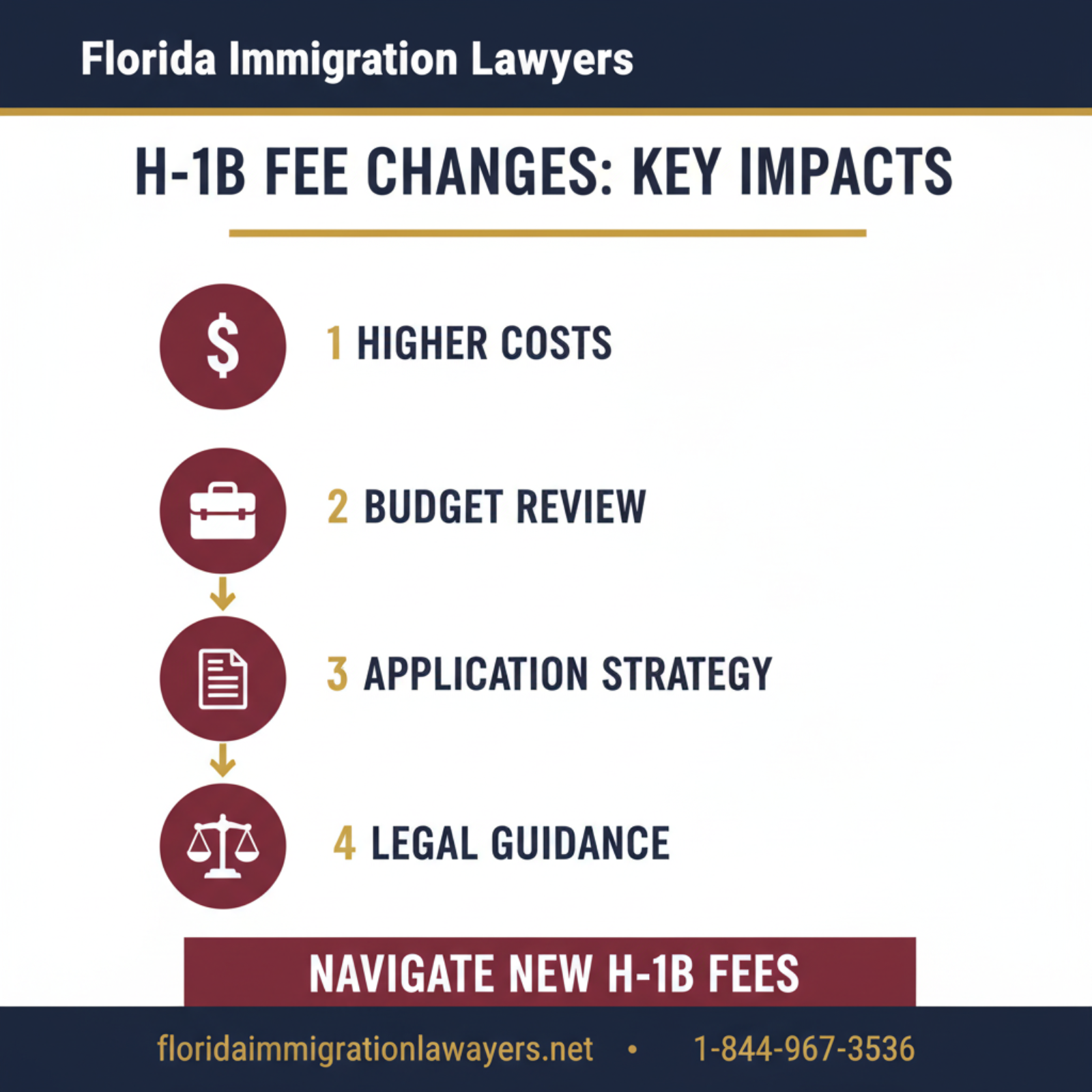
Beyond the direct financial strain, the increased fees might also implicitly encourage a higher standard of application quality. With more at stake financially, employers and legal teams will be compelled to ensure every aspect of the petition is meticulously prepared and flawlessly executed. This could inadvertently lead to fewer frivolous applications and a more streamlined process for truly qualified candidates, though it places a greater burden on all applicants to achieve perfection. The competitive nature of the H-1B lottery, combined with higher costs, means that only the most robust and well-supported petitions are likely to succeed.
For beneficiaries, while employers typically bear the primary costs, some indirect impacts may arise. Employers might become more selective in their sponsorships, or in some cases, certain permissible fees might be passed on, increasing the overall financial strain on the individual. It's vital for both employers and employees to understand their rights and obligations. If you are facing complex immigration challenges, our team at ${FIRM_NAME} can provide expert guidance. Call us at ${FIRM_PHONE} for a consultation.
Navigating the H-1B Application Process Amidst Changes
The H-1B application process is already complex, and the new fee structure adds another layer of consideration. Proactive planning and meticulous preparation are more crucial than ever.
Preparing Your H-1B Application
- Early Registration: While the registration fee is increasing, participating in the H-1B lottery early remains essential. Ensure all beneficiary information is accurate and complete to avoid disqualification.
- Budgeting: Employers must update their financial forecasts to include the new USCIS fees, legal fees, and other associated costs. This includes preparing for potential premium processing fees, which have also seen increases.
- Documentation: Gather all necessary documentation well in advance. This includes educational transcripts, degrees, professional licenses, employer letters, and detailed job descriptions. Any discrepancies or missing documents can lead to delays or denials, incurring further costs and frustration.
- Legal Review: Engage experienced immigration counsel to review all aspects of the petition. An attorney can identify potential issues, ensure compliance with all regulations, and strategize the strongest possible case. For comprehensive support, consider reaching out to our experienced attorneys at ${FIRM_NAME}.
Strategies for a Successful H-1B Petition in 2026
Success in the H-1B lottery and petition
¿Necesita ayuda con Inmigración?
Nuestros abogados de inmigración en Florida ofrecen consultas gratuitas. Llame hoy o programe en línea.
Vasquez Law Firm
Equipo Legal
Por más de 15 años, Vasquez Law Firm ha estado sirviendo a clientes en Florida. Nos especializamos en inmigración, lesiones personales, defensa criminal, compensación laboral y derecho familiar.