Citizenship Test Preparation Florida: Your Guide to Naturalization
Prepare for your U.S. citizenship test in Florida. Our expert guide covers naturalization, civics, and N-400 tips for Jacksonville residents. Contact Florida Immigration Lawyers for a free consultation.
The U.S. citizenship test in Florida assesses your English proficiency and knowledge of U.S. history and government. Preparing thoroughly for the civics test and interview is crucial for naturalization. Many resources are available, including official USCIS materials and legal guidance.
- Understand the N-400 application process.
- Master the 100 civics questions.
- Practice your English reading, writing, and speaking.
- Gather all required documentation carefully.
- Consider legal assistance for a smoother naturalization journey.
The journey to becoming a U.S. citizen is a profound step, offering countless opportunities and responsibilities. For many in Florida, particularly in vibrant communities like Jacksonville, navigating the citizenship test and naturalization process can seem daunting. You've worked hard to build your life here, and now you're ready to embrace full citizenship.
This comprehensive guide from Florida Immigration Lawyers is designed to illuminate every step, helping you prepare effectively for the U.S. citizenship test in 2026. We understand your aspirations and are here to support you. For personalized guidance and to discuss your unique situation, call Florida Immigration Lawyers at 1-844-967-3536 for a free consultation today. Our team is ready to help you achieve your American dream.
Understanding the U.S. Citizenship Test in Florida
Becoming a U.S. citizen, also known as naturalization, is a significant milestone. The process culminates in an interview with a U.S. Citizenship and Immigration Services (USCIS) officer, which includes the citizenship test. This test evaluates your understanding of English and U.S. civics.
Eligibility Requirements for Naturalization
Before you even think about the test, you must meet specific eligibility criteria. Generally, you must be at least 18 years old, be a lawful permanent resident (green card holder) for a certain period (typically five years, or three years if married to a U.S. citizen), demonstrate continuous residence and physical presence in the U.S., and show good moral character. You must also be willing to take an Oath of Allegiance to the U.S. A qualified immigration attorney can help you determine your eligibility. Learn more about general immigration pathways on our Immigration practice area page.
The English and Civics Components
The citizenship test has two main parts: English and civics. The English test assesses your ability to read, write, and speak basic English. The civics test, often called the Florida civics test in local context, gauges your knowledge of U.S. history and government.
- English Test:
- Speaking: You must answer questions about your N-400 application and personal background in English during the interview.
- Reading: You must read one out of three sentences correctly to demonstrate reading ability.
- Writing: You must write one out of three sentences correctly to demonstrate writing ability.
- Civics Test: The USCIS officer will ask you up to 10 questions from a list of 100 civics questions. You must answer at least 6 correctly to pass. The questions cover American government, history, and integrated civics.
Exemptions and Accommodations
Certain applicants may be exempt from the English test or receive accommodations for the civics test. If you are 50 years old and have been a lawful permanent resident for 20 years, or 55 years old and a lawful permanent resident for 15 years, you may be exempt from the English test. Applicants with certain medical conditions may also request an exemption from both tests by filing a Form N-648, Medical Certification for Disability Exceptions. Our attorneys can evaluate your eligibility for these exemptions.
Your Step-by-Step Guide to Naturalization and Test Preparation
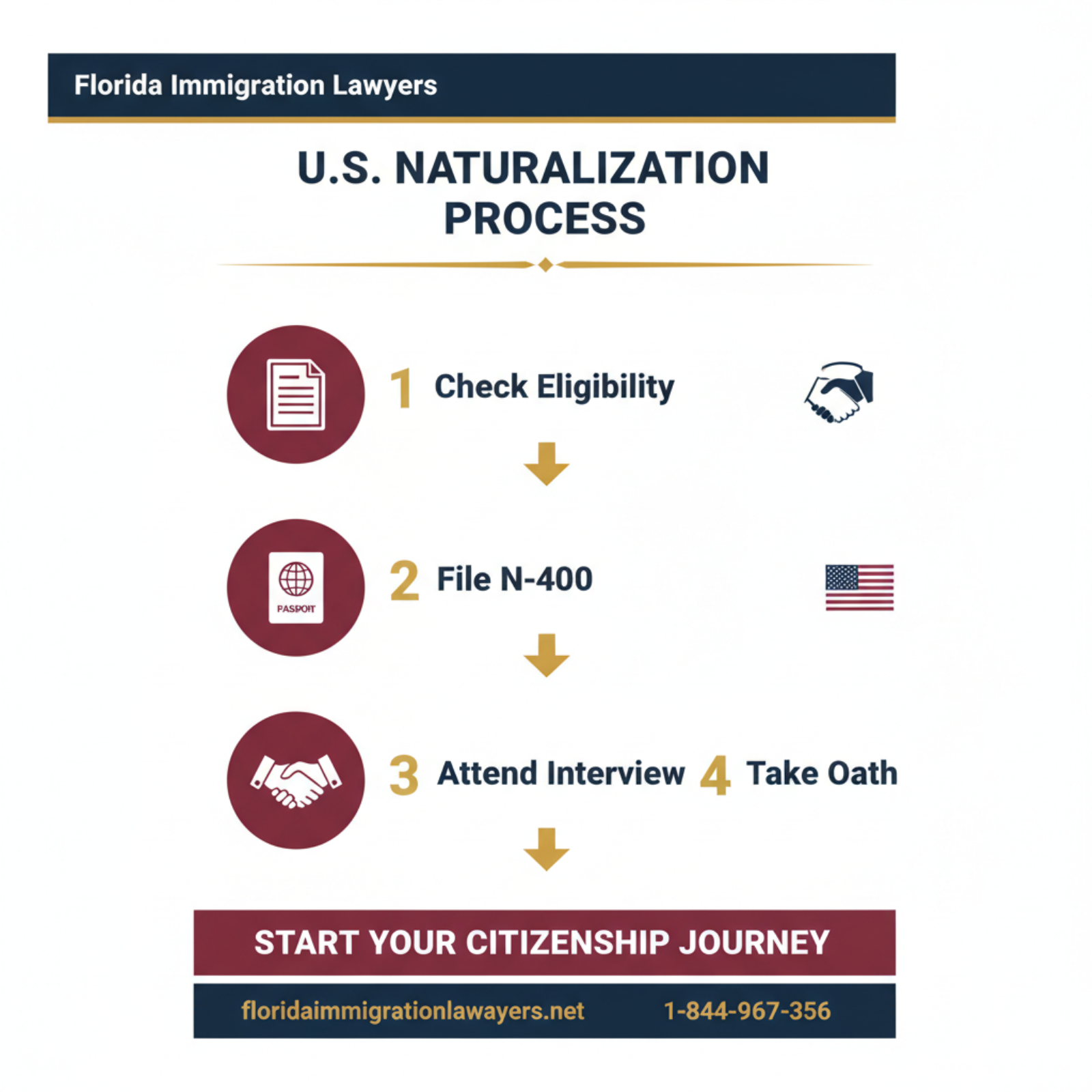
The naturalization process can be complex, but breaking it down into manageable steps makes it less intimidating. Here's a detailed guide to help you prepare for your citizenship test in Florida, especially if you reside in or near Jacksonville.
- Determine Your Eligibility: First, ensure you meet all requirements for U.S. citizenship. This includes age, lawful permanent residency duration, continuous residence, physical presence, and good moral character. Consulting with an immigration lawyer early on can prevent delays.
-
Prepare and File Form N-400, Application for Naturalization: This is the official application form for naturalization. Complete it accurately and thoroughly. Any errors or omissions can lead to delays or even denial.
- Gather all necessary documents, including your Green Card, marriage certificate (if applicable), tax returns, and travel records.
- Review all questions carefully and provide honest answers.
- Attend Biometrics Appointment: After filing your N-400, USCIS will send you an appointment notice for biometrics (fingerprints, photograph, and signature). This appointment is crucial for background checks.
-
Study for the English and Civics Test: This is where dedicated citizenship test preparation comes in.
- English: Practice speaking English daily. Read simple English books or news articles. Practice writing sentences.
- Civics: Study the official 100 civics questions and answers provided by USCIS. You can find these resources on USCIS.gov. Focus on key historical events, government structure, and important figures. Consider studying Florida-specific civics facts as well, although not directly tested, general knowledge helps.
- Engage in US Citizenship Test practice quizzes online or through study groups.
-
Prepare for the Naturalization Interview: The interview covers your N-400 application and includes the English and civics tests.
- Review your N-400 thoroughly. Be prepared to answer questions about your application, personal history, and eligibility.
- Practice answering potential questions about your background and the information on your form.
- Understand the Oath of Allegiance and what it means.
- Attend Your Interview: Arrive on time at the designated USCIS field office (e.g., Orlando, Miami, or Tampa for Florida residents). Bring all original documents you submitted copies of, plus any additional documents requested in your appointment notice.
- Receive a Decision: After the interview, the officer will typically inform you if your application is recommended for approval, continued, or denied.
- Attend the Oath of Allegiance Ceremony: If your application is approved, you will receive an invitation to the Oath of Allegiance ceremony. This is the final step to becoming a U.S. citizen. You will turn in your Green Card and receive your Certificate of Naturalization.
Interview Day Preparation
On the day of your interview, dress professionally and arrive early. Bring your appointment notice, Green Card, passport, and any other documents requested. Be confident, honest, and clear in your answers. Remember, the USCIS officer is looking for consistency and truthfulness.
Essential Documents for Your N-400 Application
A complete and accurate submission of your N-400 application hinges on providing all required documentation. Missing or incorrect documents are a common cause of delays. Here is a general checklist, but always refer to the official USCIS instructions for the most up-to-date requirements.
- Copy of your Green Card (front and back).
- Copies of all passports and travel documents used since becoming a permanent resident.
- Copies of marriage certificate(s) and divorce decrees (if applicable).
- Copies of birth certificates of your children (if applicable).
- Evidence of termination of prior marriages (if applicable).
- Copies of tax returns for the last five years (or three years if married to a U.S. citizen).
- Proof of selective service registration (for males 18-25).
- Certified court dispositions for any arrests or detentions, even if charges were dismissed.
- Form N-426, Request for Certification of Military or Naval Service (if applicable).
- Form N-648, Medical Certification for Disability Exceptions (if applicable).
- Two passport-style photos (if filing by mail, check current N-400 instructions).
- A check or money order for the correct filing fee and biometrics fee.
Always keep original documents secure and only submit copies unless USCIS specifically requests originals. When attending your interview, you will need to present the originals of all documents you submitted copies of.
Navigating the Citizenship Test Timeline and Expectations
Understanding the typical timeline for the naturalization process can help manage your expectations. While processing times vary, especially for applicants in Florida, knowing what to anticipate is beneficial.
- Filing N-400 to Biometrics Appointment: Typically 1-3 months. USCIS field offices in Florida, such as those serving Jacksonville residents, process these relatively quickly.
- Biometrics to Interview: This can vary significantly, ranging from 6 months to over a year, depending on the USCIS field office workload. For instance, processing times at the Orlando or Miami Field Office may differ. You can check current processing times on USCIS.gov.
- Interview to Oath Ceremony: If approved at the interview, the oath ceremony can be scheduled anywhere from a few days to several months later. Sometimes, it happens on the same day (known as an "Oath of Allegiance ceremony on the spot").
- Total Processing Time: From filing your N-400 to taking the Oath of Allegiance, the entire naturalization process can take anywhere from 8 months to 2 years or more. Factors like the complexity of your case, completeness of your application, and current USCIS backlogs all play a role.
After the Interview: Oath Ceremony
The Oath of Allegiance ceremony is the final step. It's a significant event where you formally pledge your loyalty to the United States. You will receive your Certificate of Naturalization, which is proof of your U.S. citizenship. You can then use this certificate to apply for a U.S. passport and register to vote.
Understanding the Costs of Naturalization and Fees
The financial aspect of applying for U.S. citizenship is an important consideration. The primary costs involve USCIS filing fees, but there can be other expenses.
- USCIS Filing Fee: This is the fee for filing Form N-400. This fee is subject to change, so always check the most current fee schedule on the USCIS website before filing.
- Biometrics Fee: This fee covers the cost of your fingerprint and background checks. This is often included with the N-400 filing fee, but always confirm current requirements.
- Attorney Fees: While not mandatory, hiring an immigration attorney can be a valuable investment. Our fees cover expert legal advice, assistance with documentation, case preparation, and representation, significantly increasing your chances of a smooth process.
- Other Potential Costs: These might include fees for obtaining certified copies of documents (e.g., birth certificates, marriage licenses), translation services if documents are not in English, or travel expenses to USCIS appointments.
Fee Waivers and Reductions:
Some applicants may be eligible for a fee waiver or a reduced fee if they meet certain income guidelines or receive public benefits. Our team at Florida Immigration Lawyers can help you determine if you qualify for such assistance. Navigating these financial details is part of our comprehensive support for your naturalization process.
Do not navigate this process alone. Contact Florida Immigration Lawyers today to ensure your application is strong and complete.
Common Mistakes to Avoid During Your Citizenship Journey
The path to U.S. citizenship is filled with specific requirements. Avoiding common pitfalls can save you time, money, and potential heartbreak. Our Florida Immigration Lawyers team frequently assists clients in overcoming issues caused by these mistakes.
- Incomplete or Inaccurate N-400 Application: Submitting an application with missing information or errors is a leading cause of delays or denials. Every question must be answered truthfully and completely. This can lead to requests for evidence (RFEs) or even an interview denial.
- Failure to Disclose All Travel History: USCIS requires a complete record of all your trips outside the U.S. since becoming a permanent resident. Omitting trips, even short ones, can raise red flags about your continuous residence or good moral character.
- Not Updating USCIS with Address Changes: If you move, you are legally required to inform USCIS within 10 days. Failing to do so can result in missed notices, appointments, or even a denial if USCIS cannot reach you. For those in Florida moving within or outside areas like Jacksonville, this is critical.
- Insufficient Preparation for the English and Civics Test: Many applicants underestimate the difficulty of the citizenship test. Failing either the English or civics portion can lead to a re-test or even a denial, prolonging your naturalization process.
- Lapses in Good Moral Character: Certain criminal offenses, even minor ones, can impact your eligibility for naturalization. Failing to disclose these, or committing them during the application process, can lead to denial
Florida Immigration Lawyers
Legal Team
Our experienced attorneys at Florida Immigration Lawyers have been serving clients across Florida for over 20 years. We specialize in immigration, personal injury, criminal defense, workers compensation, and family law.