TPS to Green Card Florida: Navigating Your Path to
Florida TPS to Green Card: Expert legal guidance for adjustment of status and permanent residency. Understand eligibility, process, and secure your future. Contact us today.
TPS to Green Card Florida: Navigating Your Path to Permanent Residency
For many individuals living in Florida under Temporary Protected Status (TPS), the dream of securing permanent residency – a Green Card – is a significant step towards long-term stability and a brighter future in the United States. While TPS offers crucial temporary relief from deportation and work authorization, it is not a direct pathway to a Green Card. However, with the right legal strategy and understanding of complex immigration laws, TPS holders can often transition to lawful permanent resident status. This comprehensive guide will walk you through the intricacies of moving from TPS to a Green Card in Florida, highlighting key requirements, potential challenges, and how expert legal assistance can make all the difference.
Understanding Temporary Protected Status (TPS) in Florida
Temporary Protected Status (TPS) is a humanitarian immigration benefit granted by the U.S. government to eligible nationals of certain countries designated by the Secretary of Homeland Security. These designations are typically made when conditions in a country prevent its nationals from returning safely, such as ongoing armed conflict, environmental disaster, or other extraordinary and temporary conditions. TPS provides beneficiaries with protection from deportation and the ability to obtain work authorization (Employment Authorization Document or EAD) for the duration of their designated status. It is crucial to understand that TPS is temporary and must be re-registered periodically to maintain its benefits. While it offers a vital lifeline, it does not inherently lead to permanent residency. For many, TPS serves as a bridge, allowing them to live and work in the U.S. while exploring other avenues for a Green Card. Understanding the nuances of your TPS status and its implications for future immigration applications is the first critical step in your journey toward permanent residency. Our immigration law practice is dedicated to helping individuals navigate these complex initial stages.
The Pathway from TPS to a Green Card: Key Considerations
Transitioning from TPS to a Green Card typically involves a process known as Adjustment of Status (AOS), which allows eligible individuals to apply for permanent residency without leaving the United States. The primary challenge for many TPS holders lies in meeting the fundamental requirement of "lawful admission" or "lawful entry" into the U.S. to be eligible for AOS. Historically, individuals who entered the U.S. without inspection (EWI) and later obtained TPS faced significant hurdles, as TPS itself was not considered a lawful admission. However, recent legal developments have provided a clearer, albeit still complex, path for some TPS holders.
The most common routes for TPS holders to adjust status involve a qualifying family relationship with a U.S. citizen or lawful permanent resident, or in some cases, an employment-based petition. It is essential to determine if you have a qualifying petitioner (e.g., a U.S. citizen spouse, parent, or adult child) who can file an immigrant visa petition on your behalf. Without such a petition, the path to a Green Card through AOS is generally not available. Understanding these foundational requirements is paramount before embarking on the application process. For those who may have entered without inspection, specific legal strategies, such as seeking advance parole, have become increasingly important, as discussed below. Our firm specializes in guiding clients through these intricate legal requirements, ensuring every aspect of your case is meticulously handled.
Overcoming the "Lawful Admission" Hurdle for TPS Holders
For many years, a significant barrier for TPS holders seeking to adjust status was the requirement of "lawful admission" into the United States. If an individual entered the U.S. without inspection (EWI), even if they later obtained TPS, they were generally ineligible for Adjustment of Status under INA §245(a). However, a landmark decision by the U.S. Supreme Court in Sanchez v. Mayorkas (2021) affirmed that TPS does not, by itself, grant an individual lawful admission. This meant that TPS holders who entered without inspection still needed an alternative method to satisfy the lawful admission requirement.
Fortunately, for some TPS holders, a strategy involving Advance Parole has emerged as a viable solution. Advance Parole is a travel document that allows certain non-citizens to re-enter the U.S. after traveling abroad without jeopardizing their pending immigration applications. If a TPS holder who entered without inspection obtains Advance Parole, travels outside the U.S., and then lawfully re-enters, that re-entry can be considered a "lawful admission" for the purposes of Adjustment of Status. This strategy, while powerful, requires careful planning and execution to avoid potential pitfalls. It is not without risks, and the specific circumstances of each case must be thoroughly evaluated. Consulting with an experienced immigration attorney is critical to determine if this strategy is appropriate and safe for your unique situation, especially considering any potential grounds of inadmissibility. Navigating this complex area requires a deep understanding of immigration law and policy, which our team provides.
Eligibility Requirements for a Green Card Through Adjustment of Status
To successfully adjust status from TPS to a Green Card, you must meet several key eligibility criteria, beyond just having TPS. These requirements are primarily tied to the underlying basis for your Green Card application, which is most commonly a family-based petition.
- Qualifying Family Relationship: The most common path involves a U.S. citizen spouse, parent, or adult child (over 21) filing an Form I-130, Petition for Alien Relative, on your behalf. In some cases, a lawful permanent resident (Green Card holder) spouse or parent can also petition, although visa availability may be subject to longer waiting times.
- Lawful Admission: As discussed, this is a critical hurdle. If you entered without inspection, you might need to utilize the Advance Parole strategy to achieve a lawful re-entry. If you initially entered with a valid visa (e.g., tourist, student) and overstayed, and then obtained TPS, your initial entry would generally satisfy the lawful admission requirement.
- Admissibility: You must be admissible to the United States. This means you must not have any grounds of inadmissibility that would prevent you from obtaining a Green Card. Common grounds include certain criminal convictions, past immigration violations, or health-related issues. Waivers may be available for some grounds of inadmissibility, but these are complex and require expert legal guidance.
- No Other Bars to Adjustment: Certain other factors can bar adjustment of status, such as engaging in terrorist activities or being subject to a final order of deportation (though TPS often provides protection from this, a prior order can complicate matters). If you have faced deportation proceedings in the past, it is imperative to discuss your full immigration history with an attorney.
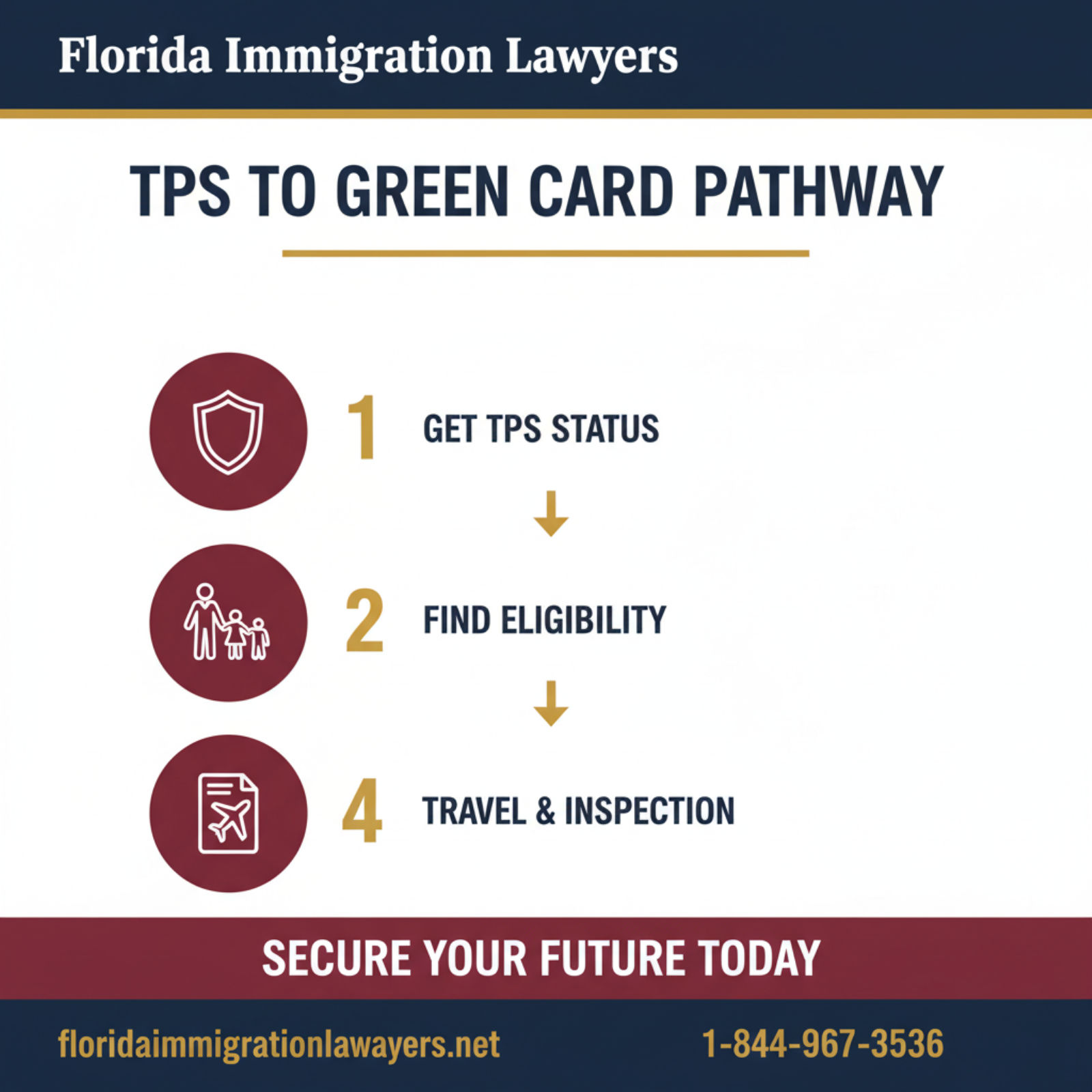
Each of these requirements is intricate and can have significant implications for your application. A thorough review of your personal circumstances and immigration history by a qualified attorney is essential to identify potential issues and develop a robust strategy.
The Application Process: Step-by-Step Guide for TPS Holders
Navigating the Green Card application process as a TPS holder involves several critical steps, each requiring meticulous attention to detail and adherence to USCIS guidelines. This journey can be lengthy and complex, making professional legal guidance invaluable.
Step 1: Filing the Immigrant Petition (Form I-130)
The first step is typically for your qualifying U.S. citizen or lawful permanent resident relative to file Form I-130, Petition for Alien Relative, with U.S. Citizenship and Immigration Services (USCIS). This petition establishes the bona fide family relationship between you and your petitioner. Along with the form, you will need to submit supporting documents such as birth certificates, marriage certificates (if applicable), proof of the petitioner's U.S. citizenship or permanent residency, and evidence of a legitimate relationship (e.g., joint bank accounts, photos, affidavits). The approval of the I-130 is a prerequisite for filing your Green Card application, and the processing times can vary significantly depending on the service center and the specific family preference category.
Step 2: Filing the Adjustment of Status Application (Form I-485)
Once your I-130 petition is approved, or in some cases, concurrently with the I-130 if a visa is immediately available (e.g., for immediate relatives of U.S. citizens), you can file Form I-485, Application to Register Permanent Residence or Adjust Status. This is the core application for your Green Card. With Form I-485, you will also typically file several ancillary applications:
- Form I-765, Application for Employment Authorization: This allows you to continue working legally while your Green Card application is pending.
- Form I-131, Application for Travel Document (Advance Parole): If you need to travel outside the U.S. while your I-485 is pending, this document is crucial. As discussed, it can also be used by EWI TPS holders to achieve lawful re-entry.
- Form I-864, Affidavit of Support: Your petitioner must file this form, demonstrating their financial ability to support you and ensuring you will not become a public charge.
- Form I-693, Report of Medical Examination and Vaccination Record: A designated civil surgeon must complete this medical exam.
Along with these forms, you will submit extensive supporting documentation, including copies of your TPS approval notices, EADs, passports, birth certificates, marriage certificates, police clearances, and detailed immigration history records. Accuracy and completeness are paramount, as errors can lead to significant delays or even denial. Our immigration attorneys meticulously prepare and review all documentation to ensure compliance with USCIS requirements.
Biometrics Appointment and Interview Process
After filing your I-485, you will receive a notice for a biometrics appointment at an Application Support Center (ASC). Here, your fingerprints, photograph, and signature will be collected for background checks. Subsequently, many adjustment of status applicants are scheduled for an interview with a USCIS officer. During the interview, the officer will review your application, verify your identity, and ask questions about your eligibility, your relationship (if family-based), and your immigration history. For TPS holders, the interview is an opportunity to clarify any ambiguities and demonstrate your eligibility for permanent residency. Proper preparation for this interview is crucial, and having an attorney present can provide significant peace of mind and support. Our team prepares clients thoroughly for their interviews, ensuring they are confident and ready to address any questions.
Essential Documents for Your Green Card Application
The success of your Green Card application hinges on submitting a comprehensive and well-organized set of documents. Missing or incorrect documentation is a leading cause of delays and Requests for Evidence (RFEs). Key documents generally include:
- Your birth certificate (and certified translation if not in English).
- Marriage certificate (if applicable, with translation).
- Divorce decrees or death certificates for any previous marriages of you or your petitioner.
- Passport identity pages and visa pages (if applicable).
- Copies of all previous I-797 approval notices (TPS, EAD, Advance Parole).
- Proof of your petitioner's U.S. citizenship (birth certificate, passport, naturalization certificate) or LPR status (Green Card).
- Financial documents for the Affidavit of Support (tax returns, employment letters, pay stubs).
- Medical examination results from a USCIS-approved civil surgeon.
- Police clearance certificates from all places you have lived for six months or more since age 16.
- Photographs meeting USCIS specifications.
- Evidence of a bona fide relationship (for marriage-based petitions: joint bank accounts, leases, utility bills, insurance policies, photos, affidavits from friends/family).
Organizing these documents systematically and ensuring all copies are legible and translated correctly is vital. Our legal team assists clients in compiling and reviewing every piece of evidence, ensuring your application is as strong as possible.
Common Challenges and Pitfalls for TPS to Green Card Applicants
While the path from TPS to a Green Card is achievable, it is not without its complexities and potential pitfalls. Awareness of these challenges is key to avoiding delays or denials:
- Unlawful Presence and Bars: Even with TPS, periods of unlawful presence before or after TPS designation can trigger re-entry bars if you depart the U.S. without proper authorization (e.g., Advance Parole). This is why the Advance Parole strategy for EWI individuals is so critical.
- Criminal Records: Certain criminal convictions, even minor ones, can render an applicant inadmissible to the U.S. and ineligible for a Green Card. It is crucial to disclose all criminal history to your attorney, as waivers may sometimes be available.
- Misrepresentation: Any past misrepresentations or fraud in immigration applications can lead to a permanent bar from the U.S. Honesty and full disclosure are paramount.
- Changes in Law or Policy: Immigration laws and policies can change, impacting eligibility or processing. Staying informed and working with an attorney who monitors these changes is essential.
- Failure to Maintain TPS: If your TPS status lapses while your Green Card application is pending, it could create significant problems, including potential vulnerability to deportation.
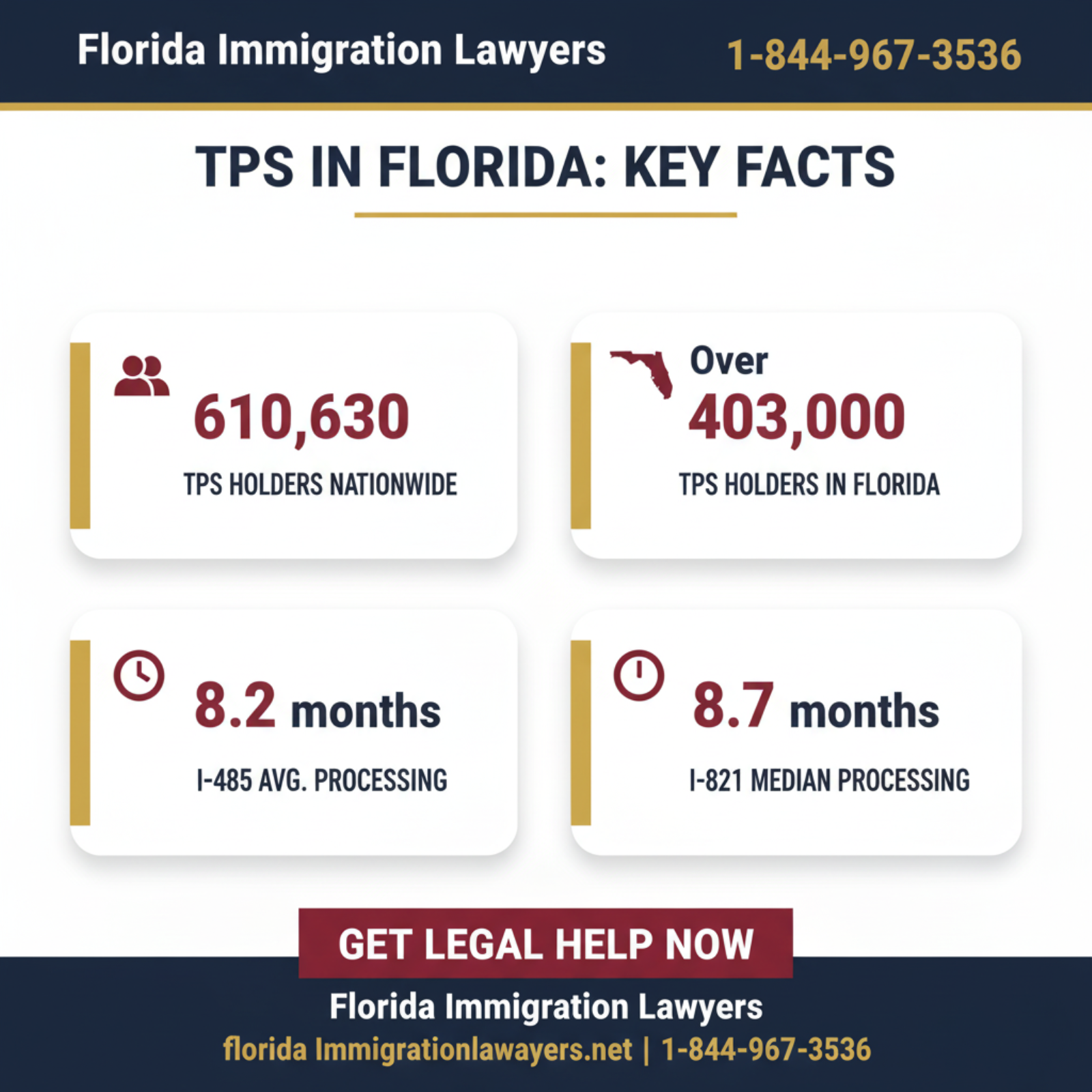
Each of these challenges requires a nuanced legal approach. An experienced immigration attorney can help identify potential issues early, advise on the best course of action, and prepare necessary waivers or arguments to strengthen your case. Do not attempt to navigate these complex issues alone.
Why Choose an Experienced Florida Immigration Attorney?
The journey from TPS to a Green Card is one of the most significant and life-changing processes an individual can undertake. Given the intricate nature of U.S. immigration law, the specific requirements for TPS holders, and the potential for severe consequences from errors, securing expert legal representation is not just beneficial—it's often essential. An experienced Florida immigration attorney brings a wealth of knowledge and practical experience to your case, significantly increasing your chances of a successful outcome.
Our attorneys specialize in complex immigration matters, including adjustment of status for TPS holders. We understand the nuances of Florida-specific immigration trends and federal policies that impact your case. We will meticulously review your entire immigration history, identify any potential challenges or red flags, and develop a tailored strategy to address them proactively. From preparing and filing all necessary forms and supporting documentation to representing you during interviews with USCIS, we provide comprehensive support every step of the way. We ensure that your application meets all legal requirements, minimizes delays, and protects your rights throughout the process. Our goal is to alleviate the stress and uncertainty, allowing you to focus on your future in Florida. Don't leave your permanent residency to chance; partner with a dedicated legal team. Learn more about our experienced legal team and how we can assist you. For a personalized consultation, please contact us today.
Conclusion: Securing Your Future in Florida
The pathway from Temporary Protected Status to a Green Card in Florida is a journey that requires careful planning, a thorough understanding of immigration law, and often, strategic navigation of complex legal hurdles. While challenging, achieving permanent residency is a tangible and attainable goal for many TPS holders. By understanding the requirements for lawful admission, securing a qualifying family petition, and meticulously preparing your application, you can significantly improve your chances of success. Remember, every individual's case is unique, and personalized legal advice is paramount. With the guidance of an experienced Florida immigration attorney, you can confidently pursue your dream of a secure and permanent future in the United States.
No Navegue Este Proceso Solo
Nuestros abogados de inmigración con experiencia están listos para luchar por usted. Obtenga una consulta gratuita y confidencial hoy.
We Speak English
Preguntas Frecuentes
Florida Immigration Lawyers
Abogado de Inmigración | Fundador, Vasquez Law Firm
Veterano de la Fuerza Aérea de EE.UU. y abogado de inmigración con miles de casos resueltos. J.D., NCCU School of Law. Miembro de AILA. Admitido en los Circuitos 4.°, 5.° y 11.°
Disponible 24/7 - Consultas Gratis
Servicios legales relacionados
Nuestros abogados de inmigración en Florida pueden ayudarle con servicios de inmigración familiar, ciudadanía y naturalización y defensa contra deportación. Llame hoy al 1-844-967-3536 para una consulta gratuita.
Enlaces Relacionados
Temas Relacionados
Consulta Legal Gratuita
Discuta su caso con nuestros abogados experimentados. Estamos disponibles 24/7.
Artículos Relacionados
Servicios de Inmigración en Naples, Condado de Collier
Descubra servicios de inmigración integrales en Naples, Condado de Collier. Aprenda sobre procesos de visa, asistencia legal y cómo evitar errores comunes. Contacte a Florida Immigration Lawyers para orientación experta y una consulta gratuita.
Extensión OPT STEM para Graduados de Florida: Guía 2026
Para los estudiantes internacionales F-1 que se gradúan de universidades de Florida con un título STEM, la extensión OPT STEM es una vía vital para extender la autorización de empleo por 24 meses. Esta guía de Florida Immigration Lawyers detalla el proceso de solicitud de 2026, incluyendo la elegibilidad, un recorrido paso a paso, documentos esenciales como el Formulario I-983 y plazos críticos. Destacamos la importancia de consultar a su DSO, asegurar un empleador E-Verify y evitar errores comunes que pueden llevar a retrasos o denegaciones. Comprender estos requisitos es clave para aprovechar el sólido mercado laboral de Florida. Contacte a nuestra firma para una consulta gratuita y navegue este proceso de manera efectiva.
Efecto de la Expungement en la Inmigración en Florida
Descubra cómo la expungement impacta la inmigración en Florida. Aprenda sobre la elegibilidad, el proceso y las posibles consecuencias. Contacte a Florida Immigration Lawyers al 1-844-967-3536 para una consulta gratuita.
