Naturalization Ceremony ICE Concerns Florida 2026: Your
Address naturalization ceremony ICE concerns in Florida for 2026. Learn your rights, understand risks, and contact Florida Immigration Lawyers for a free consultation.
Concerns about U.S. Immigration and Customs Enforcement (ICE) at naturalization ceremonies in Florida are understandable, though direct ICE operations at these events are rare for eligible applicants. While naturalization grants citizenship, certain past issues or new criminal activity could theoretically lead to complications. It is crucial to understand your rights and ensure your application is fully compliant.
- Naturalization typically provides strong protection against deportation.
- ICE presence at ceremonies for eligible applicants is uncommon.
- Consult an attorney if you have any past legal issues or concerns.
- Knowing your rights is essential for all immigrants in Florida.
- Always carry proof of your immigration status, even as an applicant.
The journey to becoming a U.S. citizen is a monumental achievement, culminating in the cherished naturalization ceremony. For many aspiring citizens in Florida, particularly in diverse communities like Naples, this moment is filled with immense joy and anticipation. However, a lingering question often arises: what about naturalization ceremony ICE concerns Florida? It is natural to feel anxious about any potential interaction with immigration enforcement, especially given the evolving landscape of immigration policies in 2026.
This comprehensive guide from Florida Immigration Lawyers addresses your understandable questions and provides clarity on what you can expect at your naturalization ceremony. We will explore the process, your rights, and how to prepare for this significant event. Our goal is to empower you with accurate information so you can approach your ceremony with confidence. If you have immediate concerns or need personalized advice, do not hesitate to Call Florida Immigration Lawyers at 1-844-967-3536 for a free consultation.
Understanding Naturalization and Immigration Enforcement in Florida
Naturalization is the process by which a lawful permanent resident (green card holder) becomes a U.S. citizen. This process is overseen by U.S. Citizenship and Immigration Services (USCIS). Once you take the Oath of Allegiance and receive your Certificate of Naturalization, you are officially a U.S. citizen, enjoying full rights and protections, including the right to vote and increased protection from deportation.
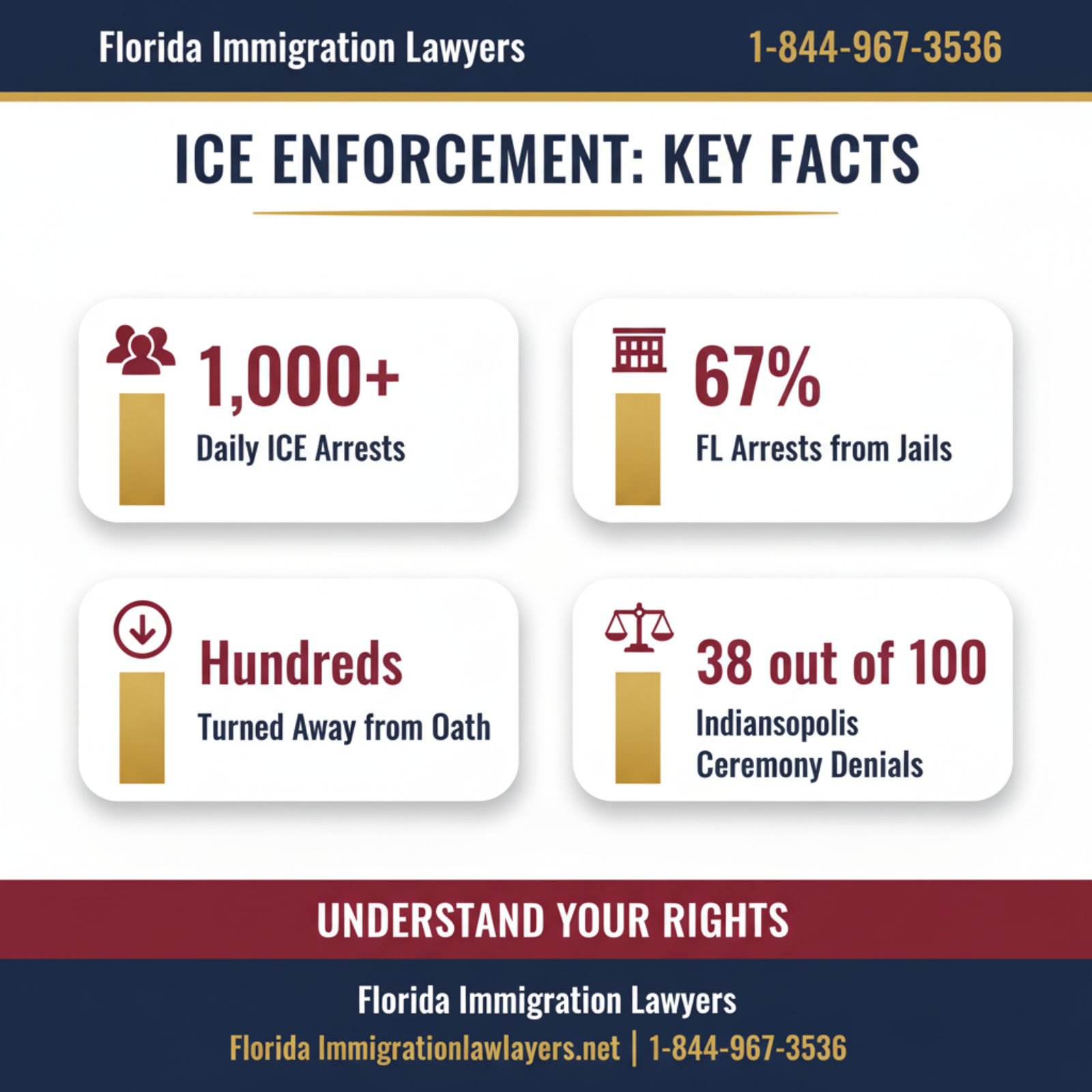
In Florida, a state with a significant immigrant population, understanding the distinction between USCIS and ICE is crucial. USCIS handles immigration benefits, while ICE is primarily responsible for enforcing immigration laws, including arrests and deportations. While ICE has broad authority, its operations at naturalization ceremonies are generally focused on individuals with outstanding warrants or those who have committed serious crimes since their initial application.
Eligibility Requirements for Naturalization
To qualify for naturalization, you must meet several key criteria. These typically include being at least 18 years old, having held lawful permanent resident status for a specific period (usually five years, or three years if married to a U.S. citizen), demonstrating continuous residence and physical presence in the U.S., and possessing good moral character. You must also pass an English and civics test and be willing to take the Oath of Allegiance.
Any issues related to your good moral character, such as certain criminal offenses, could potentially raise flags. This is why thorough preparation and legal review are vital. For residents of Naples and other Florida cities, ensuring all eligibility criteria are met is the first step towards a smooth USCIS naturalization process.
The Naturalization Process: A Step-by-Step Guide
Navigating the path to U.S. citizenship involves several stages. Understanding each step can help alleviate anxiety and ensure you are well-prepared. Florida Immigration Lawyers guides many individuals through this complex journey, making sure every detail is handled correctly.
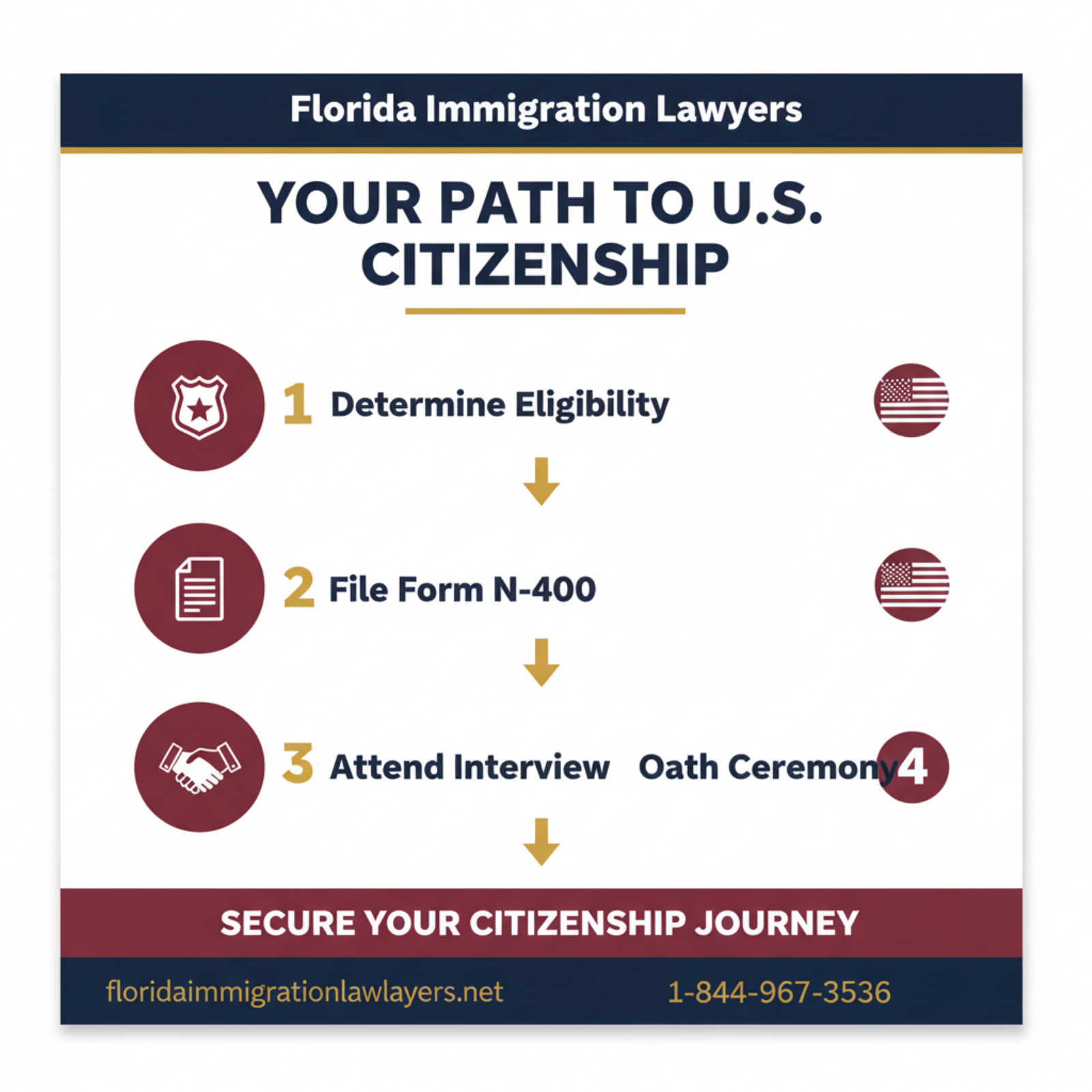
- Determine Your Eligibility: Begin by confirming you meet all the requirements for naturalization, including age, residency, and good moral character. Review the USCIS website for the most current criteria.
- Prepare and File Form N-400: Complete the Application for Naturalization, Form N-400. This form requires detailed personal, family, employment, and residency information. Accuracy is paramount.
- Attend Biometrics Appointment: After filing, you will receive a notice to attend a biometrics appointment at a local Application Support Center (ASC). Here, your fingerprints, photograph, and signature will be taken for background checks.
- Complete the Naturalization Interview: A USCIS officer will interview you to verify the information on your N-400, test your English proficiency, and assess your knowledge of U.S. history and government. Be honest and thorough in your responses.
- Receive a Decision: USCIS will issue a decision on your application. If approved, you will receive a notice for your Oath of Allegiance ceremony. If denied, you may have options to appeal or reapply, depending on the reason.
- Attend the Oath of Allegiance Ceremony: This is the final step where you take an oath to the United States and receive your Certificate of Naturalization. This ceremony officially makes you a U.S. citizen.
Preparing for Your Naturalization Interview
The interview is a critical juncture. You should review your N-400 application thoroughly and study for the English and civics tests. Practice answering potential questions about your application. Bringing an experienced immigration Florida lawyer with you can provide significant peace of mind and advocacy.
What to Expect at the Oath Ceremony
Naturalization ceremonies are typically joyous, public events held at various locations, sometimes even federal courthouses or community centers across Florida. You will check in, be assigned a seat, and listen to speeches from officials. Then, you will take the Oath of Allegiance. After the oath, you will receive your Certificate of Naturalization. It is a formal, yet celebratory, occasion.
Essential Documents for Your Naturalization Ceremony
While most of the heavy documentation is handled during the application and interview phases, you still need to bring specific items to your naturalization ceremony. Proper documentation ensures a smooth check-in process and confirms your identity. Failure to bring required documents could lead to delays.
- Your Permanent Resident Card (Green Card) – you will surrender this at the ceremony.
- The Oath of Allegiance Ceremony Notice (Form N-445).
- Any re-entry permit or refugee travel document issued to you.
- Your USCIS-issued "Green Card" (Form I-551).
- Any other immigration documents you have received from USCIS.
- Government-issued identification (e.g., Florida driver's license or state ID).
- Two identical color photographs if USCIS requested them (check your N-445).
Always review your N-445 notice carefully for any specific instructions or additional documents required. It is better to be over-prepared than to face an unexpected issue on this important day.
Timeline and Processing Expectations for USCIS Naturalization
The processing time for USCIS naturalization applications can vary significantly. Factors influencing the timeline include the specific USCIS field office (e.g., Miami, Orlando, Tampa), the completeness of your application, and current agency workloads. Generally, the process can take anywhere from 8 to 18 months, or even longer in some complex cases.
Avoiding Delays in Your Naturalization Application
To minimize delays, ensure your Form N-400 is accurate and complete, and submit all required supporting documents. Respond promptly to any Requests for Evidence (RFEs) from USCIS. Attending all scheduled appointments and interviews on time is also crucial. An experienced attorney can help you prepare a robust application, reducing the likelihood of RFEs or other slowdowns.
Cost Factors and Fee Breakdown for Naturalization
The naturalization process involves certain fees, primarily for filing Form N-400 and for biometrics services. These fees are subject to change, so it is essential to check the official USCIS website for the most current amounts. USCIS offers fee waivers for eligible applicants who demonstrate financial hardship. This can significantly reduce the cost burden.
Understanding Naturalization Fees
The application fee covers the processing of your N-400. The biometrics fee covers the cost of fingerprinting and background checks. There are no additional fees directly associated with attending the Oath of Allegiance ceremony itself. Be wary of any third parties claiming to charge for the ceremony. Consulting with a Florida immigration lawyer can help you understand all potential costs and determine if you qualify for a fee waiver.
Do not navigate this process alone. Contact Florida Immigration Lawyers today for expert guidance and support.
Common Mistakes to Avoid During Your Naturalization Journey
The naturalization process is detailed, and even small errors can lead to delays or denials. Being aware of common pitfalls can help you avoid them.
- Failing to Disclose All Information: Omitting details about past arrests, even if charges were dropped or expunged, can be considered misrepresentation and lead to serious problems. Always be truthful and complete.
- Not Meeting Residency Requirements: Miscalculating your continuous residence or physical presence in the U.S. can result in an application denial. Keep meticulous records of travel.
- Having Undisclosed Criminal History: Any criminal record, no matter how minor it seems, must be disclosed. Certain offenses can impact your good moral character and eligibility.
- Failing the English or Civics Test: Insufficient preparation for these tests can lead to a failed interview and necessitate retesting, prolonging the process.
- Ignoring USCIS Requests: Not responding promptly and thoroughly to Requests for Evidence (RFEs) or other notices from USCIS can cause delays or even abandonment of your application.
- Lying During the Interview: Providing false information or misrepresenting facts during your naturalization interview can lead to a denial, accusations of fraud, and even deportation proceedings.
- Traveling Abroad Before the Oath Ceremony: While rare, traveling outside the U.S. after your interview but before your Oath Ceremony can sometimes cause issues or delays, especially if it affects your continuous residence.
When to Call a Florida Immigration Lawyer for Naturalization
While many individuals successfully navigate the naturalization process on their own, certain situations absolutely warrant the expertise of a qualified Florida immigration lawyer. This is especially true when naturalization ceremony ICE concerns Florida are on your mind or if your case presents any complexities.
You should consider seeking legal counsel from Florida Immigration Lawyers if any of the following apply to your situation:
- You have a past criminal record, even a minor one, or have ever been arrested or charged with a crime.
- You have previously been placed in removal or deportation proceedings.
- You have concerns about your good moral character, perhaps due to tax issues, unpaid child support, or other legal entanglements.
- You have traveled extensively outside the U.S. and are unsure if you meet the continuous residence requirements.
- You have received a Request for Evidence (RFE) or a Notice of Intent to Deny (NOID) from USCIS.
- You struggle with English proficiency or learning U.S. civics and need help preparing for the interview.
- You fear potential interaction with ICE due to past immigration issues or concerns about your family members.
- You have a complex immigration history or are unsure about any aspect of the N-400 application.
Our experienced team at Florida Immigration Lawyers understands the nuances of immigration law, including specific policies that might affect individuals in Naples and across Florida. We can review your case, address your concerns about deportation risk citizenship, and represent you throughout the entire naturalization process, including attending your interview. Our goal is to protect your rights and help you achieve your dream of U.S. citizenship.
Frequently Asked Questions About Naturalization and ICE
Many applicants have questions regarding the interaction between naturalization and immigration enforcement. Here are answers to some common concerns, keeping in mind the naturalization ceremony ICE concerns Florida context.
Can ICE deport me if I am a naturalized citizen?
Once you are a naturalized U.S. citizen, you generally cannot be deported. Citizenship provides robust protection against removal. However, citizenship can be revoked in rare circumstances, such as if it was obtained through fraud or misrepresentation. This is an extremely serious matter and typically requires a denaturalization proceeding in federal court. It is not something that happens casually at a ceremony.
Do naturalized citizens have to worry about ICE?
As a naturalized citizen, you have the same rights and protections as a native-born citizen. You do not typically need to worry about ICE. ICE's mandate is to enforce immigration laws, which apply to non-citizens. If you are a U.S. citizen, you are not subject to immigration enforcement actions like deportation. Always carry proof of your citizenship, such as your Certificate of Naturalization or U.S. passport.
What proof of citizenship is ICE looking for?
ICE officers are looking for proof of lawful status or citizenship when interacting with individuals. If you are a naturalized citizen, your Certificate of Naturalization or a U.S. passport serves as definitive proof. If you are a lawful permanent resident awaiting naturalization, your Green Card (Form I-551) is your primary proof of status. Always carry these documents and present them if asked by an immigration officer.
What is the 3-3-3 rule for citizenship?
The "3-3-3 rule" is not an official USCIS or legal term for citizenship. It might be a colloquial reference to certain residency requirements. The actual requirements for naturalization typically involve being a lawful permanent resident for five years (or
No Navegue Este Proceso Solo
Nuestros abogados de inmigración con experiencia están listos para luchar por usted. Obtenga una consulta gratuita y confidencial hoy.
We Speak English
Preguntas Frecuentes
Florida Immigration Lawyers
Abogado de Inmigración | Fundador, Vasquez Law Firm
Veterano de la Fuerza Aérea de EE.UU. y abogado de inmigración con miles de casos resueltos. J.D., NCCU School of Law. Miembro de AILA. Admitido en los Circuitos 4.°, 5.° y 11.°
Disponible 24/7 - Consultas Gratis
Servicios legales relacionados
Nuestros abogados de inmigración en Florida pueden ayudarle con protección de asilo, consulta gratis de inmigración y áreas de práctica de inmigración. Llame hoy al 1-844-967-3536 para una consulta gratuita.
Enlaces Relacionados
Temas Relacionados
Consulta Legal Gratuita
Discuta su caso con nuestros abogados experimentados. Estamos disponibles 24/7.
Artículos Relacionados
Tarjeta Verde de Inversionista EB-5 en Florida: Aspectos Clave
Descubra cómo el programa de tarjeta verde de inversionista EB-5 puede ayudarlo a comenzar una nueva vida en Florida. Aprenda sobre los beneficios, procesos y errores comunes de esta vía de inmigración por inversión. Llame al 1-844-967-3536 para obtener orientación experta.
Visa E-2 para Inversores Comerciales en Florida | VLF Florida
Aprenda cómo la visa de inversionista E-2 puede ayudarle a iniciar un negocio en Nápoles, Florida. Cubrimos elegibilidad, pasos de aplicación, errores comunes, y cuándo buscar ayuda legal. Contacte a Florida Immigration Lawyers para una consulta gratuita.
Apoyo de VAWA para Víctimas en Florida | VLF Florida
Descubra las opciones de alivio migratorio de VAWA para víctimas de abuso en Hollywood, Florida. Aprenda sobre la elegibilidad, los pasos de solicitud y los errores comunes a evitar. Contacte a Florida Immigration Lawyers para una consulta gratuita.