Naturalization Ceremony ICE Concerns in Florida: What...
Worried about naturalization ceremony ICE concerns in Florida? Understand your rights and protections. Contact Florida Immigration Lawyers for a free consultation today.
The journey to U.S. citizenship through naturalization is a momentous occasion, representing years of dedication, hard work, and a commitment to a new life. For many immigrants in Florida, however, this celebratory milestone is often overshadowed by a lingering concern: the potential presence of U.S. Immigration and Customs Enforcement (ICE) at naturalization ceremonies. The fear of apprehension or questioning by immigration authorities can create significant anxiety, turning a day of joy into one of apprehension. This comprehensive guide aims to address these concerns head-on, providing clarity on ICE policies, your rights, and the specific considerations for individuals attending naturalization ceremonies in Florida. Understanding the facts and knowing your protections is the first step towards confidently embracing your new citizenship.
Understanding Naturalization and Its Importance
Naturalization is the process by which a foreign citizen or national becomes a citizen of the United States. It's the culmination of a rigorous application process, background checks, interviews, and often, years of lawful permanent residency. Achieving U.S. citizenship comes with a host of benefits, including the right to vote, eligibility for federal jobs, the ability to petition for more family members, protection from deportation, and the freedom to travel with a U.S. passport. Beyond the legal advantages, citizenship represents a deep integration into American society and a full embrace of its opportunities and responsibilities. It is a symbol of belonging and a testament to an individual's journey and contributions to the nation. The naturalization ceremony itself is a powerful and symbolic event, where applicants take an Oath of Allegiance, officially severing ties with their former nationality and pledging loyalty to the United States. This public ceremony is designed to be a welcoming and celebratory occasion, marking the beginning of a new chapter for thousands of new citizens each year.
The Path to U.S. Citizenship
The path to U.S. citizenship typically begins after an individual has held lawful permanent resident (green card) status for a certain period, usually five years, or three years if married to a U.S. citizen. Applicants must meet specific eligibility requirements, including age, continuous residency, physical presence, good moral character, and an ability to read, write, and speak basic English, along with a knowledge of U.S. history and government. The process involves submitting Form N-400, Application for Naturalization, undergoing a biometrics appointment, and attending an interview with a USCIS officer. If approved, the final step is the naturalization ceremony, where the Oath of Allegiance is administered. Throughout this process, it is crucial to ensure all information provided is accurate and truthful, as any discrepancies or undisclosed issues could jeopardize the application. Consulting with an experienced immigration attorney can help navigate these complex requirements and prepare for each stage of the journey.
Addressing ICE Concerns at Naturalization Ceremonies
The fear of ICE presence at naturalization ceremonies is a significant concern for many aspiring citizens, particularly given the heightened immigration enforcement climate in recent years. While it is understandable to feel anxious, it's important to understand the official policies and the reality on the ground. U.S. Citizenship and Immigration Services (USCIS) and ICE operate under specific guidelines regarding enforcement actions at what are designated as “sensitive locations.” Naturalization ceremonies, often held in federal courthouses or other public venues, are generally considered sensitive locations where enforcement actions are restricted. The primary goal of these ceremonies is to welcome new citizens, not to conduct immigration arrests. However, it is equally important to acknowledge that no location is entirely immune from enforcement if there are compelling circumstances, such as a national security threat or an imminent risk of violence. Nonetheless, for the vast majority of applicants, the ceremony proceeds without incident, focusing solely on the oath and celebration of citizenship. Knowledge of your rights and the applicable policies can significantly alleviate undue stress.
Official ICE Policy and Guidelines
U.S. Immigration and Customs Enforcement (ICE) has a longstanding policy regarding enforcement actions at sensitive locations. This policy, which can be reviewed on uscis.gov and justice.gov, generally prohibits enforcement actions at places like schools, hospitals, places of worship, and public ceremonies, including naturalization ceremonies, unless there are exigent circumstances. These circumstances are narrowly defined and typically involve national security concerns, an imminent risk of death, violence, or physical harm, or the pursuit of a dangerous felon. The policy aims to ensure that individuals can access essential services and participate in important civic functions without fear of apprehension. While the policy provides a layer of protection, it's crucial for individuals to understand that it is a policy, not a law, and can be subject to interpretation or change. However, the intent behind it is to foster trust and ensure the integrity of the naturalization process. If you have any concerns about your specific situation, it is always best to seek legal advice.
Protected Areas and Sensitive Locations
The concept of “sensitive locations” is central to understanding ICE's operational guidelines. These are places where enforcement actions are generally avoided to protect public safety, ensure access to essential services, and uphold the integrity of certain civic processes. Naturalization ceremonies, often held within federal courthouses or other designated public venues, typically fall under this protective umbrella. Federal courthouses, in particular, are considered sensitive locations, and any enforcement activity within them requires prior approval from supervisory officials, usually only in exceptional circumstances. This policy is designed to allow individuals to participate in judicial proceedings and civic events, such as becoming a U.S. citizen, without fear of immigration enforcement. While the policy provides a strong deterrent against routine enforcement, it does not offer absolute immunity. Individuals with outstanding warrants, serious criminal histories, or those deemed a threat to national security could still be subject to apprehension, even in a sensitive location. Therefore, it is always prudent to be aware of your legal standing and consult with an immigration attorney if you have any doubts.
Your Rights and Protections During the Naturalization Process
Understanding your rights is paramount for anyone navigating the immigration system, especially during a significant event like a naturalization ceremony. As an applicant for U.S. citizenship, you have certain constitutional protections, even before taking the Oath of Allegiance. These rights are fundamental to the American legal system and apply to everyone within U.S. borders, regardless of immigration status. Knowing what to do if you are approached by immigration officials can empower you and help protect your interests. It is crucial to remember that you have the right to remain silent, the right to an attorney, and the right not to sign anything you don't understand or that has not been reviewed by legal counsel. These protections are especially vital if there are any complexities in your immigration history, such as prior encounters with law enforcement or past immigration violations. While naturalization ceremonies are generally safe environments, being prepared and informed about your rights offers an additional layer of security and peace of mind. Seeking guidance from an experienced deportation defense attorney can provide invaluable support.
Know Your Rights: What to Do If Approached
If you are approached by an immigration officer at any time, including at or near a naturalization ceremony, it's essential to remain calm and remember your rights. You have the right to remain silent; you are not obligated to answer questions about your immigration status, birthplace, or how you entered the U.S. You also have the right to speak with an attorney before answering any questions or signing any documents. If an officer asks to see your documents, you are generally required to provide your green card or other valid immigration documents. However, you do not have to consent to a search of your person, belongings, or vehicle without a warrant. If an officer presents a warrant, inspect it carefully to ensure it is signed by a judge and specifically names you and the location to be searched. Do not lie or present false documents. If detained, ask why you are being detained and state that you wish to speak with an attorney. For comprehensive advice, it is always best to consult with an experienced immigration lawyer.
The Role of Legal Counsel
While attending a naturalization ceremony typically does not require legal representation, having an experienced immigration attorney by your side throughout the naturalization process can be invaluable. An attorney can help you prepare your application, ensure all documentation is correct, and address any potential issues that might arise during your interview or in your background check. More critically, if you have any past criminal history, prior immigration violations, or complex issues that could impact your good moral character determination, an attorney can assess your situation, advise you on potential risks, and help mitigate them. They can also represent you during your interview, if necessary, and provide crucial guidance on your rights if you are ever approached by immigration officials. The peace of mind that comes from knowing you have expert legal support can make a significant difference in what can be a stressful process. For assistance with any immigration matter, including asylum or deportation defense, do not hesitate to reach out to qualified legal professionals.
Specific Considerations for Florida Residents
Florida, with its diverse population and unique geographical position, has a complex immigration landscape. While federal immigration laws and policies, including those regarding sensitive locations, apply nationwide, state-level legislation and local enforcement practices can sometimes create additional layers of anxiety for immigrant communities. In recent years, Florida has seen increased legislative activity concerning immigration, which, while not directly impacting federal naturalization ceremonies, can contribute to a general climate of fear and uncertainty. It is important for Florida residents to distinguish between federal immigration enforcement and state or local law enforcement actions. Naturalization ceremonies are federal events, and as such, are primarily governed by federal policies. However, understanding the broader context of immigration enforcement in Florida can help new citizens and applicants navigate their daily lives more confidently. Remaining informed about both federal and state developments is key, and seeking legal counsel from attorneys familiar with Florida's specific nuances can provide tailored advice and support.
Florida's Immigration Landscape and Local Enforcement
Florida's position as a major entry point and a state with a large immigrant population means it often experiences unique challenges and discussions surrounding immigration policy. While federal agencies like ICE and USCIS operate under nationwide mandates, local law enforcement agencies in Florida may have varying levels of cooperation with federal immigration authorities. This can sometimes lead to confusion or heightened apprehension within immigrant communities. However, it's crucial to reiterate that naturalization ceremonies are federal proceedings, and the sensitive locations policy is a federal guideline. State or local laws generally do not supersede federal policy regarding enforcement at these specific federal events. Nonetheless, understanding the general climate and potential interactions with local law enforcement in your specific Florida county can be beneficial. Always remember that your rights as an individual in the U.S. are protected regardless of local policies. For any concerns about local enforcement or state-specific immigration issues, consulting with a Florida-based immigration law firm is highly recommended.
Preparing for Your Naturalization Ceremony
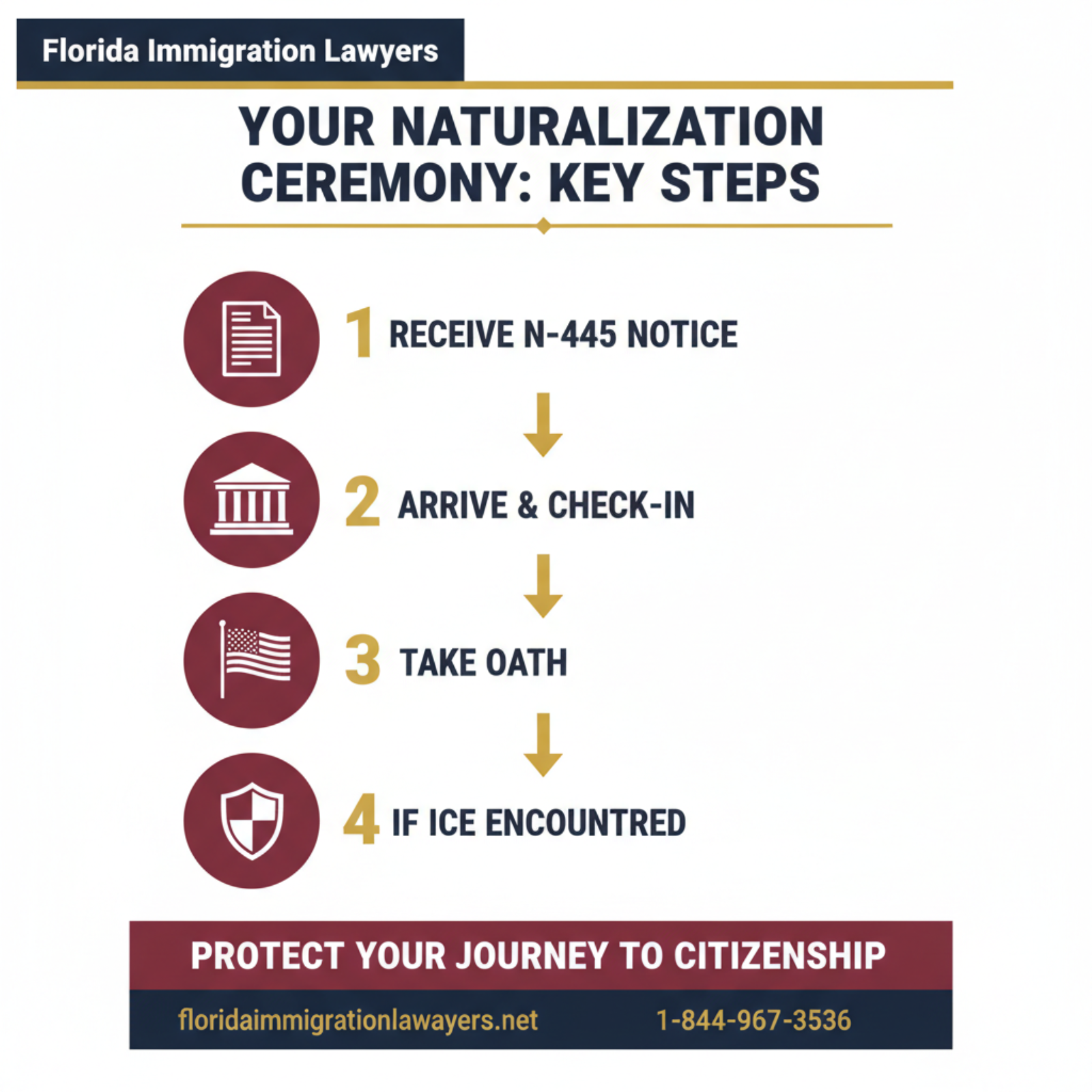
The naturalization ceremony is the final, celebratory step in becoming a U.S. citizen. Proper preparation can help ensure the day goes smoothly and allows you to fully enjoy this momentous occasion. Before the ceremony, you will receive a Notice of Naturalization Oath Ceremony (Form N-445), which will list the date, time, and location of your ceremony, along with instructions on what to bring and what to do. It is crucial to review this document carefully. On the day of the ceremony, arrive early, dress appropriately (business casual is usually recommended), and bring all required documents. The ceremony itself typically involves a welcome address, a video presentation, the administration of the Oath of Allegiance, and the distribution of naturalization certificates. It is a day of profound significance, marking your official transition to U.S. citizenship. By being well-prepared, you can minimize any last-minute stress and focus on the joy and pride of this achievement.
Documentation and What to Expect
On the day of your naturalization ceremony, you will typically need to bring your Permanent Resident Card (Green Card), your Notice of Naturalization Oath Ceremony (Form N-445), and any other immigration documents USCIS has instructed you to return. If you have changed your name as part of the naturalization process, you may also need to bring supporting documents for that. You will be asked to sign your N-445, confirming that you have not traveled outside the U.S., been arrested, or joined any organizations since your interview. The ceremony itself is a formal but joyful event. You will take the Oath of Allegiance, which is the final step in becoming a U.S. citizen. After the oath, you will receive your Certificate of Naturalization, which is proof of your U.S. citizenship. Review your certificate carefully for any errors before leaving the ceremony. This certificate is a vital document, so keep it in a safe place. If you have any questions about specific documents or the ceremony process, please contact us for guidance.
Beyond the Ceremony: Life as a U.S. Citizen
Becoming a U.S. citizen opens up a world of new opportunities and responsibilities. With your Certificate of Naturalization in hand, you can apply for a U.S. passport, which facilitates international travel and provides consular protection abroad. You gain the right to vote in federal, state, and local elections, giving you a voice in the democratic process. Citizenship also allows you to petition for more family members to immigrate to the U.S. and provides greater job opportunities, including eligibility for federal employment. Importantly, as a U.S. citizen, you are protected from deportation and can never lose your status unless it was obtained fraudulently. Beyond these tangible benefits, citizenship signifies a deeper connection to the country, offering a sense of belonging and the full embrace of the rights and freedoms guaranteed by the U.S. Constitution. It is a profound milestone that marks the beginning of a new chapter filled with possibilities.
The journey to U.S. citizenship is a significant achievement, and the naturalization ceremony should be a moment of celebration, not apprehension. While concerns about ICE presence are valid, understanding the official policies regarding sensitive locations and knowing your rights can provide immense peace of mind. For residents of Florida, remaining informed about both federal guidelines and the local immigration landscape is key. Remember, you have constitutional rights, and legal counsel is available to help you navigate any complexities. If you have questions about the naturalization process, require assistance with your application, or need guidance on your rights, do not hesitate to reach out to experienced immigration attorneys. We are here to ensure your path to citizenship is as smooth and stress-free as possible, offering expert advice on immigration law, asylum, and deportation defense. Contact us today for a free consultation and let us help you confidently embrace your new life as a U.S. citizen.
No Navegue Este Proceso Solo
Nuestros abogados de inmigración con experiencia están listos para luchar por usted. Obtenga una consulta gratuita y confidencial hoy.
We Speak English
Preguntas Frecuentes
Florida Immigration Lawyers
Abogado de Inmigración | Fundador, Vasquez Law Firm
Veterano de la Fuerza Aérea de EE.UU. y abogado de inmigración con miles de casos resueltos. J.D., NCCU School of Law. Miembro de AILA. Admitido en los Circuitos 4.°, 5.° y 11.°
Disponible 24/7 - Consultas Gratis
Servicios legales relacionados
Nuestros abogados de inmigración en Florida pueden ayudarle con áreas de práctica de inmigración, servicios de inmigración familiar y ciudadanía y naturalización. Llame hoy al 1-844-967-3536 para una consulta gratuita.
Enlaces Relacionados
Temas Relacionados
Consulta Legal Gratuita
Discuta su caso con nuestros abogados experimentados. Estamos disponibles 24/7.
Artículos Relacionados
Entrevista Stokes: Navegando el Fraude Matrimonial en Florida
Una entrevista Stokes es una entrevista especializada y separada realizada por USCIS cuando existen sospechas de fraude matrimonial en una solicitud de tarjeta de residencia. Este riguroso proceso implica el interrogatorio individual de los cónyuges, centrándose en las inconsistencias de sus testimonios para determinar la autenticidad de su vínculo matrimonial. Para las parejas en Florida, navegar esta entrevista de alto riesgo requiere una preparación meticulosa, una documentación exhaustiva y, a menudo, la orientación estratégica de un abogado de inmigración experimentado. Comprender el proceso, prepararse para preguntas detalladas y presentar un caso sólido son cruciales para superar las acusaciones de fraude matrimonial y asegurar su futuro migratorio. Florida Immigration Lawyers está listo para ayudarle.
Abogado de Inmigración Gainesville: Ayuda Legal Norte Florida
Para aquellos en Gainesville, el Condado de Alachua y en todo el Norte de Florida, navegar por la ley de inmigración de EE. UU. requiere orientación experta. Un abogado de inmigración experimentado puede simplificar procesos complejos, desde peticiones familiares y visas de empleo hasta reclamos críticos de asilo y defensa contra la deportación. Esta guía completa describe los servicios esenciales proporcionados por un abogado de inmigración, detalla la documentación necesaria, aclara los tiempos de procesamiento y analiza los costos asociados. También destacamos los errores comunes a evitar y los escenarios cruciales donde el asesoramiento legal es indispensable. Florida Immigration Lawyers atiende a todo Florida, incluyendo Gainesville y St. Petersburg, brindando apoyo legal dedicado para ayudarle a alcanzar sus metas migratorias. Contáctenos para una consulta gratuita para discutir sus necesidades específicas.
Naturalización Militar Acelerada en Bases de Florida
Descubre el proceso de naturalización militar acelerada para miembros de servicio en bases de Florida como MacDill. Aprende sobre elegibilidad, pasos y errores comunes. Contacta a Florida Immigration Lawyers para una consulta gratuita.
