Abrego Garcia Deportation Florida: Your Rights & Legal Help
Navigating complex immigration challenges like the Abrego Garcia deportation in Florida requires expert legal support. Understand your rights and how a Florida immigration lawyer can help. Contact Florida Immigration Lawyers for a free consultation.
Abrego Garcia Deportation Florida: Expert Legal Defense & Your Rights
Navigating the complexities of immigration law, especially when facing a deportation case like that of Abrego Garcia in Florida, can be an overwhelming and frightening experience. The stakes are incredibly high, often involving the potential separation of families and the disruption of lives built over years. Understanding your rights, the legal process, and the critical importance of skilled legal representation is paramount. This comprehensive guide aims to shed light on deportation proceedings in Florida, offering insights into defense strategies and how a dedicated immigration attorney can make a profound difference in your case. Whether you are directly involved in a deportation case or seeking to understand the implications for a loved one, arming yourself with knowledge and expert legal counsel is the first step towards a robust defense.
Understanding Deportation Proceedings in Florida
Deportation, officially known as "removal" proceedings, is the process by which the U.S. government seeks to expel a non-citizen from the country. These proceedings are initiated for various reasons, ranging from visa violations and criminal convictions to unlawful entry. In Florida, as in other states, these cases are heard in immigration courts, which operate under the Executive Office for Immigration Review (EOIR) within the U.S. Department of Justice. The process is distinct from criminal court proceedings, though a criminal history can often be the catalyst for removal. A thorough understanding of the specific grounds for removal and the procedural steps is essential for mounting an effective defense. For more detailed information on various immigration categories and processes, visit USCIS.gov.
What Triggers a Deportation Case?
Deportation cases can be triggered by a wide array of circumstances. Common reasons include overstaying a visa, entering the U.S. without inspection, violating the terms of a visa (e.g., working without authorization on a tourist visa), or committing certain criminal offenses. Even minor infractions can sometimes lead to severe immigration consequences. For example, certain misdemeanors, especially those involving moral turpitude or controlled substances, can render an individual deportable. Furthermore, individuals who have previously been deported and re-entered the U.S. without authorization face particularly challenging circumstances. It's crucial to understand that even lawful permanent residents (green card holders) are not immune to deportation if they commit certain crimes or violate immigration laws.
For instance, if you are arrested for a minor offense that might have immigration consequences, consulting with Florida Immigration Lawyers immediately can help prevent a local criminal case from escalating into a full-blown deportation proceeding. Early intervention is key to safeguarding your future and exploring all possible avenues for defense before the situation becomes more complex.
The Role of Immigration Courts
Immigration courts are administrative courts responsible for adjudicating removal cases. Unlike federal courts, immigration courts do not have juries; cases are decided by an Immigration Judge (IJ). The Department of Homeland Security (DHS), typically through Immigration and Customs Enforcement (ICE), acts as the prosecutor, presenting the government's case for removal. The individual facing deportation, known as the respondent, has the opportunity to present their defense, including evidence, witnesses, and legal arguments. The process can be complex, involving multiple hearings, motions, and appeals. Understanding the specific procedures and rules of evidence in immigration court is vital, which is why experienced legal representation is invaluable. Information on immigration court procedures can be found on the Department of Justice website.
Key Stages of the Deportation Process
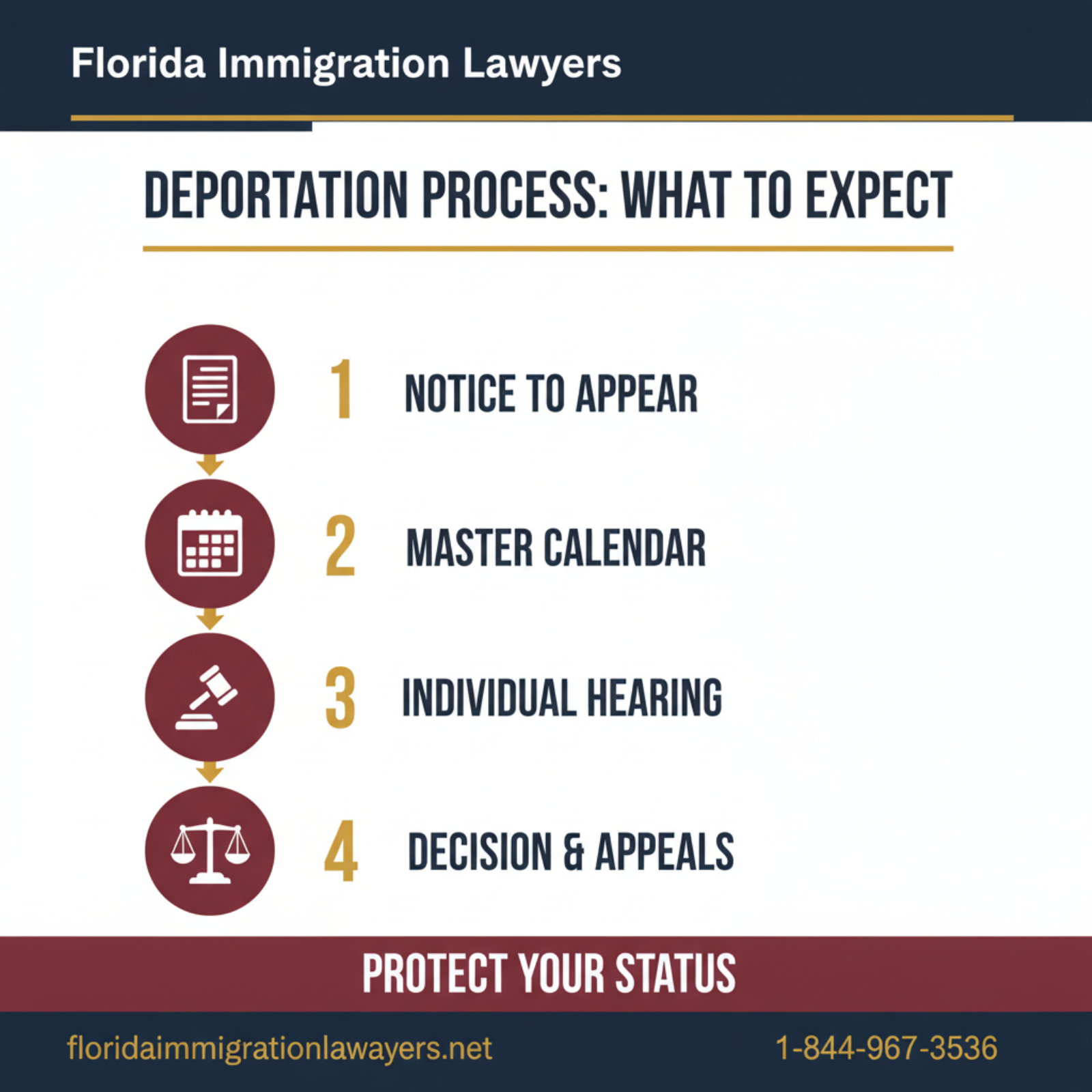
The deportation process typically begins with a Notice to Appear (NTA), a document issued by DHS that outlines the alleged immigration violations and schedules the initial court hearing (the Master Calendar Hearing). At this hearing, the respondent acknowledges the NTA, states whether they admit or deny the allegations, and identifies any relief from removal they intend to pursue. Subsequent Individual Hearings are where evidence is presented, witnesses testify, and legal arguments are made before the Immigration Judge. If the judge orders removal, the respondent generally has the right to appeal the decision to the Board of Immigration Appeals (BIA), and sometimes further to a federal circuit court. Each stage presents opportunities for legal intervention and strategic defense.
Navigating these stages without expert legal guidance can lead to missed deadlines or procedural errors, which can be detrimental. A skilled attorney can file necessary motions, represent you during hearings, and strategically prepare for each step, aiming to secure the best possible outcome. For urgent assistance, contacting Florida Immigration Lawyers at 1-844-967-3536 can provide immediate clarity and support, ensuring your case is handled with the utmost care.
Your Rights During a Deportation Case
Even when facing deportation, non-citizens in the U.S. retain important legal rights. It's critical to be aware of these rights and to exercise them appropriately. Understanding what you are and are not required to do can significantly impact the outcome of your case. An experienced deportation defense lawyer can ensure these rights are protected throughout the proceedings.
Right to Legal Representation
While the government is not required to provide an attorney in civil immigration proceedings, you have the right to obtain legal counsel at your own expense. Having an attorney is arguably the most crucial right, as immigration law is incredibly complex. A lawyer can explain the charges, identify potential defenses, gather evidence, prepare you for court, and represent your interests before the Immigration Judge. Studies consistently show that individuals with legal representation have a significantly higher success rate in immigration court. Do not hesitate to seek professional legal advice from qualified immigration attorneys.
Imagine a scenario where an individual, unaware of specific legal nuances, inadvertently admits to allegations that could be challenged. An attorney would prevent such missteps, ensuring all statements align with a robust defense strategy, protecting you from potential self-incrimination. This expert guidance is invaluable in securing a fair hearing and a strong defense.
Right to Present Evidence
You have the right to present evidence on your behalf to support your defense against deportation. This can include documents (such as birth certificates, marriage licenses, tax records, employment records), affidavits from family and friends, expert witness testimony, and more. Properly collecting, organizing, and presenting this evidence in a manner acceptable to the immigration court is a critical skill that an experienced attorney possesses. They can help you understand what types of evidence are most persuasive for your specific case and how to obtain them.
Right to Appeal
If an Immigration Judge orders your removal, you generally have the right to appeal that decision to the Board of Immigration Appeals (BIA). The BIA reviews the judge's decision for legal errors or abuses of discretion. If the BIA upholds the removal order, in some cases, you may have the option to appeal further to a federal circuit court of appeals. This appellate process is highly technical and requires a deep understanding of legal precedent and procedural rules. An attorney specializing in immigration law can guide you through the appeals process, drafting compelling legal briefs and arguments.
Common Defenses Against Deportation
Facing deportation does not automatically mean removal is inevitable. There are numerous forms of relief and defenses available under U.S. immigration law, depending on the specific circumstances of your case. Identifying and successfully pursuing the correct defense strategy requires the expertise of a seasoned immigration lawyer. These defenses are complex and often require meeting strict eligibility criteria.
Asylum and Withholding of Removal
If you fear persecution in your home country based on your race, religion, nationality, political opinion, or membership in a particular social group, you may be eligible for asylum or withholding of removal. Asylum grants permanent residency after one year, while withholding of removal prevents deportation to a specific country but does not lead to permanent residency. Both require demonstrating a well-founded fear of persecution. The application process involves detailed personal testimony and extensive corroborating evidence, often under tight deadlines. This is a highly specialized area of law where expert legal guidance is crucial.
Cancellation of Removal
Cancellation of Removal is a form of relief available to certain long-term residents. For non-LPRs (non-lawful permanent residents), you must demonstrate continuous physical presence in the U.S. for at least 10 years, good moral character, and show that your removal would cause "exceptional and extremely unusual hardship" to a qualifying U.S. citizen or LPR spouse, parent, or child. For LPRs, you must have been a lawful permanent resident for at least five years, resided continuously in the U.S. for seven years after admission, and not have committed certain aggravated felonies. The 'exceptional and extremely unusual hardship' standard is a high bar, requiring compelling evidence that your family members would suffer beyond what is typical for families separated by deportation. This often involves demonstrating severe medical conditions, educational disruptions, or profound emotional and financial distress that would be unique to your family's situation.
Successfully arguing for Cancellation of Removal demands meticulous documentation and persuasive testimony. For example, a family might present medical records for a U.S. citizen child with a chronic illness requiring specialized care only available in the U.S., alongside psychological evaluations detailing the child's dependence on the deportable parent. An experienced attorney from Florida Immigration Lawyers can help you gather and present this crucial evidence effectively, building a strong case tailored to your unique circumstances.
Adjustment of Status
For individuals eligible for a green card through a family petition (e.g., spouse, parent, or adult child of a U.S. citizen or LPR) or employment-based petition, it may be possible to 'adjust' their status to lawful permanent resident while remaining in the U.S., even if in removal proceedings. This is often available to those who entered legally and have an approved visa petition. However, factors like unlawful entry or specific criminal convictions can make one ineligible, potentially requiring a waiver. An attorney can assess eligibility and file necessary petitions.
Waivers of Inadmissibility/Deportability
Even if found inadmissible or deportable due to violations or criminal offenses, various waivers may be available. These waivers ask the government to forgive the violation based on qualifying factors, often involving hardship to U.S. citizen or LPR family members. Common waivers include the I-601 (Application for Waiver of Grounds of Inadmissibility) and the I-212 (Application for Permission to Reapply for Admission into the United States After Deportation or Removal). For example, an individual who entered without inspection and later married a U.S. citizen might need an I-601A provisional unlawful presence waiver. These are highly discretionary and require strong legal arguments.
Prosecutorial Discretion
In some cases, the Department of Homeland Security (DHS) may exercise 'prosecutorial discretion' to close or terminate removal proceedings, or agree to a less severe outcome. This is not a form of relief from removal but rather a decision by the government to not pursue deportation against a particular individual. Factors that may lead to the exercise of prosecutorial discretion include long-term U.S. residence, strong family ties to U.S. citizens or LPRs, military service, humanitarian considerations, and lack of serious criminal history. While not a guaranteed outcome, a well-presented request by an attorney outlining all favorable factors can significantly influence DHS's decision.
Voluntary Departure
Voluntary departure allows an individual to leave the U.S. voluntarily at their own expense within a specified timeframe, typically 60-120 days, avoiding a formal removal order. While it still means leaving the country, it has significant advantages over a deportation order. A voluntary departure order does not carry the same bars to future re-entry as a formal deportation order, making it easier to apply for a visa or other immigration benefits in the future. An attorney can help negotiate the terms of voluntary departure with the Immigration Judge or ICE, ensuring you understand the implications and adhere to all requirements.
No Navegue Este Proceso Solo
Nuestros abogados de inmigración con experiencia están listos para luchar por usted. Obtenga una consulta gratuita y confidencial hoy.
We Speak English
Preguntas Frecuentes
Florida Immigration Lawyers
Abogado de Inmigración | Fundador, Vasquez Law Firm
Veterano de la Fuerza Aérea de EE.UU. y abogado de inmigración con miles de casos resueltos. J.D., NCCU School of Law. Miembro de AILA. Admitido en los Circuitos 4.°, 5.° y 11.°
Disponible 24/7 - Consultas Gratis
Servicios legales relacionados
Nuestros abogados de inmigración en Florida pueden ayudarle con áreas de práctica de inmigración, servicios de inmigración familiar y ciudadanía y naturalización. Llame hoy al 1-844-967-3536 para una consulta gratuita.
Enlaces Relacionados
Temas Relacionados
Consulta Legal Gratuita
Discuta su caso con nuestros abogados experimentados. Estamos disponibles 24/7.
Artículos Relacionados
Exención Provisional I-601A en Florida | VLF Florida
Aprenda sobre el proceso de exención provisional I-601A en Florida y cómo puede ayudarle a evitar la separación de su familia. Contáctenos al 1-844-967-3536.
Guía de Exención I-601 para Inmigrantes en Florida
La exención I-601 ofrece una solución para los inmigrantes que enfrentan inadmisibilidad en los EE.UU. debido a razones como la presencia ilegal. Esta guía se centra en el proceso I-601 en Florida, particularmente en Pembroke Pines, y proporciona una visión detallada de la elegibilidad, los pasos de aplicación y los errores comunes. Contacte a Florida Immigration Lawyers para una consulta gratuita.
Encuentra Doctores en Florida para el Examen Médico de
Descubre cómo navegar el proceso del examen médico de inmigración en Florida. Aprende los pasos, evita errores comunes y descubre cuándo buscar asesoramiento legal. Contacta a Florida Immigration Lawyers al 1-844-967-3536 para obtener ayuda.
