H-1B Visa Florida Employers Guide 2026: Sponsoring...
Florida employers, learn to navigate the H-1B visa process for 2026. This comprehensive guide covers requirements, lottery, costs, and expert sponsorship strategies. Contact us.
H-1B Visa Florida Employers Guide 2026: Sponsoring Global Talent
As Florida's economy continues its robust growth, fueled by innovation in technology, healthcare, tourism, and aerospace, the demand for highly skilled professionals intensifies. For many businesses, sourcing top-tier talent domestically can be a significant challenge. This is where the H-1B nonimmigrant visa program becomes an indispensable tool, allowing U.S. employers to temporarily employ foreign workers in specialty occupations. For Florida employers looking ahead to 2026, understanding and strategically navigating the H-1B visa process is paramount to securing the global talent necessary for sustained competitive advantage. This comprehensive guide will equip you with the knowledge to successfully sponsor global talent, from eligibility and application to costs and strategic planning.
Understanding the H-1B Visa Program for Florida Businesses
The H-1B visa is a non-immigrant visa that permits U.S. employers to temporarily employ foreign workers in specialty occupations. A specialty occupation is defined as one that requires a theoretical and practical application of a body of highly specialized knowledge, and a bachelor's degree or higher in the specific specialty, or its equivalent, as a minimum for entry into the occupation. For Florida businesses, the H-1B program is a critical pathway to fill skill gaps, especially in burgeoning sectors like IT, engineering, biomedical research, and finance, where local talent pools may not meet the specialized demands. By sponsoring H-1B workers, Florida companies can access a global pool of experts, fostering innovation, diversity, and economic growth within the state. This program not only benefits employers by bringing in specialized skills but also offers foreign professionals a valuable opportunity to contribute to the U.S. economy and gain international experience.
Eligibility Requirements for Employers and Employees
Successfully navigating the H-1B visa process begins with a clear understanding of the eligibility criteria for both the sponsoring employer and the prospective employee. Meeting these foundational requirements is crucial before even considering the lottery or petition filing.
Employer Eligibility
For a Florida business to be eligible to sponsor an H-1B worker, it must meet several key conditions. Firstly, the employer must offer a position that qualifies as a "specialty occupation," meaning it generally requires at least a bachelor's degree in a specific field. Secondly, there must be a genuine employer-employee relationship, where the employer has the right to control the worker's employment, including hiring, firing, and supervising. This is particularly important for consulting firms or third-party placements. Thirdly, the employer must file a Labor Condition Application (LCA) with the U.S. Department of Labor (DOL) and attest that they will pay the H-1B worker at least the prevailing wage or the actual wage paid to other employees with similar experience and qualifications, whichever is higher, and provide working conditions that will not adversely affect other workers. Finally, the employer must have a valid Federal Employer Identification Number (FEIN) and be a legitimate business entity operating in Florida.
Employee Eligibility
The foreign national seeking an H-1B visa must also meet specific qualifications. The primary requirement is that the individual must hold a bachelor's degree or its equivalent, or possess a license in a specialty occupation field (if required), or have work experience equivalent to a bachelor's degree. USCIS evaluates foreign degrees for U.S. equivalency, often requiring an educational evaluation from a credential evaluation service. Furthermore, the job offered must be in a "specialty occupation" directly related to the employee's academic background or experience. The employee must also demonstrate that they have the necessary qualifications and skills to perform the duties of the offered position. Any gaps in education or experience must be thoroughly documented and explained to ensure compliance with USCIS standards.
Navigating the H-1B Lottery and Application Process for 2026
The H-1B visa program is subject to an annual cap, making the lottery and application process highly competitive and complex, especially for the 2026 fiscal year. Understanding each phase is critical for Florida employers.
The Annual H-1B Cap and Lottery
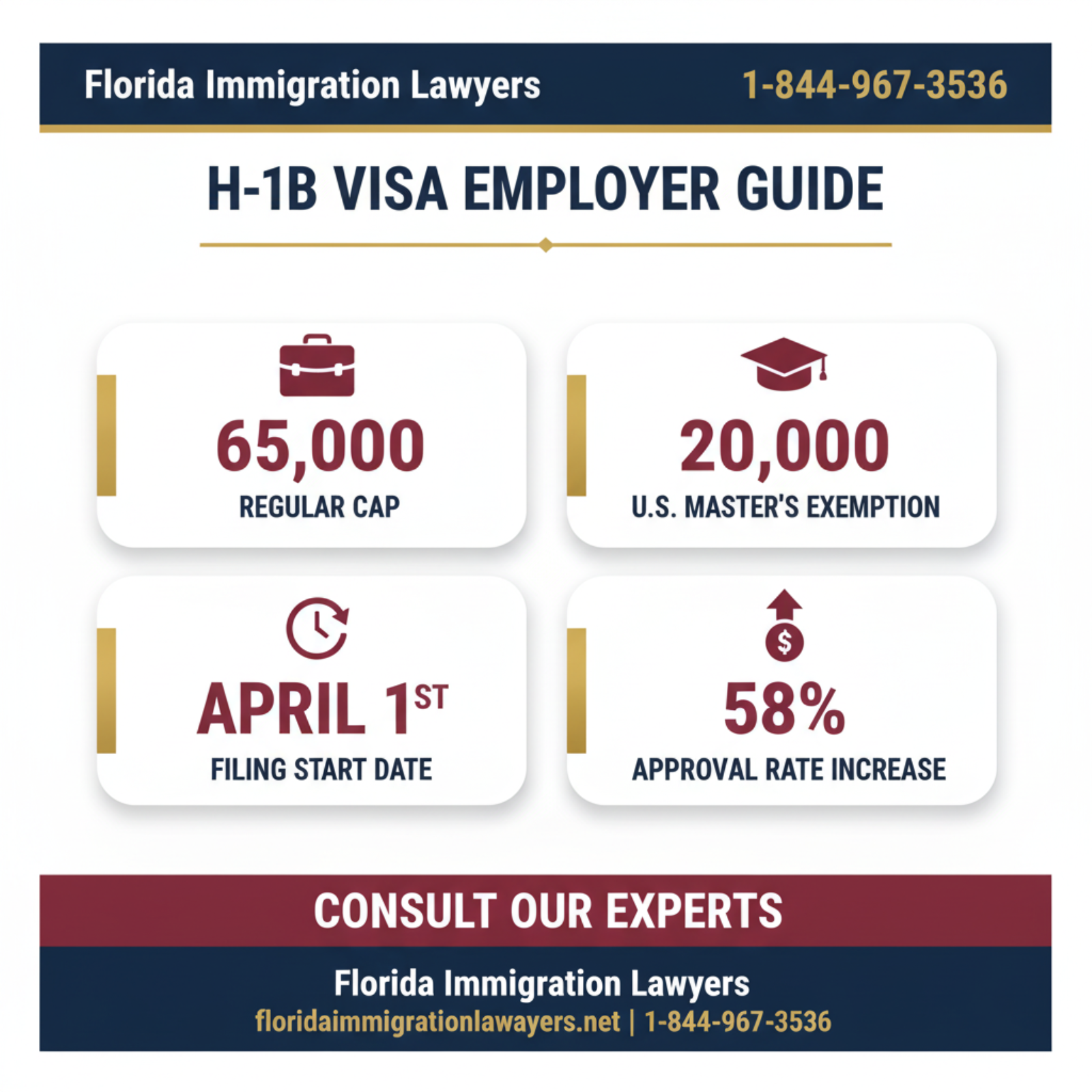
Each fiscal year, Congress sets a limit on the number of H-1B visas issued: 65,000 for the regular cap and an additional 20,000 for those with a U.S. master's degree or higher. Due to overwhelming demand, USCIS typically conducts an electronic registration lottery to select petitions for processing. For the 2026 fiscal year, employers will likely need to register prospective H-1B beneficiaries during a specific window, usually in March of the preceding calendar year (e.g., March 2025 for FY 2026). During this registration period, employers or their authorized representatives submit basic information about the company and the prospective employee. USCIS then conducts a random lottery selection. Only those registrations selected in the lottery are eligible to file a full H-1B petition. The importance of timely and accurate registration cannot be overstated, as a single error can lead to disqualification.
Key Steps in the H-1B Petition Process
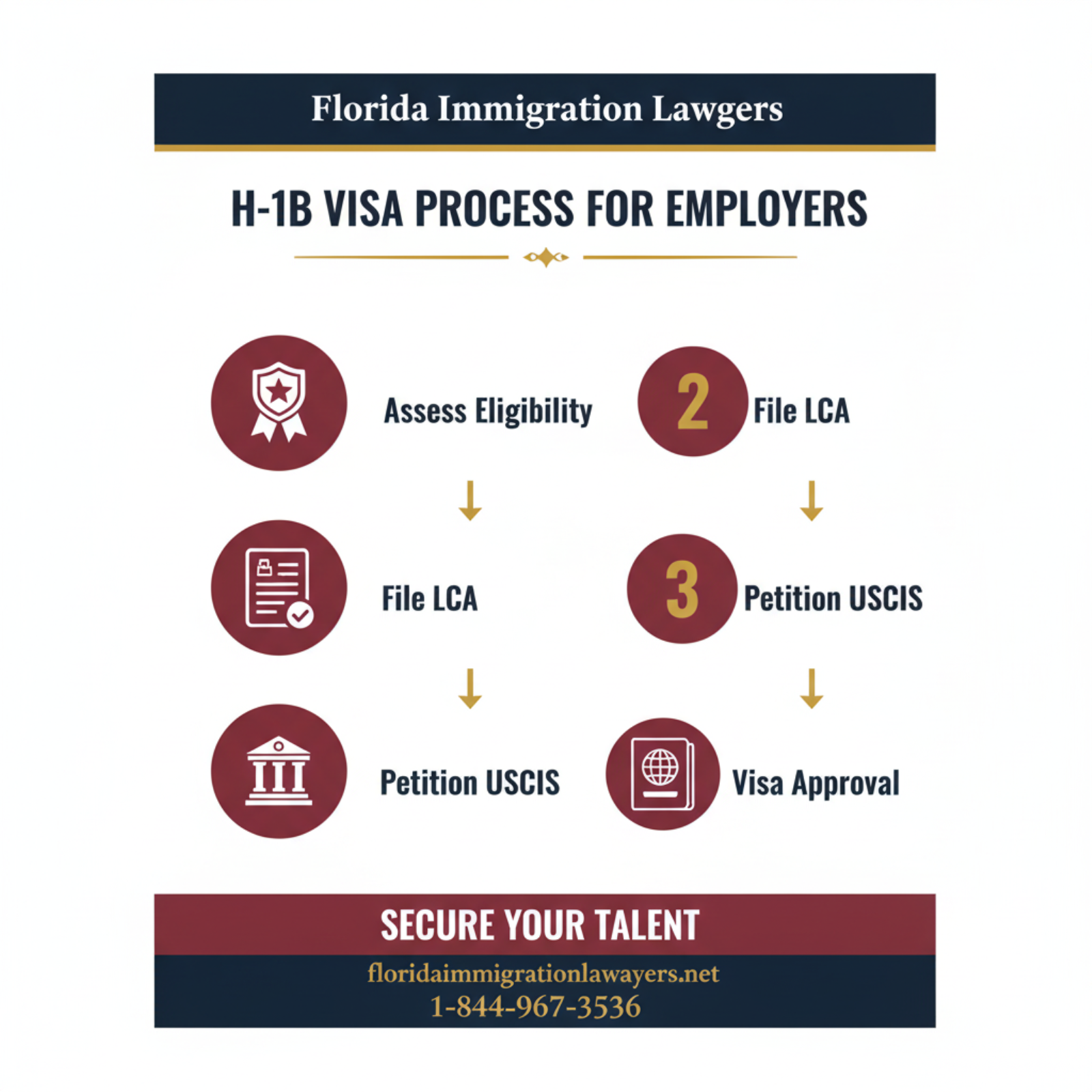
Once a registration is selected, the real work of petition filing begins. The first critical step is filing the Labor Condition Application (LCA) with the U.S. Department of Labor. This document attests to the employer's commitment to pay the prevailing wage and provide appropriate working conditions. After the LCA is certified, the employer must prepare and file Form I-129, Petition for a Nonimmigrant Worker, with U.S. Citizenship and Immigration Services (uscis.gov). This comprehensive petition includes the certified LCA, the job offer letter, evidence of the employee's qualifications (degrees, transcripts, evaluations), company financial documents, and a detailed letter explaining the specialty occupation and the need for the foreign worker. Supporting documentation is extensive and must be meticulously organized. Employers may opt for Premium Processing, an expedited service for an additional fee, to receive a decision within 15 calendar days. Depending on the employee's current status, they may undergo consular processing at a U.S. embassy or consulate abroad (information often found on travel.state.gov) or apply for a Change of Status if already in the U.S. Navigating these steps requires precision and a deep understanding of immigration law.
Costs Associated with H-1B Sponsorship
Sponsoring an H-1B visa involves various fees and expenses that Florida employers must budget for. These costs can be substantial and vary depending on the company size and specific circumstances.
Government Filing Fees
- I-129 Filing Fee: This is the base fee for filing the Petition for a Nonimmigrant Worker.
- American Competitiveness and Workforce Improvement Act (ACWIA) Fee: This fee supports U.S. worker training and education programs. It is $750 for employers with 1-25 full-time equivalent employees and $1,500 for employers with 26 or more full-time equivalent employees.
- Fraud Prevention and Detection Fee: A mandatory fee of $500, designed to combat fraud in visa programs.
- Public Law 114-113 Fee: An additional fee of $4,000 applies to employers who have 50 or more employees, and more than 50 percent of those employees are in H-1B or L-1 nonimmigrant status.
- Premium Processing Fee (Optional): For employers who need an expedited decision, USCIS offers Premium Processing for an additional fee, currently $2,805, which guarantees a response within 15 calendar days.
Legal and Other Costs
Beyond government fees, employers should anticipate legal fees for immigration attorneys, which can range significantly based on the complexity of the case and the firm's experience. These fees cover the preparation and filing of the LCA, Form I-129, and all supporting documentation, as well as responding to any Requests for Evidence (RFEs). Other potential costs include: educational credential evaluations for foreign degrees (typically $100-$300), recruitment advertisement costs if required for the LCA, and travel expenses for the employee if they need to attend a consular interview abroad. While these costs can seem daunting, investing in expert legal counsel helps minimize errors, reduces the risk of denial, and ultimately saves time and resources in the long run.
Strategic Considerations for Florida Employers in 2026
Given the competitive nature and complexity of the H-1B program, Florida employers must adopt a strategic and proactive approach for the 2026 fiscal year. Merely reacting to deadlines is often insufficient; foresight and meticulous planning are key to success.
Proactive Planning and Recruitment
The H-1B lottery's timing means that employers need to identify their global talent needs well in advance. Begin assessing your workforce requirements and potential H-1B candidates at least six to nine months before the anticipated registration period (typically March). This allows ample time for internal approvals, candidate selection, and the collection of necessary documentation. Early engagement with prospective employees ensures they understand the process and can provide required academic and professional credentials promptly. Furthermore, a proactive strategy includes understanding the prevailing wage requirements for specific occupations in different Florida regions, which can influence recruitment budgets and job offers. Staying informed about potential legislative changes or policy updates from the Department of Justice (justice.gov) or USCIS is also crucial for adapting your strategy.
Compliance and Post-Approval Obligations
H-1B sponsorship doesn't end with approval. Florida employers have ongoing compliance obligations that must be diligently met to avoid penalties. Key among these is maintaining a Public Access File (PAF) at the employer's principal place of business in the U.S. This file must contain specific documents related to the LCA, such as the certified LCA, documentation of the wage rate, and evidence of actual wage system. Employers must also ensure they continue to pay the H-1B worker the prevailing or actual wage, whichever is higher, and notify USCIS of any material changes, such as a change in the employee's work location or job duties. Proper record-keeping for the entire H-1B employment period is essential. Non-compliance can lead to severe penalties, including fines, debarment from future H-1B sponsorships, and even criminal charges.
Alternatives and Contingency Planning
What if your H-1B registration isn't selected in the lottery, or the petition is denied? Smart Florida employers develop contingency plans. Explore other nonimmigrant visa categories that might be suitable, such as L-1 visas for intracompany transferees, O-1 visas for individuals with extraordinary ability, TN visas for Canadian and Mexican professionals, or E-3 visas for Australian specialty occupation workers. Each has distinct requirements and limitations. Additionally, consider if the position could be filled by individuals eligible for other immigration pathways, though less directly related, such as those seeking asylum, if their skills align with your needs and they obtain work authorization. Having a backup strategy ensures that your talent acquisition efforts are not entirely dependent on the H-1B lottery's outcome.
Why Expert Legal Counsel is Indispensable
The H-1B visa process is notoriously complex, with intricate regulations, strict deadlines, and a high volume of applications. For Florida employers, attempting to navigate this landscape without expert legal guidance can lead to costly errors, delays, and even petition denials. An experienced immigration attorney provides invaluable assistance, from determining eligibility and preparing the voluminous documentation to responding to Requests for Evidence (RFEs) and ensuring ongoing compliance. They stay abreast of the latest policy changes from USCIS and the Department of Labor, offering strategic advice tailored to your specific business needs. Their expertise helps minimize risks, maximize the chances of a successful outcome, and ensures that your company remains compliant with all immigration laws. Furthermore, an attorney can advise on broader immigration issues, including deportation defense, should unforeseen circumstances arise for your sponsored employees. Entrusting your H-1B petitions to seasoned professionals, like our attorneys, allows you to focus on your core business while we manage the complexities of immigration law.
Conclusion
For Florida employers, the H-1B visa program remains a vital pathway to secure the specialized global talent essential for innovation and growth in 2026 and beyond. While the process is undeniably complex and competitive, a strategic, well-informed approach, coupled with diligent preparation and expert legal guidance, significantly enhances your chances of success. By understanding the eligibility requirements, meticulously navigating the lottery and application process, budgeting for associated costs, and planning proactively, Florida businesses can effectively leverage the H-1B program to build a diverse and highly skilled workforce. Don't let the intricacies of immigration law deter you from accessing the talent your business needs to thrive. Contact us today to discuss your H-1B sponsorship needs and secure your global talent pipeline.
No Navegue Este Proceso Solo
Nuestros abogados de inmigración con experiencia están listos para luchar por usted. Obtenga una consulta gratuita y confidencial hoy.
We Speak English
O deje sus datos y le llamamos:
Evaluación Gratis en 24 Horas
O hable con nosotros ahora

Asistente de voz IA — disponible 24/7
GratisPreguntas Frecuentes

William J. Vásquez
Abogado Fundador · Vasquez Law Firm
Veterano de la Fuerza Aérea de EE.UU. y abogado de inmigración con años de experiencia práctica en inmigración de EE.UU. J.D., NCCU School of Law. Miembro de AILA. Admitido en los Circuitos 4.º, 5.º y 11.º.
Disponible 24/7 - Consultas Gratis
Revisado para exactitud legal por William J. Vásquez
Con licencia en Carolina del Norte; la inmigración a EE.UU. es una práctica federal.
Servicios legales relacionados
Nuestros abogados de inmigración en Florida pueden ayudarle con ciudadanía y naturalización, defensa contra deportación y protección de asilo. Llame hoy al 1-844-967-3536 para una consulta gratuita.
Enlaces Relacionados
Temas Relacionados
Consulta Legal Gratuita
Discuta su caso con nuestros abogados experimentados. Estamos disponibles 24/7.
Artículos Relacionados
Naturalización Militar Acelerada en Bases de Florida
Explora opciones de naturalización militar para familias en bases de Florida, incluyendo beneficios de parole en lugar en Miami. Aprende a acelerar tu aplicación con la guía experta de Florida Immigration Lawyers.
Abogado de Inmigración Orlando Consulta Gratis 2026
Descubra cómo encontrar un abogado de inmigración en Orlando que ofrezca una consulta gratuita. Comprenda los servicios disponibles y por qué elegir a Florida Immigration Lawyers puede hacer la diferencia en su caso.
Abogado de Doble Nacionalidad: Guía Entrevista USCIS Florida
Abogado de doble nacionalidad en Florida: Consejos esenciales y preparación experta para su entrevista de naturalización de USCIS. Asegure su ciudadanía