Immigration Interview Preparation Florida: Your Guide
Preparing for your immigration interview in Florida is a pivotal step towards securing your future. This comprehensive guide provides essential tips, a detailed step-by-step preparation plan, and a crucial document checklist to ensure you are fully ready for your USCIS interview. Learn about common mistakes to avoid, understand processing timelines, and identify when legal assistance from experienced Florida immigration lawyers is vital. Whether you are in Hialeah, Miami, or Orlando, navigating your green card, naturalization, or asylum interview requires meticulous attention to detail and professional guidance. Florida Immigration Lawyers offers free consultations to help you prepare effectively and confidently.

Preparing for your immigration interview in Florida is a critical step towards achieving your immigration goals. This interview, conducted by USCIS, is designed to verify the information in your application and determine your eligibility for the requested benefit, such as a green card or citizenship. Thorough preparation is key to a successful outcome, involving meticulous document gathering, understanding potential questions, and practicing your responses. Familiarity with the process helps alleviate stress and ensures you present your case clearly and accurately, especially in areas like Hialeah or Miami where many interviews take place.
- Review your application thoroughly before the interview.
- Gather all original documents and their copies as required.
- Practice answering common interview questions clearly and honestly.
- Consider bringing an experienced immigration lawyer to the interview.
- Understand the specific requirements and processes for your case type.
The prospect of an immigration interview can be daunting, filled with uncertainty and anxiety. For many individuals and families across Florida, from Hialeah to Orlando, this interview represents a pivotal moment in their journey towards a new life in the United States. Whether you are seeking a green card, naturalization, or an asylum approval, thorough preparation is not just recommended-it is absolutely essential. This comprehensive guide from Florida Immigration Lawyers is designed to equip you with the knowledge and tips you need to face your USCIS interview with confidence and clarity.
Understanding the process, knowing what to expect, and diligently gathering all necessary documentation can significantly improve your chances of a successful outcome. We understand the stakes are high, and navigating the complexities of immigration law can feel overwhelming. Our goal is to demystify the interview process, offering actionable advice tailored to the unique environment of Florida. Do not leave your future to chance. Call Florida Immigration Lawyers at 1-844-967-3536 for a free consultation and let us help you prepare effectively.
Understanding Your Immigration Interview in Florida: An Overview
An immigration interview is a formal meeting with a USCIS officer to discuss your application for an immigration benefit. These interviews are a standard part of many immigration processes, including applications for adjustment of status (green cards), naturalization (citizenship), asylum, and various non-immigrant visas. The officer's primary goal is to confirm the accuracy of the information provided in your application, verify your eligibility under U.S. immigration law, and address any potential inadmissibility issues.
In Florida, interviews are typically conducted at one of the USCIS field offices, such as those in Miami, Orlando, or Tampa. For applicants in Hialeah, the Miami field office is the most common location. The type of interview you attend will depend on your specific application. For example, a marriage-based green card interview will focus heavily on the bona fides of your relationship, while a naturalization interview will assess your knowledge of U.S. history and government, as well as your English language proficiency. Understanding the specific focus of your interview is the first step in effective preparation. Recent developments, such as the restarting of asylum and immigration processing, underscore the dynamic nature of immigration procedures, making up-to-date legal advice more crucial than ever. (Ref: INA § 204, 8 U.S.C. § 1154)
During the interview, the officer will ask a series of questions based on your submitted forms and supporting documents. They will also assess your demeanor and credibility. Honesty and consistency are paramount. Any discrepancies between your testimony and your application or supporting documents could raise concerns and potentially lead to delays or even denial. It is vital to present a clear, truthful, and consistent narrative throughout the process. Preparing thoroughly allows you to articulate your case confidently and accurately, demonstrating your eligibility and good moral character to the interviewing officer.
Florida Immigration Lawyers has extensive experience guiding clients through various types of interviews. We understand the nuances of each application type and can help you anticipate the specific questions and challenges you might face. Our team stays informed about the latest policy changes and judicial decisions, ensuring our advice is always current and tailored to your situation. We serve clients throughout Florida, providing personalized support for every stage of their immigration journey, including complex cases that might involve previous denials or criminal history.
Step-by-Step Guide to Immigration Interview Preparation in Florida
Effective immigration interview preparation is a multi-faceted process that requires diligent attention to detail. This step-by-step guide will walk you through the essential actions you should take to ensure you are fully ready for your USCIS interview in Florida. Following these steps can significantly reduce stress and increase your chances of a positive outcome, whether you are in Hialeah or elsewhere in the state.
-
Before the Interview: Thorough Review and Documentation
Review Your Application: Start by meticulously reviewing every form you submitted to USCIS. This includes your initial petition, your adjustment of status application (Form I-485), and any supporting affidavits. You must be familiar with every answer you provided. The interviewing officer will refer to these documents extensively. Ensure your memory aligns perfectly with the written record, as inconsistencies can lead to serious issues. If you have copies of your forms, read them multiple times.
Gather All Documents: Compile all original documents and at least one set of clear copies. This includes passports, birth certificates, marriage certificates, divorce decrees, police clearances, medical exam results (Form I-693), tax returns, and any evidence supporting your application (e.g., proof of relationship, employment letters). Organize these documents in an easily accessible folder. Do not forget to bring the interview notice itself. For family-based petitions, bring joint financial documents, photos, and letters from friends/family attesting to your relationship. For employment-based, bring employment verification letters and pay stubs.
Practice Answering Questions: Anticipate common interview questions specific to your case type. For a green card interview, expect questions about your relationship, how you met, daily life, and future plans. For naturalization, study U.S. civics and history. Practice articulating your answers clearly, concisely, and truthfully. Mock interviews with a friend, family member, or your attorney can be incredibly valuable to build confidence and identify areas for improvement. Focus on direct, honest responses without volunteering unnecessary information.
-
During the Interview: Professionalism and Honesty
Dress Professionally and Arrive Early: Treat the interview like a formal business meeting. Dress in clean, appropriate attire. Plan to arrive at the USCIS field office (e.g., Miami, Orlando) at least 30-45 minutes before your scheduled time. This allows for security checks, finding parking, and settling in without feeling rushed. Being late can lead to rescheduling or even denial of your application, causing significant delays in your immigration process.
Be Honest and Consistent: Always tell the truth, even if it feels uncomfortable. Lying or misrepresenting facts to a USCIS officer can result in severe penalties, including a permanent bar from the United States. If you do not understand a question, politely ask the officer to repeat or rephrase it. Do not guess. If you do not know an answer, state that you do not know. Your answers should be consistent with your application and supporting documents. If you have an attorney, they can help clarify questions.
Maintain Composure and Respect: Remain calm and respectful throughout the interview, regardless of the officer's demeanor. Avoid arguing or becoming emotional. Answer questions directly and clearly. Maintain eye contact, but do not stare. Remember that the officer is doing their job, and your cooperation and respectful attitude can contribute to a smoother process. If you feel overwhelmed, take a deep breath. Your attorney can intervene if necessary.
-
After the Interview: Follow-up and Decision
Understand Next Steps: At the end of the interview, the officer may tell you if your application is approved, if further action is needed (like a Request for Evidence - RFE), or if they need more time to make a decision. Ensure you understand what to expect next. If an RFE is issued, respond promptly and thoroughly with the requested information. Failure to respond can lead to denial. Keep a record of all communications with USCIS.
Monitor Your Case Status: You can typically check the status of your case online using the receipt number provided by USCIS. Be patient, as processing times can vary significantly. If you do not hear back within the expected timeframe, your attorney can help inquire about the status. Keep your address updated with USCIS to ensure you receive all correspondence. (Ref: 8 CFR § 103.2)
Essential Documents Checklist for Your Florida Immigration Interview
Having all required documents meticulously organized is a cornerstone of successful immigration interview preparation. Missing documents can lead to significant delays, Requests for Evidence (RFEs), or even denial of your application. For your USCIS interview in Florida, ensure you bring the originals and at least one set of clear photocopies of every document. This checklist covers generally required items, but always refer to your specific interview notice and application instructions.
- Interview Appointment Notice: The official letter from USCIS scheduling your interview.
- Government-Issued Photo Identification: Your passport, driver's license (even if expired), or state ID.
- All Passports: Current and expired passports for all applicants.
- Birth Certificates: Original birth certificates for all applicants, with certified translations if not in English.
- Marriage Certificate: If applicable, original marriage certificate and proof of termination of previous marriages (divorce decrees, death certificates).
- Medical Examination Report (Form I-693): Sealed in an envelope, completed by a USCIS-approved civil surgeon. Do not open it yourself.
- Affidavits of Support (Form I-864): Along with all supporting financial documents (tax transcripts, employment letters, pay stubs) for the petitioner and any joint sponsors.
- Police Certificates: From any country where you lived for six months or more since age 16, if requested or applicable.
- Proof of Relationship (for family-based petitions): Joint bank accounts, utility bills, leases, insurance policies, photos, letters from friends/family, children's birth certificates.
- Proof of Employment (for employment-based petitions): Employer letters, pay stubs, tax documents.
- Proof of Residency in Florida: Utility bills, lease agreements, bank statements showing your Florida address.
- Educational Documents: Diplomas, transcripts, professional licenses, if relevant to your application.
- Criminal Records: Certified copies of court dispositions for any arrests or convictions, even minor ones.
- Any Previously Submitted Applications/Petitions: Copies of all forms filed with USCIS.
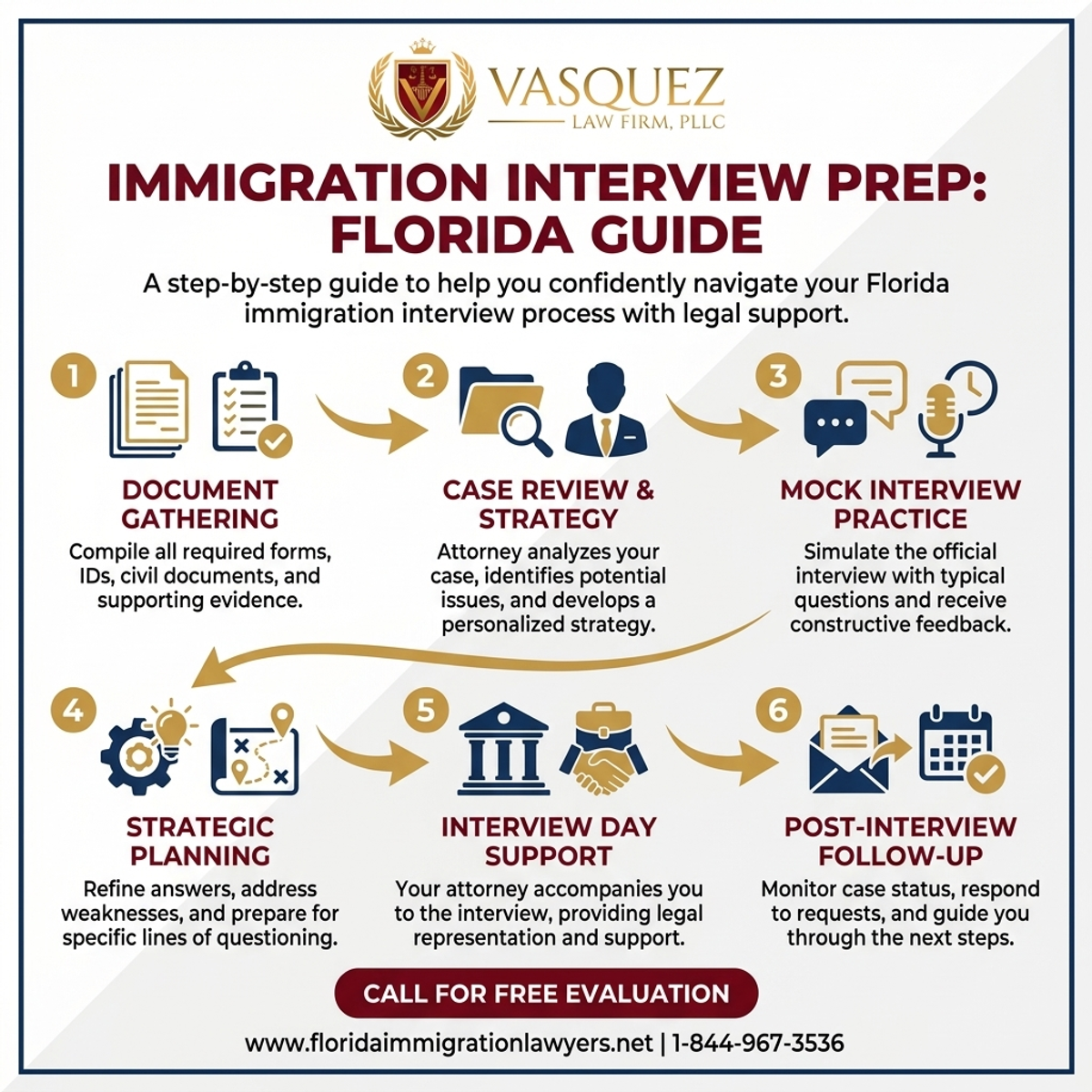
Step-by-Step Process — Immigration Interview Preparation Florida: Your Guide
Navigating Timelines and Processing Expectations in Florida
The waiting period for an immigration interview and the subsequent decision can be a source of significant anxiety. USCIS processing times vary widely based on the type of application, the specific field office, and current caseloads. For applicants in Florida, particularly those in populous areas like Hialeah, Miami, and Orlando, understanding these timelines is a crucial part of your preparation. While no one can guarantee specific processing durations, knowing general expectations can help you plan your future.
You can check estimated processing times on the USCIS website by selecting your form type and the field office or service center handling your case. For instance, adjustment of status applications (Form I-485) typically take several months to over a year, depending on the underlying visa petition category and the specific field office. Naturalization applications (Form N-400) also have varying timelines, often ranging from 6 months to more than a year from filing to oath ceremony. Asylum interviews often have their own expedited processing priorities, especially for affirmative asylum applications.
Recent news regarding the government restarting asylum and immigration processing, along with federal court decisions vacating certain freeze policies, suggests a potential for changes in processing speed. However, backlogs accumulated during previous periods can still impact current wait times. It is essential to remain patient and avoid making major life decisions based solely on estimated timelines. Always keep your contact information updated with USCIS. If your case is taking an unusually long time, or if you have an urgent need, your attorney may be able to submit an inquiry or expedite request.
After your interview, the officer may approve your case on the spot, issue a Request for Evidence (RFE) if more information is needed, or inform you that a decision will be mailed. An RFE is not a denial but requires a timely and thorough response. If your application is denied, you may have options to appeal or refile, depending on the reasons for denial. Consulting with an attorney is vital at this stage to understand your options and next steps. For those in Florida, our firm assists clients in appealing unfavorable decisions and navigating complex post-interview scenarios.
Cost Factors and Fee Breakdown for Immigration Processes in Florida
Understanding the financial aspects of your immigration journey is an integral part of your immigration interview preparation. The overall cost can encompass various fees, and it is important to budget accordingly. While USCIS fees are standardized across the country, other costs, such as legal fees or medical exam prices, may vary slightly within Florida. It is important to note that specific filing fees are subject to change by USCIS, so always check the most current fee schedule on their official website.
The primary cost components generally include:
- USCIS Filing Fees: Each application form (e.g., I-130, I-485, N-400) has a specific filing fee. For adjustment of status, this often includes the fee for Form I-485, plus fees for related applications like Form I-765 (Employment Authorization Document) and Form I-131 (Advance Parole) if filed concurrently. These fees are non-refundable, even if your application is denied.
- Biometrics Services Fee: Most applicants are required to attend a biometrics appointment to have their fingerprints, photograph, and signature taken. There is a separate fee for this service, which is often included with the main application fee.
- Medical Examination Fees: All adjustment of status applicants must undergo a medical examination by a USCIS-approved civil surgeon. The cost of this exam is paid directly to the civil surgeon's office and can vary significantly, typically ranging from a few hundred dollars.
- Translation Fees: If any of your supporting documents are not in English, they must be accompanied by a certified English translation. The cost of these translation services can add up, especially for multiple documents.
- Attorney Fees: Retaining an experienced immigration attorney, like those at Florida Immigration Lawyers, is a significant investment but often provides immense value. Legal fees cover professional guidance, document preparation, representation at interviews, and assistance with complex issues. While this is an additional cost, it can prevent costly mistakes and increase the likelihood of success. Our firm offers transparent fee structures and discusses all costs upfront during your free consultation.
- Miscellaneous Costs: These can include postage, travel expenses to USCIS offices (e.g., from Hialeah to Miami), and fees for obtaining original documents (e.g., birth certificates from your home country).
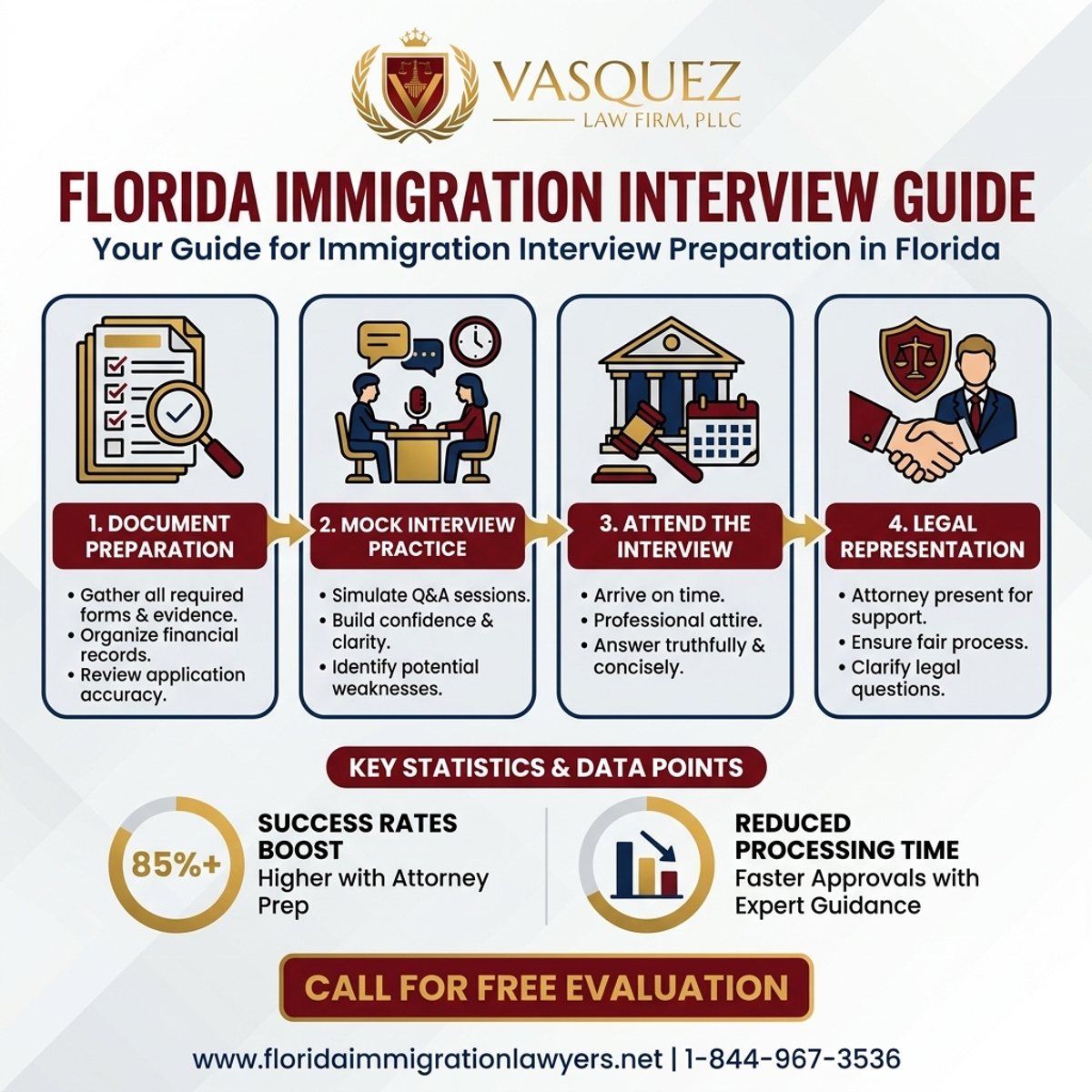
Key Statistics — Immigration Interview Preparation Florida: Your Guide
Do not navigate this process alone. The financial and legal complexities of immigration can be overwhelming. Contact Florida Immigration Lawyers today to discuss your specific case and understand all associated costs. We are here to provide clear guidance and support every step of the way.
Common Mistakes to Avoid During Your Immigration Interview
Avoiding common pitfalls is just as important as thorough immigration interview preparation. Many applicants in Florida inadvertently make mistakes that can jeopardize their case. Being aware of these errors can help you ensure a smoother process with USCIS.
-
Providing Inconsistent Information: Discrepancies between your interview testimony and your written application or previous statements can raise red flags. Always review your application thoroughly beforehand.
-
Failing to Bring All Required Documents: Forgetting a crucial original document or a copy can lead to a Request for Evidence (RFE) and significant delays. Always use a checklist.
-
Arriving Late or Missing the Interview: Punctuality is critical. Arriving late can result in rescheduling, while missing the interview without proper notice can lead to denial.
-
Lying or Misrepresenting Facts: Any false statements to a USCIS officer can have severe consequences, including permanent bars from immigration benefits. Always be truthful.
-
Not Understanding Questions: If you do not understand a question, politely ask the officer to repeat or rephrase it. Do not guess an answer or provide irrelevant information.
-
Volunteering Unnecessary Information: Answer questions directly and truthfully, but avoid elaborating excessively or offering information not explicitly requested. Stick to the facts.
-
Failing to Disclose Criminal History (Even Minor): All arrests, charges, or convictions, no matter how minor or old, must be disclosed. USCIS has access to extensive databases.
-
Not Updating Your Address with USCIS: Moving without notifying USCIS can cause you to miss crucial notices, including your interview appointment or RFEs, leading to potential denial.
-
Bringing an Unauthorized Interpreter: If you need an interpreter and one is not provided by USCIS, you must bring a certified, disinterested interpreter. Family members are often not permitted unless specifically authorized.
-
Disrespectful or Argumentative Behavior: Maintain a respectful and cooperative attitude throughout the interview, even if you feel frustrated or misunderstood. Your demeanor is assessed.
When to Call a Florida Immigration Lawyer for Interview Preparation
While this guide provides valuable tips for immigration interview preparation, there are many situations where the expertise of a qualified Florida immigration lawyer becomes indispensable. Navigating the complex landscape of USCIS procedures alone can be risky, especially when facing unique challenges or uncertainties. Florida Immigration Lawyers are here to provide the specialized legal support you need.
You should strongly consider contacting an attorney if:
- You have a complicated case history: This includes previous denials, deportation proceedings (deportation defense), multiple visa applications, or any issues with maintaining lawful status.
- You have a criminal record: Even minor offenses can have significant immigration consequences. An attorney can assess the impact and prepare waivers if necessary.
- You have concerns about inadmissibility: If there are grounds for inadmissibility, such as health issues, past misrepresentations, or unlawful presence, a lawyer can help prepare arguments or waivers.
- You have previously been denied an immigration benefit: Understanding the reasons for denial and strategizing for a new application or appeal requires legal expertise.
- You have language barriers or communication difficulties: An attorney can ensure proper communication and intervene if questions are unclear or misinterpreted.
- You are applying for asylum: Asylum interviews (asylum) are particularly sensitive and require extensive legal and factual preparation. The recent news regarding processing restarts makes timely, expert advice crucial.
- You feel overwhelmed or anxious about the process: Having an attorney by your side can provide peace of mind and ensure you are fully prepared to present your best case.
- Your case involves complex family relationships or business structures: Family-based (family immigration) or business-based immigration cases often have intricate requirements.
Florida Immigration Lawyers serves clients throughout Florida, including Hialeah, Miami, and Orlando, offering dedicated support for all aspects of your immigration journey. Our experienced attorneys are skilled in preparing clients for interviews, identifying potential issues, and advocating on their behalf. Do not hesitate to seek professional guidance when your future is on the line. Contact us for a free consultation to discuss your specific needs.
About Florida Immigration Lawyers
Florida Immigration Lawyers is a leading immigration law firm dedicated to serving individuals and families across the entire state of Florida. Our mission is to provide compassionate, effective, and results-driven legal representation for all immigration matters. We understand the profound impact immigration decisions have on people's lives and are committed to guiding our clients through every step of the complex legal process.
Our experienced attorneys specialize in a wide range of immigration services, including family-based petitions, employment visas, green card applications, naturalization, asylum claims, and deportation defense. We pride ourselves on our deep understanding of U.S. immigration law, our attention to detail, and our unwavering dedication to our clients. We offer personalized legal strategies tailored to each client's unique circumstances, ensuring the best possible outcome.
At Florida Immigration Lawyers, we believe that everyone deserves high-quality legal representation. We are available 24/7 to address your concerns and offer free consultations to help you understand your options without financial obligation. Our team is bilingual, and we proudly offer services in both English and Spanish, ensuring clear and effective communication. When you choose Florida Immigration Lawyers, you choose a partner committed to your success. Call us today at 1-844-967-3536 or visit https://www.floridaimmigrationlawyers.net to learn more.
Sources and References
- U.S. Citizenship and Immigration Services (USCIS)
- Executive Office for Immigration Review (EOIR)
- U.S. Department of State - Bureau of Consular Affairs
- 8 U.S.C. Chapter 12 - Immigration and Nationality Act (INA)
- 8 CFR § 103.2 - Applications, petitions, and other documents; filings; requests for evidence; appeals
- INA § 204 - Procedure for granting immigrant status
Related services: immigration practice areas, citizenship and naturalization, business immigration.
This article provides general legal information and is not intended as legal advice. Every case is unique, and outcomes depend on specific facts and circumstances. Contact an attorney for advice about your particular situation.
Your journey through the immigration process is significant, and your immigration interview is a critical moment. With the right preparation and legal support, you can approach it with confidence. Do not face this important step alone. Contact Florida Immigration Lawyers today for a free consultation at 1-844-967-3536. Se Habla Espanol - Estamos aqui para ayudarle.
If you need legal assistance, learn more about experienced immigration attorneys in Orlando, or call us at 1-844-967-3536 for a free consultation.
Do Not Navigate This Process Alone
Our experienced immigration attorneys are ready to fight for you. Get a free, confidential consultation today.
Se Habla Español
Frequently Asked Questions
Florida Immigration Lawyers
Immigration Attorney | Founder, Vasquez Law Firm
U.S. Air Force veteran and immigration attorney with thousands of cases resolved. J.D., NCCU School of Law. AILA member. Admitted to the 4th, 5th, and 11th Circuit Courts.
Available 24/7 - Free Evaluations
Related Legal Services
Our Florida immigration attorneys can help you with family immigration services, immigration practice areas and free immigration consultation. Call today at 1-844-967-3536 for a free consultation.
Related Links
Related Topics
Free Legal Consultation
Discuss your case with our experienced attorneys. We're available 24/7.
Se Habla Español - Estamos aquí para ayudarle.
Related Articles
Family Petition Immigration Lawyer Miami: Your Florida Guide
For families in Miami, Kissimmee, and across Florida, securing a family petition is often the first step towards reuniting with loved ones in the U.S. This process, which typically begins with filing Form I-130, Petition for Alien Relative, requires meticulous attention to detail and a thorough understanding of U.S. immigration law. From proving a legitimate family relationship to navigating extensive documentation and often lengthy processing times, the journey can be complex. An experienced family petition immigration lawyer can provide invaluable guidance, helping to avoid common pitfalls, respond to USCIS requests, and ensure a smooth application process. Florida Immigration Lawyers offers dedicated legal support to families statewide, helping them achieve their dreams of reunification.
DACA Renewal Florida 2026 Guide for Dreamers | VLF Florida
For DACA recipients in Florida, understanding the DACA renewal process for 2026 is vital. This comprehensive guide details eligibility, step-by-step procedures, essential documents, timelines, and costs. Learn how to file your Form I-821D and I-765, avoid common mistakes, and ensure continuous residence. We cover specific considerations for Dreamers in St. Petersburg and across Florida, emphasizing the importance of timely and accurate submissions to USCIS. Discover when legal assistance from Florida Immigration Lawyers can be crucial, especially for complex cases involving criminal history or travel outside the U.S. Get expert advice to protect your deferred action status and employment authorization.
DACA Renewal Florida 2026 Guide for Dreamers | VLF Florida
Learn how to renew your DACA in Florida for 2026. This guide provides essential steps, common pitfalls, and resources available to Dreamers in Hialeah and beyond. Call Florida Immigration Lawyers at 1-844-967-3536 for a free consultation.
Understanding the I-864 Affidavit of Support in Florida
Learn about the I-864 Affidavit of Support, a critical step for sponsoring family members in Florida. This guide covers requirements, common mistakes, and when to seek legal counsel. Contact Florida Immigration Lawyers for expert assistance.