Immigration Bond Hearing Florida: Your Guide to Freedom
When a loved one is detained by ICE in Florida, an immigration bond hearing becomes paramount for their release. This guide from Florida Immigration Lawyers provides a comprehensive overview of the process, covering eligibility, required documents, timelines, and costs. Learn how to navigate the complexities of detention, understand the factors an immigration judge considers, and avoid common mistakes that could jeopardize a favorable outcome. Our experienced attorneys are dedicated to helping families in Orlando and across Florida secure release through effective legal representation. Contact us for a free consultation to discuss your specific situation and take the first step towards reuniting with your family.

An immigration bond hearing in Florida is a crucial legal proceeding where an immigration judge determines if a detained individual can be released from U.S. Immigration and Customs Enforcement (ICE) custody by paying a bond. This hearing assesses factors like flight risk and danger to the community. Eligibility depends on the specific grounds of detention, with some cases involving mandatory detention without bond. Securing an immigration bond allows individuals to fight their case outside of detention, often with better access to legal resources and support.
- Purpose: To determine eligibility for release on bond from ICE detention.
- Eligibility: Assessed based on flight risk, public safety, and statutory bars.
- Process: Involves a hearing before an immigration judge to present evidence.
- Location: Hearings typically occur in immigration courts, such as the one in Orlando, Florida.
- Legal Help: An experienced immigration lawyer is vital for navigating the complex process.
Navigating the immigration system can be one of the most challenging experiences for individuals and their families. When a loved one is detained by U.S. Immigration and Customs Enforcement (ICE) in Florida, the immediate concern is often how to secure their release. This is where an immigration bond hearing Florida becomes a critical step towards freedom and reunification. The process can seem daunting, filled with complex legal requirements and emotional stress.
Many families in Orlando and across Florida find themselves in this difficult situation, unsure of their rights or the steps they need to take. Understanding the intricacies of detention, bond eligibility, and the hearing process is essential for a positive outcome. This comprehensive guide will walk you through every aspect of an immigration bond hearing, offering clarity and practical advice. We aim to empower you with the knowledge needed to face this challenge head-on.
In the current climate, with ongoing changes to immigration policies, understanding your options is more important than ever. Recent discussions around green card changes and stricter enforcement highlight the need for expert legal guidance. Do not face this complex legal battle alone. For immediate assistance and peace of mind, call Florida Immigration Lawyers at 1-844-967-3536 for a free consultation. Our dedicated team is ready to help you and your family.
Understanding Immigration Bonds and Detention in Florida
When an individual is apprehended by U.S. Immigration and Customs Enforcement (ICE) in Florida, they are typically placed into immigration detention. This detention is not a criminal punishment but a civil administrative measure to ensure the individual appears for future immigration court proceedings or can be deported if ordered. The goal of an immigration bond hearing Florida is to determine if the detained person can be released from this custody by posting a bond, essentially a financial guarantee that they will attend all scheduled hearings.
The authority for detention and release on bond comes from the Immigration and Nationality Act (INA), specifically INA § 236 (8 U.S.C. § 1226). This section outlines who may be detained and who may be released on bond. ICE officers initially assess whether to set a bond or hold an individual without bond. If ICE does not set a bond, or sets one that is too high, the detained individual has the right to request a bond hearing before an immigration judge. This is a fundamental right for many non-citizens facing detention in facilities like the Baker County Detention Center or Glades County Detention Center, which serve the Orlando and wider Florida areas.
Detention can be particularly stressful for families, especially when a loved one is held far from home. The purpose of a bond is to mitigate the risk that the individual might flee or pose a danger to the community. An immigration judge at an immigration bond hearing will carefully weigh these factors. They will consider the individual's ties to the community, their immigration history, and any criminal record. Our firm understands the local context of Florida immigration courts and detention centers, providing invaluable support during these challenging times.
Eligibility and Key Factors for an Immigration Bond Hearing
Not everyone detained by ICE is eligible for an immigration bond. Eligibility depends on the specific grounds for detention, which are primarily categorized into mandatory detention and discretionary detention. Mandatory detention applies to certain individuals, such as those with specific criminal convictions or those deemed a national security risk, as outlined in INA § 236(c). If mandatory detention applies, an immigration judge generally cannot set a bond, making the case much more complex. This is why understanding the legal basis for detention is crucial for anyone facing an immigration bond hearing Florida.
For individuals not subject to mandatory detention, an immigration judge has the discretion to set a bond. During the bond hearing, the judge will evaluate several key factors to determine if the individual poses a flight risk or a danger to the community. These factors include the individual's ties to the U.S. (family, employment, property in Florida), their length of residence, their immigration history, and any criminal record. The judge will also consider their likelihood of appearing for future court dates and whether they are a threat to public safety. Evidence of strong community ties in Orlando or other Florida cities can be highly beneficial.
The burden of proof typically lies with the detained individual to demonstrate that they are not a flight risk and do not pose a danger. This requires presenting compelling evidence and arguments. For example, evidence of a stable job, U.S. citizen family members, and a clean criminal record are all positive indicators. Conversely, a history of failing to appear in court or serious criminal offenses will significantly reduce the chances of bond approval. A skilled attorney can help gather and present this evidence effectively at an immigration bond hearing, significantly improving the chances of a favorable outcome.
Step-by-Step Guide to the Immigration Bond Hearing Process
Navigating an immigration bond hearing Florida involves several distinct stages, each requiring careful attention. Understanding this process can help you prepare and reduce anxiety. Here is a step-by-step guide:
- Arrest and Detention by ICE in Florida: An individual is taken into custody by ICE, often following an encounter with law enforcement or an immigration raid. They are typically transported to an immigration detention facility, which in Florida may include facilities near Orlando.
- Initial Custody Review/Bond Determination: ICE generally conducts an initial review to determine if the individual is eligible for release on an immigration bond. Sometimes, ICE may set an administrative bond. If no bond is set, or if the bond is deemed too high, the individual or their attorney can request a bond hearing.
- Requesting a Bond Hearing: The attorney or the detained individual files a formal request for a bond hearing with the Executive Office for Immigration Review (EOIR), the agency that oversees immigration courts. This request is typically made to the immigration court with jurisdiction over the detention facility.
- Preparing for the Hearing: This critical stage involves gathering all necessary documents and evidence, identifying potential witnesses (such as family members or employers), and preparing legal arguments. A strong case requires meticulous preparation to demonstrate that the individual is not a flight risk or a danger to the community.
- The Hearing Itself: The bond hearing takes place before an immigration judge. The judge will hear arguments from the detained individual's attorney and the ICE attorney (government counsel). Evidence will be presented, and witnesses may testify. The judge's role is to determine if a bond should be granted and, if so, the appropriate amount.
- Bond Decision and Release: If the judge grants a bond, they will set a specific amount. Once the bond is paid, typically by a relative or friend (the bond obligor), the individual will be processed for release from detention. The bond payment ensures their appearance at all future immigration court dates.
- What to Expect After Release: After release, the individual must strictly adhere to the conditions of their bond, including attending all scheduled court hearings. Failure to do so can result in bond forfeiture and re-detention. Continued legal representation is vital for navigating the ongoing immigration case.
For comprehensive assistance with every stage of this process, including deportation defense, consult with experienced legal counsel.
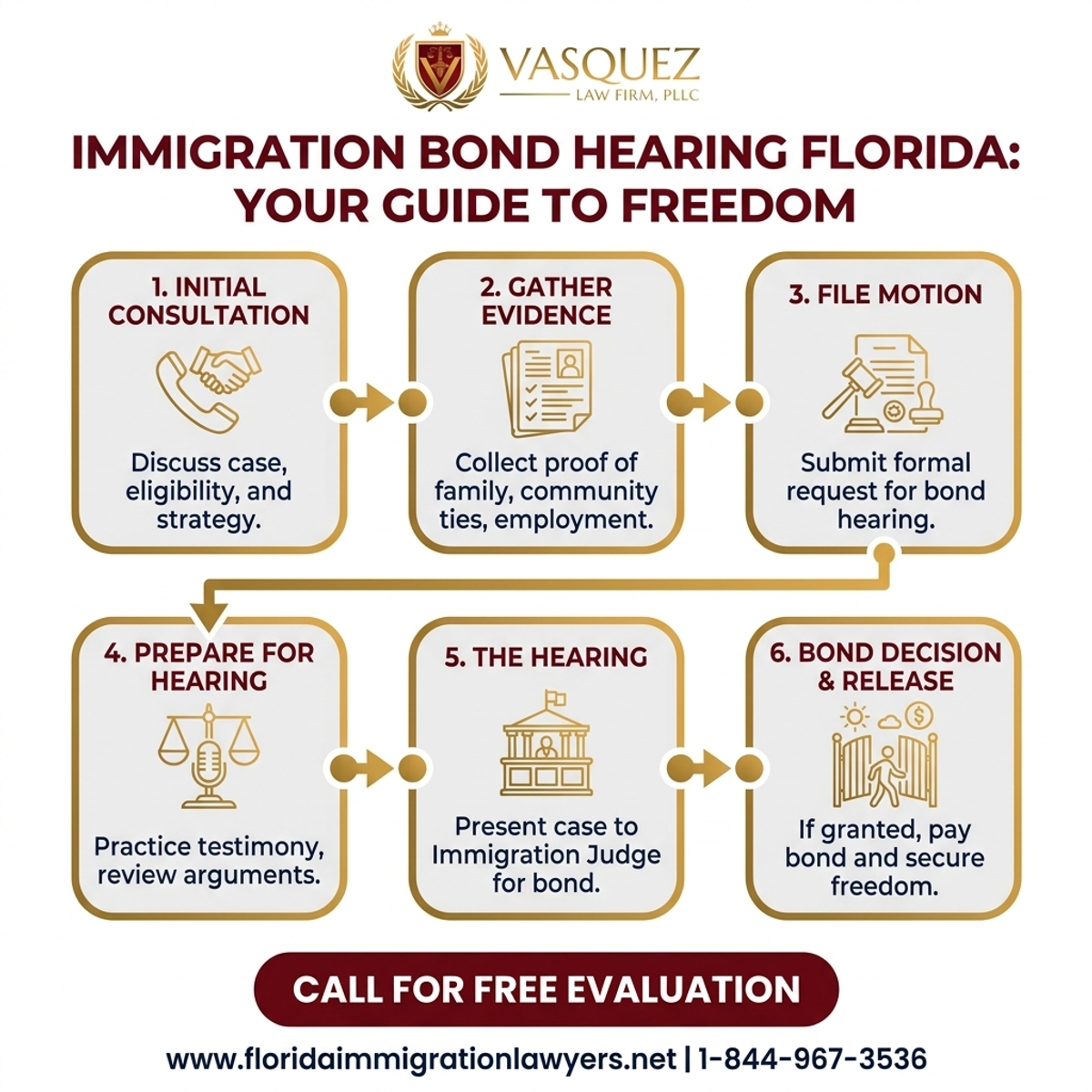
Step-by-Step Process — Immigration Bond Hearing Florida: Your Guide to Freedom
Do not navigate this process alone. Contact Florida Immigration Lawyers today to discuss your immigration bond hearing and explore your options for securing release.
Essential Documents and Evidence for Your Florida Bond Case
Presenting a robust case at an immigration bond hearing in Florida hinges on compelling evidence. A well-prepared document checklist is vital to demonstrate strong ties to the community, good moral character, and minimal flight risk. Gathering these items thoroughly and accurately can significantly influence the immigration judge's decision regarding bond eligibility and amount. Your legal team at Florida Immigration Lawyers will guide you through this process, ensuring all critical information is presented.
- Identity and Immigration Documents:
- Passport, birth certificate, national ID from home country.
- Any U.S. immigration documents (e.g., I-94 arrival/departure record, visa, previous applications).
- Notice to Appear (NTA) from ICE.
- Proof of Florida Residence:
- Lease agreements or property deeds in your name or a family member's name.
- Utility bills, bank statements, or other mail showing a consistent address in Orlando or another Florida city.
- Family Ties in the U.S.:
- Birth certificates of U.S. citizen children, spouses, or other immediate relatives.
- Marriage certificates for U.S. citizen or legal permanent resident spouses.
- Letters of support from family members detailing their reliance on you and your role in their lives.
- Employment and Financial Stability:
- Letters from employers confirming employment, salary, and job stability.
- Pay stubs, tax returns, or bank statements demonstrating financial responsibility.
- Proof of property ownership or other significant assets in Florida.
- Community Involvement and Good Moral Character:
- Letters from community leaders, religious institutions, schools, or non-profit organizations attesting to your character and involvement.
- Proof of volunteer work or civic engagement.
- Criminal History (if applicable):
- Certified court dispositions for any arrests or convictions, showing the final outcome. It is crucial to be transparent about any criminal history.
- Medical Records:
- Documentation of any serious medical conditions requiring ongoing treatment, especially if detention would compromise care.
Even seemingly minor details can strengthen your case. A comprehensive collection of these documents provides a clear picture of your ties to the community and your reliability. This preparation is paramount for a successful outcome at an immigration bond hearing.
Timelines, Costs, and the Critical Role of a Florida Immigration Lawyer
Understanding the timelines and potential costs associated with an immigration bond hearing Florida is crucial for effective planning. The period from detention to a bond hearing can vary significantly. Typically, an individual may wait anywhere from a few days to several weeks for a hearing, depending on court dockets and the specific immigration court's caseload, such as the Orlando Immigration Court. Once a bond is granted, the release process usually takes 24-72 hours after payment is confirmed. These timelines can be stressful, making prompt legal action essential.
The cost of an immigration bond itself is determined by the immigration judge and can range significantly, often from $1,500 to $25,000 or more, depending on the individual's circumstances, flight risk, and danger to the community. The bond amount is a guarantee that the individual will appear for all future court dates. It is important to note that these fees are set by the court and are separate from legal fees. The bond can be paid in full to the Department of Homeland Security or through a licensed bond agent, which typically requires a percentage of the total bond amount as a non-refundable fee. For more information on immigration processes, visit USCIS.
The role of a Florida immigration lawyer is absolutely critical throughout this entire process. From the moment of detention, an attorney can intervene to request a bond hearing, gather necessary evidence, and prepare a compelling argument before the immigration judge. They understand the specific nuances of Florida immigration courts and the factors judges consider. A lawyer can advocate for a lower bond amount, present evidence of community ties in Orlando, and challenge claims of flight risk or danger. Furthermore, they can help navigate the complex paperwork and ensure all deadlines are met, significantly increasing the likelihood of a successful outcome and securing release. Our experienced attorneys at Florida Immigration Lawyers are dedicated to fighting for your freedom.
Common Mistakes to Avoid in Immigration Bond Hearings
Navigating an immigration bond hearing in Florida is fraught with potential pitfalls. Avoiding common mistakes can significantly improve your chances of a successful outcome and secure timely release from detention. Be aware of these errors:
- Not Seeking Legal Counsel Immediately: Delaying contact with an immigration lawyer is one of the biggest mistakes. Early intervention can make a crucial difference in requesting a bond, preparing documentation, and advocating for your rights from the outset.
- Providing Inconsistent Information to ICE or the Court: Any discrepancies in your statements, whether to ICE agents or the immigration judge, can be perceived as dishonesty and severely undermine your credibility, leading to bond denial or a higher bond amount.
- Failing to Gather Sufficient Supporting Evidence: A weak case lacking proper documentation (e.g., proof of residency, family ties, employment) fails to convince the judge that you are not a flight risk or a danger. Thorough preparation is key.
- Missing Court Dates After Release: If a bond is granted and you are released, failing to appear for any future immigration court hearings will result in the forfeiture of your bond and likely re-detention. This also severely damages your future immigration prospects.
- Misunderstanding Mandatory Detention Rules: Assuming everyone is eligible for bond can lead to false hopes and wasted effort. Some individuals, particularly those with certain criminal histories, are subject to mandatory detention under INA § 236(c) and are not bondable.
- Not Understanding Bond Obligor Responsibilities: The person who pays the bond (the obligor) is financially responsible for ensuring the detained individual appears at all court dates. Misunderstanding this commitment can lead to financial loss if the bond is forfeited.
- Discussing Your Case with ICE Without an Attorney Present: Anything you say to ICE can be used against you. It is always best to politely decline to answer questions and state that you wish to speak with your attorney before providing any information.
- Failing to Disclose Criminal History Accurately: Attempting to hide or misrepresent past arrests or convictions will damage your credibility if discovered. It is better to disclose all information to your attorney, who can then prepare a strategy to address it.
- Not Preparing for the Judge's Questions: The immigration judge will ask probing questions. Being unprepared or giving vague answers can suggest unreliability. An attorney will prepare you for typical questions and help you articulate clear, consistent responses.
- Believing All Detentions Are Bondable: This common misconception overlooks the complexities of immigration law. Certain grounds for detention legally bar an individual from being released on bond, regardless of their family or community ties. An attorney can determine if you fall under such a category and explore other avenues, like deportation defense.
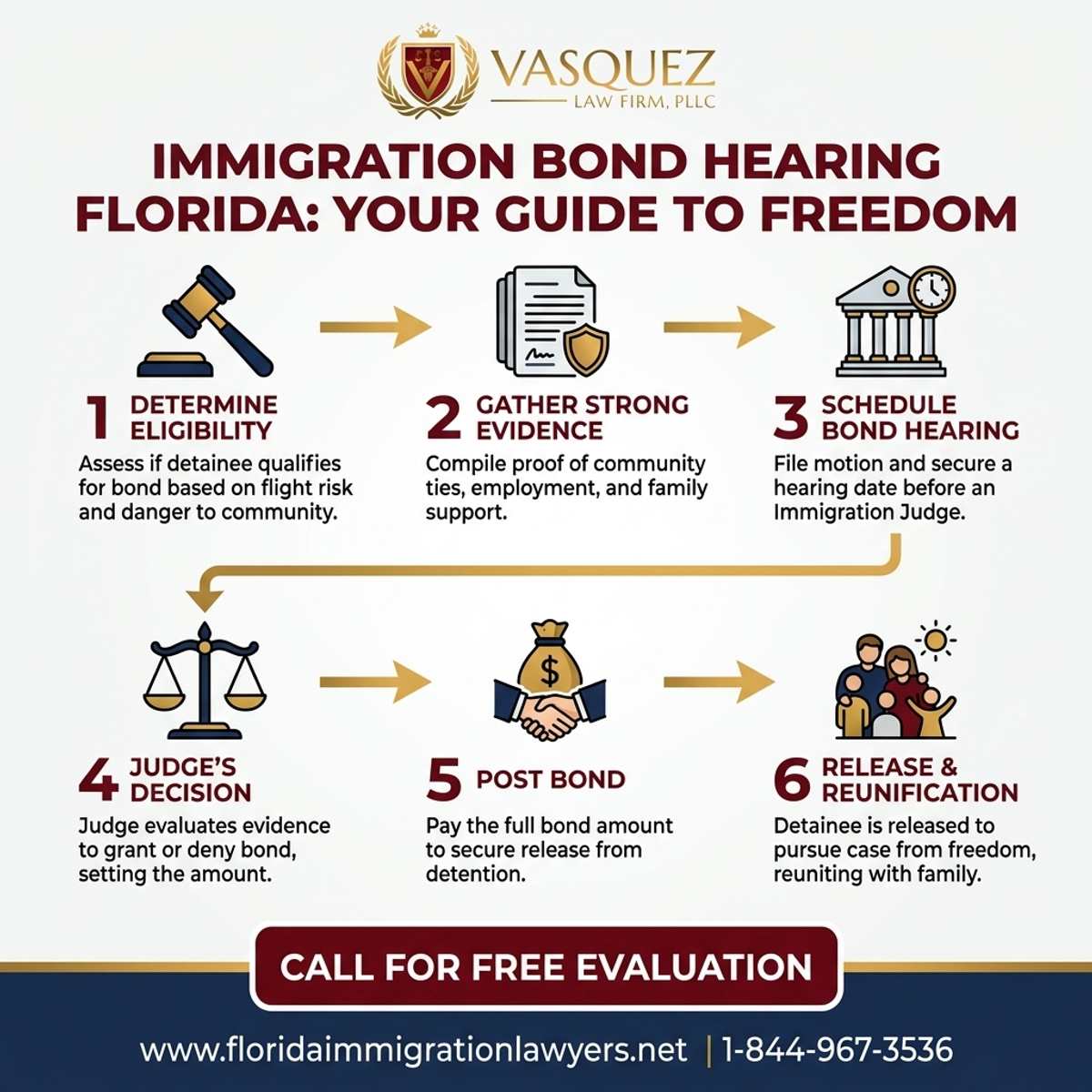
Key Statistics — Immigration Bond Hearing Florida: Your Guide to Freedom
When to Call a Florida Immigration Lawyer for a Bond Hearing
The decision to contact an immigration lawyer should be made as early as possible, ideally immediately upon learning of an ICE detention in Florida. The complexities of an immigration bond hearing Florida demand expert legal guidance. You should definitely call Florida Immigration Lawyers if:
- A loved one has been detained by ICE: Time is of the essence. Early intervention by an attorney can expedite the bond hearing request and begin the process of gathering crucial evidence for release.
- ICE has claimed mandatory detention: If ICE asserts that your loved one is not eligible for bond due to mandatory detention, an attorney can review the legal basis for this claim and potentially challenge it. Mandatory detention is often misapplied.
- The ICE-set bond is too high: If ICE offers a bond amount that is unaffordable, an attorney can argue before an immigration judge to have the bond reduced to a more reasonable sum, based on your financial capacity and other factors.
- There is a complex criminal history: Past arrests or convictions can significantly complicate bond eligibility. An experienced lawyer understands how different criminal offenses impact immigration cases and can present mitigating factors or argue against their relevance.
- You are unsure about eligibility or the process: The immigration system is intricate. A lawyer can assess your specific situation, explain your options, and guide you through every step of the bond hearing, ensuring no critical details are overlooked.
- You need help gathering and presenting evidence: Collecting the necessary documents and preparing witnesses can be overwhelming. An attorney will organize your case, ensuring compelling evidence is presented clearly and persuasively to the judge.
- You are facing deportation proceedings: A bond hearing is often the first step in a broader immigration case. A lawyer can not only help with the bond but also develop a comprehensive strategy for your underlying immigration case, including defense against deportation.
Do not risk your freedom or the freedom of a loved one by attempting to navigate this process alone. Our firm specializes in these critical situations across Florida.
About Florida Immigration Lawyers
Florida Immigration Lawyers is a leading immigration law firm dedicated to serving individuals and families across the entire state of Florida. With offices strategically located to assist clients statewide, we understand the unique challenges faced by immigrants in our community, including those in Orlando. Our team of compassionate and highly experienced attorneys is committed to providing aggressive and effective legal representation in all areas of immigration law. We believe in protecting the rights and securing the futures of our clients.
Our comprehensive practice areas include a focus on immigration bond hearings, deportation defense, asylum applications, family-based immigration, business immigration, and U.S. citizenship matters. We pride ourselves on offering personalized attention, clear communication, and strategic solutions tailored to each client's unique circumstances. We are available 24/7 to address urgent needs and offer free consultations to help you understand your options without financial commitment.
At Florida Immigration Lawyers, we are more than just legal representatives; we are advocates for justice and a lifeline for those navigating the complex U.S. immigration system. We serve all of Florida, ensuring that no matter where you are, expert legal help is within reach. Visit our website at https://www.floridaimmigrationlawyers.net or call us at 1-844-967-3536 to schedule your free consultation today.
Sources and References
- U.S. Citizenship and Immigration Services (USCIS)
- Executive Office for Immigration Review (EOIR)
- U.S. Department of State
- 8 U.S.C. § 1226 (Immigration and Nationality Act § 236) - Detention and Release of Aliens
- 8 CFR § 1236.1 - Apprehension, custody, detention, and parole
Related services: immigration practice areas, family immigration services, citizenship and naturalization.
This article provides general legal information and is not intended as legal advice. Every case is unique, and outcomes depend on specific facts and circumstances. Contact an attorney for advice about your particular situation. Immigration laws are subject to change, and this content reflects information current as of 2026-05-24.
If you or a loved one needs assistance with an immigration bond hearing in Florida, do not wait. Securing release from detention is often the first and most critical step in defending an immigration case. Let our experienced attorneys fight for your rights and guide you through this challenging process. Call Florida Immigration Lawyers today at 1-844-967-3536 for a free consultation. Se Habla Español - Estamos aquí para ayudarle.
Do Not Navigate This Process Alone
Our experienced immigration attorneys are ready to fight for you. Get a free, confidential consultation today.
Se Habla Español
Frequently Asked Questions
Florida Immigration Lawyers
Immigration Attorney | Founder, Vasquez Law Firm
U.S. Air Force veteran and immigration attorney with thousands of cases resolved. J.D., NCCU School of Law. AILA member. Admitted to the 4th, 5th, and 11th Circuit Courts.
Available 24/7 - Free Evaluations
Related Legal Services
Our Florida immigration attorneys can help you with experienced immigration attorneys, business immigration and asylum protection. Call today at 1-844-967-3536 for a free consultation.
Related Links
Related Topics
Free Legal Consultation
Discuss your case with our experienced attorneys. We're available 24/7.
Se Habla Español - Estamos aquí para ayudarle.
Related Articles
VAWA Immigration Relief in Florida: A Guide | VLF Florida
Learn about VAWA immigration relief in Florida and how it can help abuse victims gain independence. Call us for a free consultation.
Expungement's Effect on Immigration in Florida | VLF Florida
Expungement can affect your immigration status in Florida. Learn how a sealed record influences immigration consequences and why consulting a lawyer is essential for navigating these complex issues.
N-600 Certificate of Citizenship Florida Children | VLF Florida
For families in Florida, the N-600 Certificate of Citizenship is a vital document for children who have derived or acquired U.S. citizenship through their parents. This certificate provides official proof of citizenship, which is essential for obtaining a U.S. passport, accessing federal benefits, and establishing identity. This comprehensive guide from Florida Immigration Lawyers explains the eligibility criteria under INA 320 and 322, detailing who qualifies and the conditions that must be met, such as having a U.S. citizen parent and the child being under 18 and a lawful permanent resident. We outline a step-by-step process for filing the N-600 application, including gathering necessary documents like birth certificates, green cards, and proof of parental citizenship. The guide also covers expected processing timelines for 2026 and the various cost factors involved, from USCIS filing fees to potential legal expenses. We highlight common mistakes to avoid, such as incomplete documentation or incorrect eligibility assessments, which can lead to delays or denials. Finally, we discuss when it is crucial to seek legal counsel, particularly for complex cases involving adoptions, prior denials, or criminal histories. Florida Immigration Lawyers is dedicated to assisting families in Jacksonville and across Florida, offering expert guidance to ensure your child's citizenship is formally recognized.
Free Immigration Consultation: Legal Help in Florida
Navigating immigration in Fort Lauderdale can be complex. Our free consultation offers guidance on legal options and strategies. Contact Florida Immigration Lawyers for support today.
